


Prof Michael Rod, former Vice Provost, Strategic Enrolment, University of New Brunswick
A Unisa research seminar has challenged researchers, entrepreneurs and communities to rethink agricultural waste and explore how discarded by-products can be transformed into new products, businesses and sources of livelihoods.
The call was made during a seminar hosted by the AgriSETA Research Chair Unit (ARCU) in Unisa's Department of Human Sciences under the theme "Closing the Loop: Entrepreneurship, Innovation and the Future of Agrifood Waste."
The seminar explored how waste generated across agricultural and food production systems can be reused and converted into valuable resources, while creating opportunities for entrepreneurship, skills development and sustainable economic growth.
The AgriSETA Research Chair represents a partnership between Unisa and the Agricultural Sector Education and Training Authority (AgriSETA), with a focus on agricultural education and workforce development. The partnership supports skills development for employed and unemployed agricultural workers and promotes collaboration between academia, industry and government to address skills gaps in the sector.
Welcoming participants, Prof Bosire Onyancha, Director of Research and Innovation in Unisa's College of Human Sciences, said the seminar theme addressed one of the major challenges of the modern economy: finding ways to turn materials traditionally regarded as waste into sources of economic and environmental value.
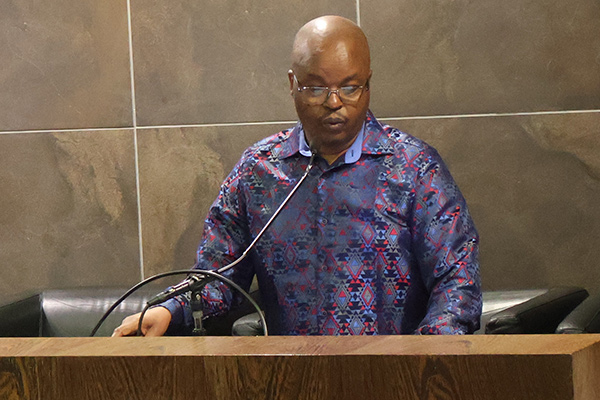
Prof Bosire Onyancha, Director: Research and Innovation, College of Human Sciences
He said the role of universities should extend beyond generating knowledge.
"Universities are entrusted with the duty to increasingly ensure that research generates innovative solutions, informs practice, creates opportunities for entrepreneurship and contributes meaningfully to sustainable development," said Onyancha.
He said the focus on agrifood waste demonstrated the need for research institutions to connect academic knowledge with practical challenges facing communities and industries.
Delivering the keynote address, Prof Michael Rod, former Vice-Provost for Strategic Enrolment at the University of New Brunswick, highlighted the role of the circular economy in improving material efficiency and retaining value through redesign, reuse and system-level innovation.
In agriculture and food production, he said, this approach could involve transforming by-products into ingredients, biomaterials, fertilisers and energy rather than allowing them to become waste.
Rod said materials such as fruit and vegetable peels, seeds, pulp and crop residues could be repurposed to create products with economic value.
He also emphasised the role universities can play in helping communities understand waste reuse and valorisation.
According to Rod, agricultural and food waste can contain useful natural resources, including fibre, proteins and oils, which can be extracted and used in new products.
He also highlighted the potential of microorganisms to break down organic matter and produce nutrient-rich fertilisers for gardens and farms.
Other opportunities include using bacteria and yeast to convert waste into organic acids, animal feed and biofuels.
For Rod, equipping communities with the knowledge and skills to develop such solutions is increasingly important as economies search for new ways of creating jobs and meeting changing economic and environmental needs.
Responding to the keynote address, Dr Gamuchirai Mutezo, founder of Madam Waste, an African female-owned urban energy planning firm operating in Johannesburg and Kigali, stressed the importance of ensuring that research reaches the communities it is intended to serve.
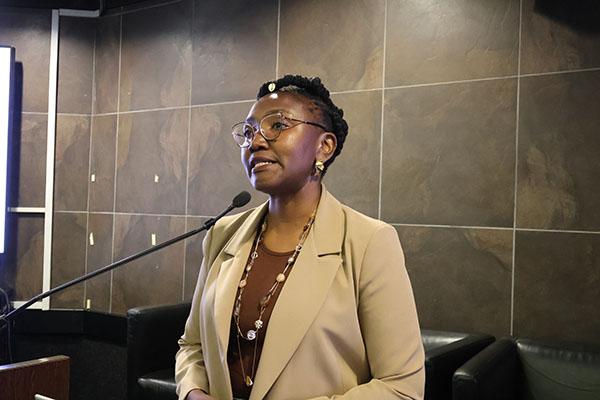
Dr Gamuchirai Mutezo, founder of Madam Waste, a 100% African female-owned urban energy planning firm based in Johannesburg, South Africa and Kigali, Rwanda
She argued that high-quality research, particularly in agriculture, should have a tangible impact beyond academic publications.
Mutezo said research on product reuse and reusability should be translated into practical solutions that ordinary South Africans can understand and apply.
She said agricultural research has the potential to contribute to addressing challenges such as food insecurity while also helping communities develop skills, stimulate innovation and create economic opportunities.
Her message was that research should not remain confined to academic journals when communities are facing pressing economic and social challenges that require practical solutions.
Closing the seminar, Prof Mokgadi Ngoepe-Ntsoane, Leader of the AgriSETA Research Chair Unit in the College of Human Sciences, placed the discussion within South Africa’s broader socioeconomic challenges.
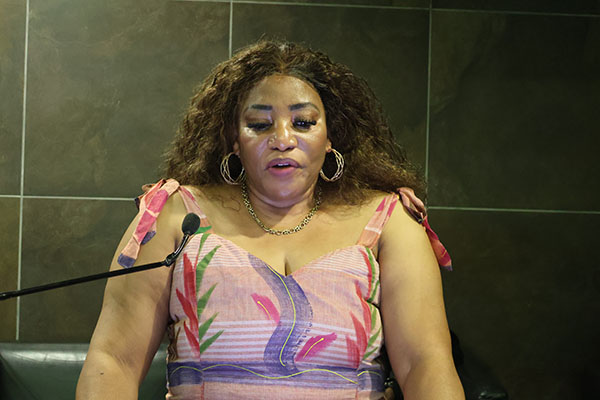
Prof Mokgadi Ngoepe-Ntsoane, Leader of the AgriSETA Research Chair Unit (ARCU), College of Human Science
She said the country continues to grapple with interconnected problems including food insecurity, unemployment, inequality, environmental degradation and climate change, while valuable resources are simultaneously being lost throughout agricultural and food value chains.
She challenged participants to consider how those discarded resources could become the foundation for new economic activity.
"How do we create value from what is currently being discarded? How do we build enterprises around it? What innovations are required? What skills will those enterprises require? And how do we ensure that communities, young people, women and emerging entrepreneurs participate in these new opportunities?" she asked.
Ngoepe-Ntsoane said closing the loop in agriculture could involve converting residues and by-products into new products, energy, agricultural inputs and enterprises.
However, she cautioned that technology alone would not be enough to establish a functioning circular economy.
It would require entrepreneurial thinking, appropriate skills, supportive institutions, partnerships and an enabling innovation ecosystem.
She also stressed that no single discipline, institution or sector could build a circular economy on its own.
"It requires collaboration among universities, industry and entrepreneurs, researchers and innovators, communities and young people who can translate these ideas into locally relevant solutions," she said.
The seminar highlighted the growing need for stronger links between research, innovation and enterprise development, particularly in sectors such as agriculture where waste can represent both an environmental challenge and an untapped economic resource.
For Unisa's AgriSETA Research Chair Unit, the challenge is therefore not simply to reduce waste, but to help develop the knowledge, skills and partnerships needed to turn what is discarded today into opportunities for tomorrow.
* By William Malose Thubakgale, Department of Institutional Advancement
* Photography: Thapelo Stimo, Communications and Marketing, College of Human Sciences
Publish date: 2026-09-04 00:00:00.0

 Unisa research unit urges turning agrifood waste into new economic opportunities
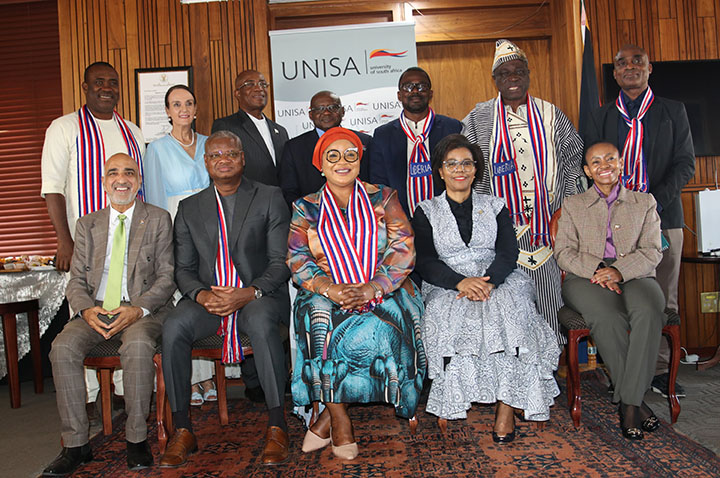 Liberia turns to Unisa for expertise in building Peace and Reconciliation Memorial Museum
 Unisa calls for stronger youth voice in shaping BRICS and global governance
 Prof LenkaBula calls for solidarity and action at Unisa Women's Day commemoration
 From passion to profession: How TVET shaped Nobuhle Ndandani's automotive spray-painting career