
Lesetja Kganyago
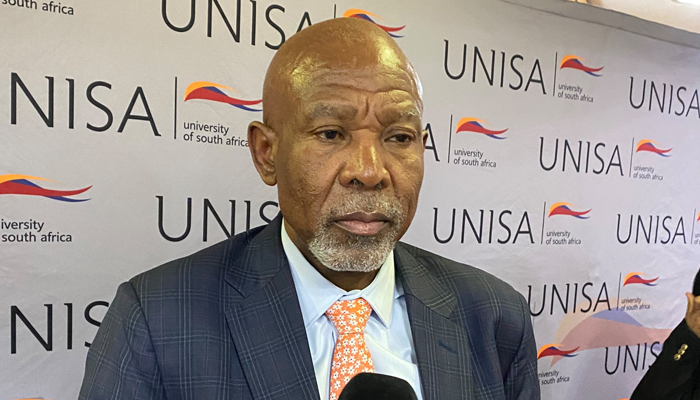
Resilience has become one of the defining features of South Africa’s economic story, but Reserve Bank Governor Lesetja Kganyago says the country now faces a more difficult challenge: turning that resilience into sustained economic growth.
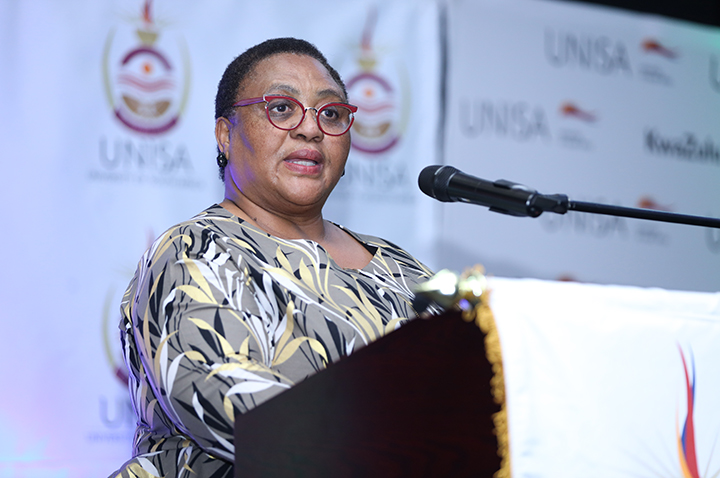
Kganyago was speaking at the University of South Africa (Unisa), where he delivered a public lecture titled "Emerging Market Resilience & South Africa’s Economic Case" to an audience of academics, economics students and policy observers.
The lecture examined how emerging economies have responded to global financial shocks, what South Africa has done to strengthen its economic institutions, and why the country continues to struggle to generate the levels of growth needed to improve living standards and create jobs.
For Unisa, the lecture also formed part of the university's tradition of bringing leading policymakers and thinkers into conversation with students, academics and the broader public on issues shaping South Africa's future.
Drawing on the experience of emerging markets during the financial crises of the 1990s, Kganyago explained how countries across Asia and other developing regions responded to external shocks by strengthening their economic defences.
One of the most important lessons was the need to build adequate foreign exchange reserves. Strong reserves provide countries with a buffer during periods of financial volatility and can help restore confidence when international capital flows suddenly reverse.
But Kganyago cautioned that resilience cannot be built through reserves alone.
He highlighted the dangers of excessive borrowing, particularly in developing economies where weak financial systems can magnify the effects of a crisis. Uncontrolled debt accumulation, he noted, can result in bank failures, widespread job losses and expensive government bailouts.
Effective financial regulation and supervision are therefore essential to ensuring that economic growth does not come at the expense of financial stability.
The changing role of emerging markets in the global economy also provided important context for his argument. Emerging economies now account for more than 60% of global GDP, compared with about 40% in previous decades. Much of that expansion, however, has been driven by China and India, while regions such as Africa and Latin America have struggled to achieve comparable levels of growth.
For South Africa, the comparison highlights both its strengths and its vulnerabilities.
Kganyago argued that some of the most important foundations of South Africa’s economic resilience were established during the reforms of the 1990s.
The strengthening of central bank independence, the gradual dismantling of exchange controls and the introduction of inflation targeting helped establish greater macroeconomic stability and investor confidence.
These reforms also enabled the country to build stronger foreign exchange reserves and develop institutions capable of responding to economic shocks.
But that progress was followed by a significant deterioration in public finances after the 2008 global financial crisis.
Government debt increased from less than 30% of GDP to close to 80%, contributing to credit-rating downgrades and higher borrowing costs.
The consequences have become increasingly difficult for government to ignore. Debt-service costs now absorb close to 20% of national tax revenue, reducing the resources available for infrastructure, education, healthcare and other public services.
There are, however, signs of improvement.
Kganyago pointed to evidence that government debt is beginning to stabilise, supported by the primary surplus achieved through greater fiscal discipline. He said the improvement has already contributed to better credit ratings and lower borrowing costs.
The progress, he cautioned, should not be mistaken for the end of South Africa’s fiscal challenges.
While fiscal stabilisation represents an important achievement, Kganyago identified weak economic growth as one of South Africa’s most pressing challenges.
For many South Africans, the consequences are reflected in stagnant incomes, limited employment opportunities and declining living standards compared with the expectations of the early 2010s.
The governor linked the country’s weak growth performance to a combination of institutional decline, the effects of state capture and years of underinvestment and poor performance at state-owned enterprises.
These challenges have constrained South Africa's ability to expand its productive capacity and have left the country growing more slowly than several emerging-market peers.
Kganyago pointed to reforms under Operation Vulindlela, a joint initiative of the Presidency and National Treasury aimed at removing structural constraints in sectors such as energy, logistics and network industries.
While these reforms have produced progress, he argued that implementation needs to move faster.
The central message was that South Africa cannot afford to become complacent about the stability it has achieved. Macroeconomic stability creates the conditions for growth, but it does not create growth on its own.
The country must continue pursuing structural reforms while confronting the vested interests that have historically delayed or weakened those reforms.
Unisa Principal and Vice-Chancellor Prof Puleng LenkaBula, who introduced the lecture, placed the discussion within the university’s broader role in addressing Africa’s development challenges.
She argued that resilience should not simply mean the ability to survive crises. In a world facing geopolitical tensions, climate change and economic uncertainty, resilience also requires the ability to adapt, innovate and pursue new opportunities.
That message closely reflected the challenge emerging from Kganyago's address.
South Africa has demonstrated that it can withstand major economic shocks and build institutions capable of protecting macroeconomic stability. The harder task now is to use that stability as a platform for sustained and inclusive growth.
For Unisa’s students and staff, the discussion offered a broader lesson about the country's economic future. Stability matters, but it is ultimately a means to an end.
The real test of South Africa's resilience will be whether it can translate decades of institutional reform and hard-won economic stability into stronger growth, more jobs and better living standards for its people.
* Sipho Jack, Journalist, Department of Institutional Advancement
Publish date: 2026-08-07 00:00:00.0
 Lesetja Kganyago: 'South Africa's economy has stabilised. But where is the growth?'
 From Unisa to Hungary: How Sizakele Nkosi turned determination into a global opportunity
 Too few vets, too many outbreaks: South Africa's FMD challenge
 Unisa sparks critical conversation on South Africa's unfinished land question
 From Unisa graduate to global fraud intelligence investigator