

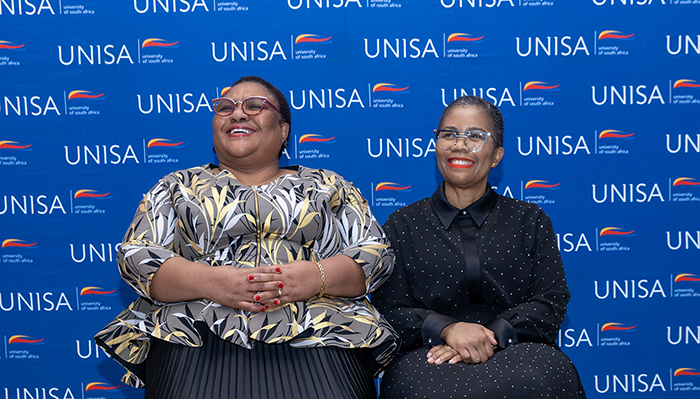
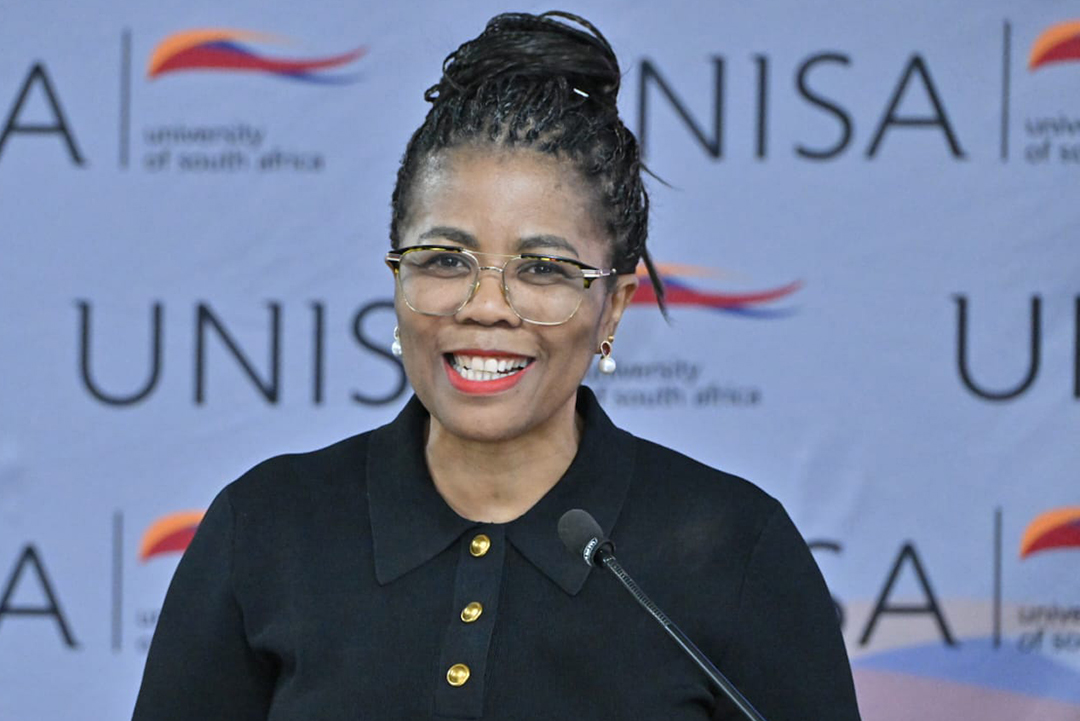
Keynote speaker Thoko Didiza, Speaker of the National Assembly and former Minister of Agriculture and Land Affairs, and Prof Puleng LenkaBula, Unisa Principal and Vice-Chancellor
The University of South Africa (Unisa) hosted its fourth Annual Simiso Nkwanyana Memorial Lecture at the Olive Convention Centre in Durban, KwaZulu-Natal, bringing together academics, policymakers, students and community leaders to reflect on one of South Africa's most enduring and complex challenges: the land question.
Held under the theme, "Land as a Catalyst for Rural Economic Development in South Africa," the lecture examined how land can become a driver of economic inclusion, social justice and sustainable rural development. It also celebrated the legacy of Simiso Nkwanyana, whose commitment to transformation continues to inspire critical dialogue on issues shaping South Africa’s future.
Opening the event, Prof Puleng LenkaBula, Unisa Principal and Vice-Chancellor, positioned the land question at the centre of South Africa's democratic journey, arguing that meaningful transformation cannot be achieved without confronting the legacy of historical dispossession.
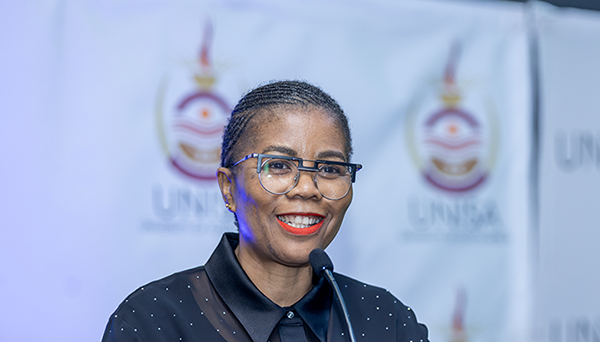
Prof Puleng LenkaBula, Unisa Principal and Vice-Chancellor
She reflected on the enduring impact of the 1913 Natives Land Act, which confined Black South Africans to just 7% of the country's land and entrenched patterns of exclusion that continue to shape rural poverty and inequality more than three decades into democracy.
For LenkaBula, the debate extends far beyond ownership.
"This is not merely a question of resources," she said. "It's about a rightful place in the land, representing a narrative of struggle that resonates through generations, forcing us to confront our past in the pursuit of a more equitable future."
She reaffirmed Unisa's commitment to advancing rural development through its open distance and e-learning model, highlighting research and innovation in agriculture, water security and sustainable energy as practical ways the university can help improve the lives of rural communities.
The annual lecture commemorates Simiso Nkwanyana, a founding member of Unisa's first Student Representative Council in 1996, who passed away in 2003. Remembered as a principled student leader committed to social justice and transformation, Nkwanyana believed that meaningful change required both political courage and intellectual engagement. His vision provided the foundation for the evening’s discussions.
Delivering the keynote address, Thoko Didiza, Speaker of the National Assembly and former Minister of Agriculture and Land Affairs, linked Nkwanyana's legacy to South Africa's continuing struggle to achieve equitable land reform.
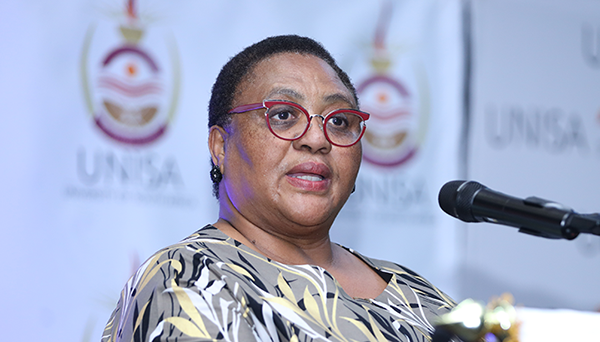
Thoko Didiza, Speaker of the National Assembly and former Minister of Agriculture and Land Affairs
She described him as a promising young leader whose life was cut short before he could witness the outcomes of South Africa’s 2004 democratic elections.
"He was part of a pivotal moment in our history," she said, "advocating for a united front against the systemic issues embedded in our landscape."
Didiza argued that universities have a vital role to play in shaping the country's future by producing graduates capable of driving meaningful social and economic transformation.
"Comrade Simiso knew that our universities could bring forth voices that demand reform; they are sites of resistance and hope."
She also reflected on the constitutional and ideological dimensions of land reform, describing land not simply as property but as a means of production essential to economic participation and human dignity. Referring to Section 25 of the Constitution, she said the state has a responsibility to promote equitable access to land while cautioning against allowing the reform agenda to be driven by narrow commercial interests.
In closing, Didiza challenged young South Africans to use education as a tool for transformation and invoked Sol Plaatje's account of the devastation caused by the 1913 Land Act as a reminder of why the land question remains central to South Africa’s democratic future.
The discussions reflected the broader national debate on land reform and rural development. While government programmes have redistributed and restored millions of hectares of land since 1994, ownership patterns remain unequal and large portions of state-owned land remain underutilised. At the same time, legislative developments such as the Expropriation Act and the proposed Equitable Access to Land Bill continue to shape public debate on how best to accelerate reform while safeguarding agricultural productivity and economic growth.
Against this backdrop, the lecture highlighted the importance of informed, evidence-based dialogue that moves beyond political rhetoric towards practical solutions capable of unlocking rural economic development.
The keynote address was followed by a panel discussion moderated by Unisa's Acting Chief Financial Officer, Liana Joubert. Joining the discussion were Prof Albert Modi, Advocate Sipho Mantula, Tsholofelo Suping and Gugulethu Tshabalala, who examined the role of land in driving rural development from legal, economic and community perspectives.
Opening the discussion, Tshabalala drew laughter from the audience with a light-hearted remark about his first name, explaining that because his name is Gugulethu, people, including some organisers and earlier speakers, often assume he is a woman, which explained why the panel consisted entirely of men.
Turning to the topic at hand, Tshabalala approached the theme from a practical economic perspective. Referring to the scientific definition of a catalyst, he argued that just as a catalyst accelerates a reaction, land should accelerate economic activity and create opportunities in rural communities.
Building on the keynote address, he challenged policymakers and development practitioners to move beyond high-level discussions and focus on implementation.
"While significant land has been acquired and returned to the people, the question we must ask is: what are we doing with that land?"
Drawing on his upbringing in Nongoma in northern KwaZulu-Natal and referencing discussions from the recent Ruralnomics programme, Tshabalala argued that sustainable rural development must be driven by people with lived experience of rural communities.
"Those who possess tacit knowledge and lived experiences of rural areas must lead this change themselves. The vast land in the hands of the people requires a dedicated rural development ecosystem to generate genuine wealth, fulfilling the vision championed by past heroes and heroines for Black and African communities."
Supporting this view, fellow panellist Tsholofelo Suping said unlocking the economic potential of rural South Africa requires both a shift in mindset and greater accountability across government.
He cited challenges such as departmental underspending and delays in issuing prospecting permits as examples of administrative inefficiencies that continue to constrain economic growth and job creation.
Suping also called on institutions of higher learning, particularly Unisa, to strengthen their engagement with communities by applying research, innovation and developmental education directly to rural livelihoods.
He further stressed that women's leadership should be recognised as central to South Africa's development agenda.
"Women make up the majority of the population. Women's leadership should be unquestioned. I believe women must lead their own fight for equality without seeking permission from men, while men have a duty to support their struggle."
The panel reinforced one of the lecture's central messages: that land reform is about more than ownership. It requires implementation, capable institutions, accountable leadership and partnerships that translate policy into sustainable economic opportunities for rural communities.
As South Africa continues to grapple with the legacy of dispossession and inequality, Unisa's Simiso Nkwanyana Memorial Lecture has established itself as an important platform for national reflection and dialogue.
By bringing together scholars, policymakers, students and community leaders, the lecture reaffirmed the university's role in shaping conversations on some of the country's most pressing challenges. The discussions in Durban underscored a common message shared by LenkaBula, Didiza and the panellists: meaningful land reform will require not only progressive legislation, but also ethical leadership, rigorous scholarship and sustained collaboration to build a more inclusive, prosperous and equitable South Africa.
* By Sipho Jack, Journalist, Department of Institutional Advancement
Publish date: 2026-07-29 00:00:00.0

 Reclaiming African heritage through geographical names
 From research to real-world impact: Unisa-linked project explores new ways to advance LGBTQIA+ rights
 Unisa hackathon winners develop AI solution to support students at risk of falling behind
 Beyond Black Wednesday: Unisa lecture calls for urgent action to protect media freedom and public broadcasting
 Unisa celebrates 25 new PhD graduates advancing research and innovation