

Equipped with state-of-the-art laboratories that provide students with hands-on experiences to bridge theory and practice
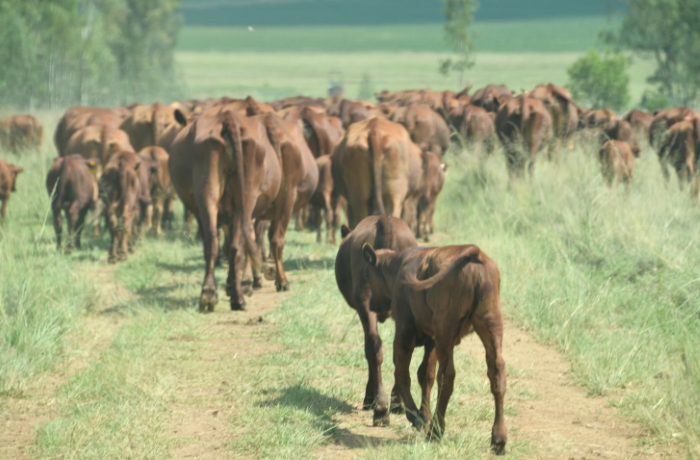
More than 2 000 FMD cases have been recorded nationally, placing additional pressure on farmers, veterinary services and the country's livestock sector.
South Africa's ongoing struggle with Foot-and-Mouth Disease (FMD) has highlighted the need to significantly expand the country's veterinary training capacity, with experts warning that a shortage of veterinarians is hampering efforts to detect, contain and respond to outbreaks.
More than 2 000 FMD cases have been recorded nationally, placing additional pressure on farmers, veterinary services and the country's livestock sector.
FMD is a highly contagious viral disease that affects cloven-hoofed animals, including cattle, pigs, sheep and goats. Infected animals can develop high fevers and painful blisters on the tongue, mouth and hooves, often resulting in severe lameness and significant reductions in milk production.
For Unisas College of Agriculture and Environmental Sciences (CAES), the recurring outbreaks underscore the need for greater investment in veterinary education and training to strengthen animal health systems, protect farmers' livelihoods and safeguard national food security.
Prof Ashley Gunter, Deputy Executive Dean in CAES, said the scale and persistence of the outbreaks demonstrated that South Africa's existing veterinary training capacity was insufficient to meet the country's needs.
"South Africa's recurring FMD outbreaks expose a fundamental weakness: we have too few veterinarians on the ground to provide the surveillance, early detection and rapid response that a disease of this magnitude demands," said Gunter.
South Africa currently has only one university offering veterinary training, producing about 160 new veterinary graduates each year. According to Gunter, this number falls short of the country's requirements, particularly in rural and farming communities where access to veterinary services remains limited.
The shortage has implications beyond individual farmers. Limited access to veterinary professionals can make it more difficult to identify disease outbreaks early, monitor livestock health and implement rapid containment measures when infectious diseases emerge.
Unisa believes its proposed veterinary college could help address some of these challenges through a distributed training model that expands access to veterinary education while strengthening links between veterinarians and the communities they serve.
"Unisa's distributed model allows us to recruit and train veterinarians who are rooted in the very communities where outbreaks originate. Our students can be placed across all nine provinces, providing a nationwide surveillance network that currently does not exist," Gunter said.
The proposed College of Veterinary Science would not focus solely on increasing the number of qualified veterinarians. Unisa also envisages integrating veterinary education with research, innovation, and community engagement to strengthen the broader veterinary and animal health system.
Prof Fasina and Dr Mbizeni have echoed the call for greater investment in veterinary capacity, arguing that the shortage has implications for the wider economy.
"Ultimately, food security depends on healthy livestock. A larger veterinary workforce means healthier animals, more productive herds and more resilient farming communities," they said.
The impact of FMD extends beyond animal health. Outbreaks can disrupt livestock production and trade, place financial pressure on farmers and threaten the stability of agricultural supply chains. Strengthening disease prevention, surveillance and response is therefore central to protecting both agricultural livelihoods and the country’s food supply.
Looking ahead, Unisa sees its proposed College of Veterinary Science as a long-term contribution to South Africa's veterinary education and animal-health system. The university aims to produce approximately 200 veterinarians a year by 2040, increasing the number of qualified professionals available to serve communities across the country.
For Unisa, the FMD crisis has reinforced the importance of building veterinary capacity before the next outbreak rather than responding only once disease has spread.
* By Noxolo Miya, Journalist, Department of Institutional Advancement
Publish date: 2026-08-04 00:00:00.0

 Reclaiming African heritage through geographical names
 From research to real-world impact: Unisa-linked project explores new ways to advance LGBTQIA+ rights
 Unisa hackathon winners develop AI solution to support students at risk of falling behind
 Beyond Black Wednesday: Unisa lecture calls for urgent action to protect media freedom and public broadcasting
 Unisa celebrates 25 new PhD graduates advancing research and innovation