
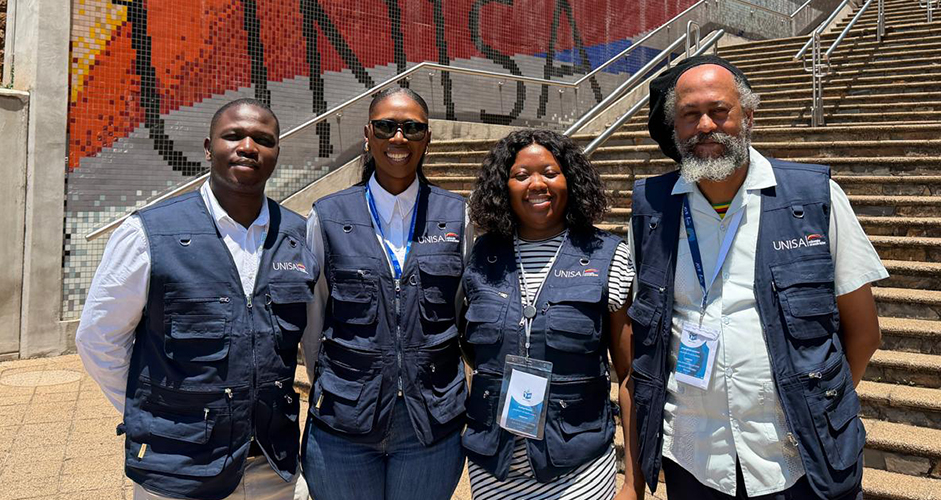
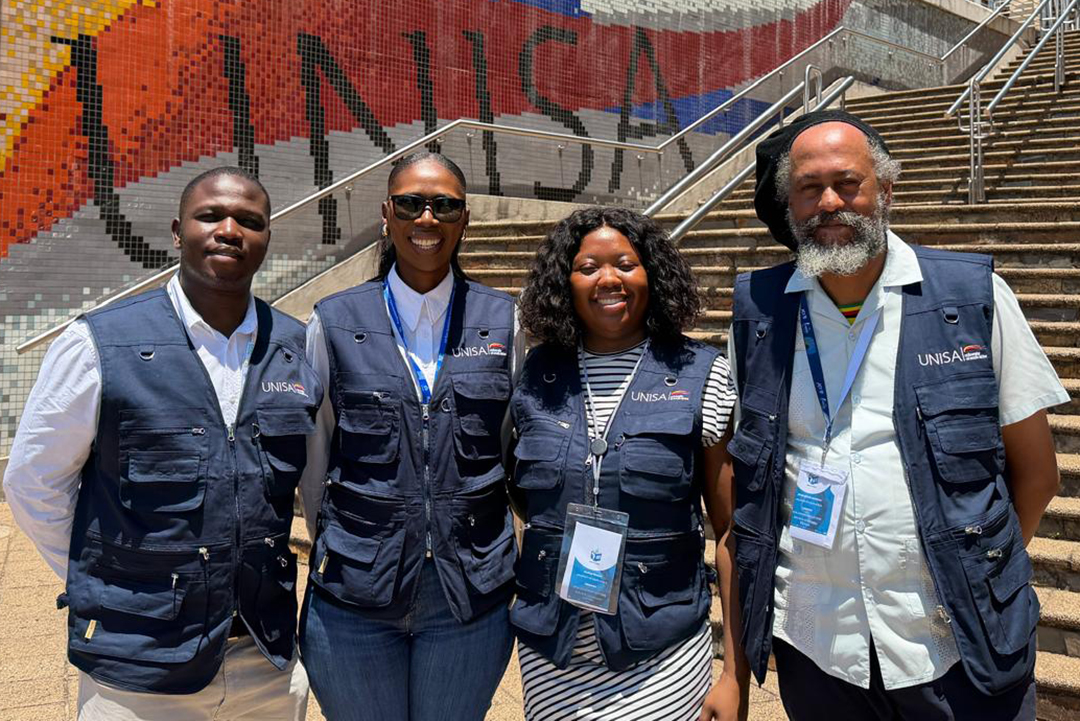
Members of the Unisa Election Observer Mission participating in the monitoring of South Africa's 2026 local government elections. From left: Dr Tendai Mbanje, election and governance expert; Dr Lefatshe Moagi, lecturer in the Department of Political Sciences; Dr Modiegi Ntsoane; and Adv Dr Sipho Mantula, researcher at the Thabo Mbeki African School of Public and International Affairs.
The University of South Africa (Unisa) has reaffirmed its commitment to strengthening democracy and promoting accountable governance by deploying about 100 trained election observers during South Africa's 2026 local government elections.
The Unisa Election Observer Mission (UEOM) monitored voting processes at various polling stations, assessing compliance with electoral procedures, voter accessibility, inclusivity and the overall integrity of the electoral process. The mission also visited the Electoral Commission of South Africa's (IEC) Results Operations Centre (ROC) in Midrand, where election results were being processed. Beyond monitoring election conduct, the initiative allowed Unisa academics, researchers, staff and emerging broadcasters to contribute to democratic oversight, voter education and public accountability.
The university's participation reflects its longstanding involvement in election observation, which dates back to 2014, and its commitment to ensuring that academic expertise contributes to strengthening South Africa's democratic institutions. One of the key observations emerging from the mission was the variation in voter turnout across different communities. Dr Tendai Mbanje, an election and governance expert, said some polling stations experienced relatively high voter participation, while others recorded noticeably fewer voters compared with the number registered.
He explained that the observation teams assessed compliance with electoral procedures, the treatment of voters and the availability of infrastructure provided by the IEC. Although observers identified minor technical difficulties involving Voter Management Devices (VMDs) and instances of political parties campaigning near polling stations, no major disruptions were reported in the areas monitored. Mbanje said election observation plays an important role in protecting democratic processes, discouraging electoral malpractice and identifying improvements that can strengthen future elections.
He also raised concerns about public participation in municipal elections, noting that citizens appeared to show greater interest in national and provincial elections than in local government contests. This trend, he suggested, highlighted the need for sustained voter education and greater public engagement at the municipal level. Local government elections are particularly important because municipalities are responsible for delivering essential services that directly affect people's daily lives, including water, electricity, sanitation and local infrastructure.
Strengthening participation in these elections is therefore critical to ensuring that communities have a meaningful say in how they are governed. For Dr Modiegi Ntsoane, the effectiveness of an election cannot be measured solely by whether voting takes place peacefully. She emphasised that independent observation must also examine electoral integrity, accessibility, inclusivity and the extent to which citizens participate in democratic processes.
According to Ntsoane, voting was generally peaceful in the areas observed, although older voters appeared to participate more actively than younger people. She stressed the importance of understanding why some eligible voters choose not to participate, arguing that the experiences of non-voters are just as important as those who cast their ballots. Ntsoane explained that the mission gathered information through field notes, observation reports and a web-based platform that allowed teams to share their findings.
These observations will be consolidated into a comprehensive Unisa Election Observer Mission report, providing an assessment of the electoral process and identifying areas requiring improvement. Among the challenges identified were instances in which some voting station officials appeared unfamiliar with the role and accreditation of election observers. The mission also encountered challenges relating to accreditation and access to the Results Operations Centre in Midrand. Ntsoane said these experiences highlighted the importance of ensuring that election officials understand the role of independent observers and that appropriate arrangements are in place to facilitate their work.
She further emphasised that democratic participation must be understood within the broader context of governance, social conditions and public trust. In particular, she identified youth participation as an important factor in strengthening the legitimacy and long-term sustainability of democracy.
Adv Dr Sipho Mantula, Deputy Head of the Unisa Election Observer Mission and a researcher at the Thabo Mbeki African School of Public and International Affairs, described the university's presence at the Results Operations Centre as an important contribution to democratic accountability. He said independent election observation promotes transparency, strengthens public confidence and provides an additional layer of scrutiny over electoral processes. Mantula emphasised that local government elections deserve particular attention because municipal decisions directly affect the quality of life in communities.
He encouraged residents to remain engaged beyond election day and to hold elected representatives accountable for their commitments and performance. According to Mantula, the mission's findings will help identify strengths and weaknesses in election management, voter education and accessibility, while contributing to efforts to strengthen public confidence in democratic institutions. He also linked Unisa's participation to the university's commitment to Ubuntu, constitutional governance and public accountability.
"Democracy is further enhanced when elections are not only free and fair but are independently observed, transparently assessed and continually improved, which is something the Unisa Election Observation Mission is privileged to do in the service of the national democratic process," he said. Dr Lefatshe Moagi, Head of the Unisa Election Observation Mission and a lecturer in the Department of Political Sciences, expressed appreciation to the approximately 100 trained observers who participated in the initiative.
She described their contribution as an example of the university's commitment to community engagement and service to South African society. Moagi noted that Unisa has participated in election observation since 2014, building experience and institutional capacity in democratic monitoring. "As team leaders, we continue to uphold the mandate of being an institution of higher learning that trains election observers," she said. The mission demonstrates how universities can contribute to democratic development beyond traditional teaching and research activities.
Through election observation, Unisa provides opportunities for academics, researchers and students to apply their knowledge in practical settings while generating insights that can inform public policy and electoral administration. The initiative also supports the United Nations Sustainable Development Goal 16, which promotes peaceful and inclusive societies, accountable institutions and participatory decision-making. Its focus on governance, citizen participation and institutional accountability is equally relevant to the African Union's Agenda 2063 aspiration for a continent characterised by good governance, democracy and respect for human rights.
At the national level, the mission contributes to the objectives of South Africa's National Development Plan, particularly its emphasis on building capable, accountable institutions and encouraging active citizenship. Unisa Radio's election coverage team supported public education, live reporting and community engagement during the 2026 local government elections. Unisa Radio also played an important role in the university's election activities, deploying a seven-member team to the Results Operations Centre to provide live reporting, interviews, technical assistance, content production and social media coverage. The deployment formed part of a broader 14-member team drawn from Unisa's main campus and Unisa Radio.
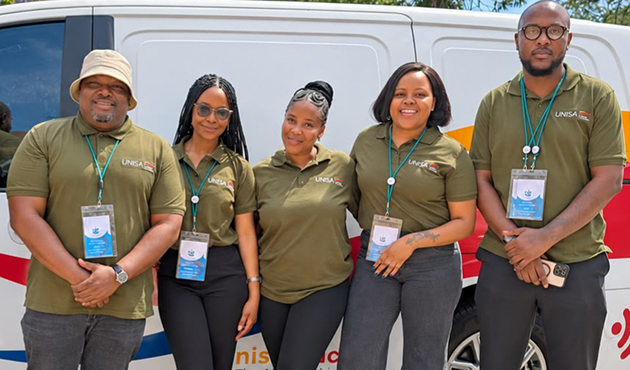
Unisa Radio's election coverage team at the 2026 local government elections. From left: Lebogang Motaung, Broadcast Assistant; Botlhale Kakane, Journalism Intern; Mmamokete Masekoa, Roundtable Debate host; Kea Mooka, reporter; and Tumelo Makgoara, Programme Manager.
Unisa Radio Programme Manager Tumelo Makgoara said the station's involvement reflected its responsibility to go beyond conventional broadcasting and contribute to public education, democratic participation and accountability. He explained that the election coverage was designed to help listeners understand how local government works and why election outcomes matter to their everyday lives. Issues such as water provision, electricity, sanitation, infrastructure and municipal accountability were central to the station's reporting. Makgoara also highlighted the importance of accurate, impartial and responsible journalism, particularly during the counting and announcement of election results.
He stressed the need to distinguish preliminary results from officially declared outcomes and to ensure that political claims were subjected to appropriate verification. Cooperation between field reporters and studio teams helped the station provide audiences with reliable information across its programmes and digital platforms. The initiative also created valuable practical learning opportunities for emerging broadcasters, allowing them to gain experience covering a major national event. According to Makgoara, the longer-term objective is to strengthen public understanding of democratic processes while developing Unisa Radio's journalism capacity and contribution to community broadcasting.
For Unisa Radio reporter Kea Mooka, covering the elections was about more than reporting on political parties, voting figures and election results. Her focus was on documenting the experiences, concerns and expectations of ordinary residents whose lives are directly affected by municipal governance. Through her interactions with community members, Mooka identified recurring concerns about water shortages, unemployment, drug abuse and declining confidence in local political leadership. Residents expressed a desire for reliable basic services, employment opportunities, safer neighbourhoods and leaders who could be held accountable for their performance.
Mooka said community broadcasting provides an important platform for residents to express their concerns and demand accountability from elected representatives. "Elections are not just about political parties fighting for votes, they are about people, their real lives, their hopes and their right to hold others to account who are meant to hold public office," she said.
Her observations reinforce the importance of people-centred journalism that connects electoral processes to the social and economic realities experienced by communities. Mmamokete Masekoa, host of Unisa Radio's Roundtable Debate, said the programme had played an active role in the election period through voter education, interviews with political leaders and engagements with IEC experts. The programme also drew on the expertise of political analysts and academics, including Prof Dirk Kotze, Prof Kealeboga Maphunye and Pusheletso Maleka, to provide audiences with informed perspectives on electoral developments and local governance.
Masekoa said involving different stakeholders helped deepen public understanding of the issues affecting municipalities and the responsibilities of elected representatives. Accountability, governance and service delivery remained central to the programme's discussions, with listeners encouraged to ask difficult questions and scrutinise the performance of political leaders. Unisa Radio journalist and social media team member Botlhale Kakane also contributed to the station's voter education efforts by producing informative content and sharing election updates across digital platforms. Her work included using the station's digital screens and social media channels to communicate information about the electoral process and encourage informed participation.
Together, these efforts demonstrated the role educational broadcasting can play in connecting academic expertise with public debate and strengthening democratic literacy. Among the residents who shared their expectations was community member Edith Mabasa, who expressed hope that the elections would bring meaningful improvements to her community. Mabasa called for greater attention to the needs of people who are often excluded from mainstream development opportunities, particularly young people.
She highlighted the importance of recreational facilities, skills development programmes and initiatives that create opportunities for young people to participate productively in their communities. She also raised concerns about safety and security, including the need to protect schoolchildren from drug and alcohol abuse. For Mabasa, improved infrastructure, community development programmes and greater opportunities for volunteering and civic participation were equally important. Her expectations extended beyond the delivery of basic services to include accountable leadership and tangible improvements in people's lives.
These concerns reflected a broader message emerging from Unisa Radio's community engagements: residents want elected leaders who understand local challenges and are prepared to respond through practical action. Unisa's participation in the 2026 local government elections demonstrates the contribution higher education institutions can make to democratic governance through independent observation, research, public education and community engagement. By deploying trained observers and involving its broadcasting platform, the university combined academic expertise with practical electoral monitoring and public communication.
The mission's findings are expected to provide insights into electoral administration, voter participation, accessibility and areas requiring further improvement. Beyond the immediate election period, the initiative reinforces the importance of continuous civic education and sustained public participation in municipal affairs. It also highlights the responsibility of universities to contribute to public discourse, support democratic institutions and encourage citizens to remain engaged in decisions affecting their communities. As the country moves beyond the elections, the central challenge will be ensuring that democratic participation does not end at the ballot box.
* By Miyendah Mongwe, Intern at Unisa Radio, and Mmamokete Masekoa, Host of Roundtable Debate, Unisa Radio
Publish date: 2026-11-06 00:00:00.0

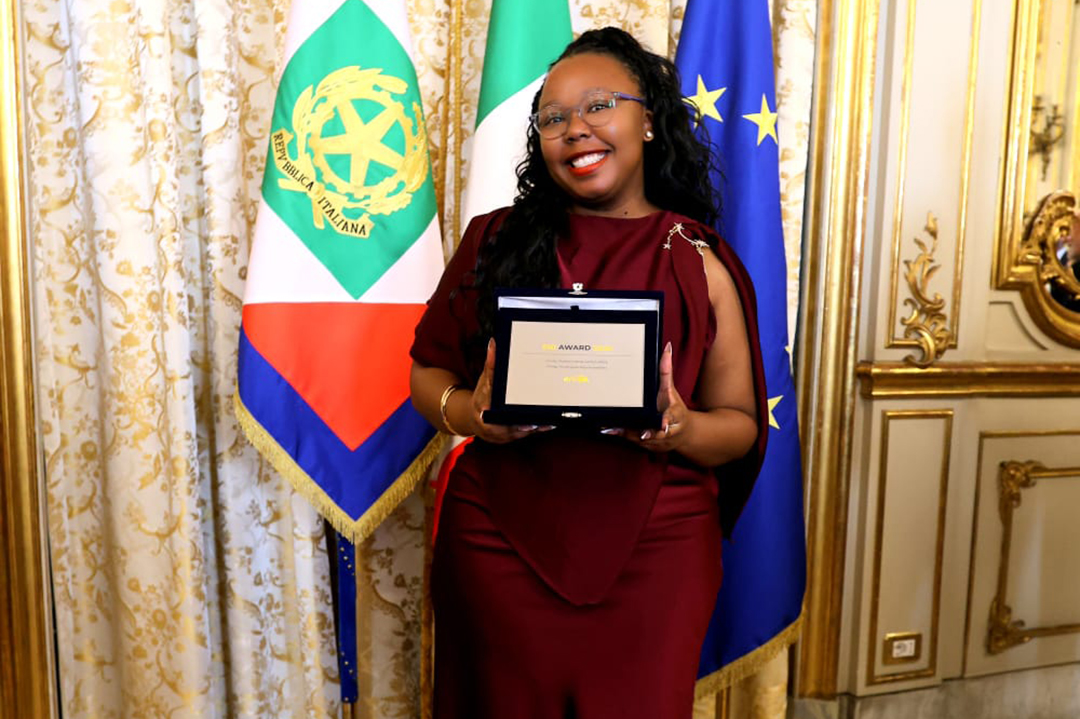 Unisa PhD student Gosego Sedikelo wins prestigious 2026 Eni Award for sustainable battery recycling research
 Unisa deploys 100 Election Observers to strengthen democracy and electoral accountability
 Unisa KwaZulu-Natal Region promotes staff well-being through health and wellness day
 Unisa graduate wins national recognition for excellence in teaching
 Unisa's Prof Puleng Segalo elected to prestigious Academy of Science of South Africa