

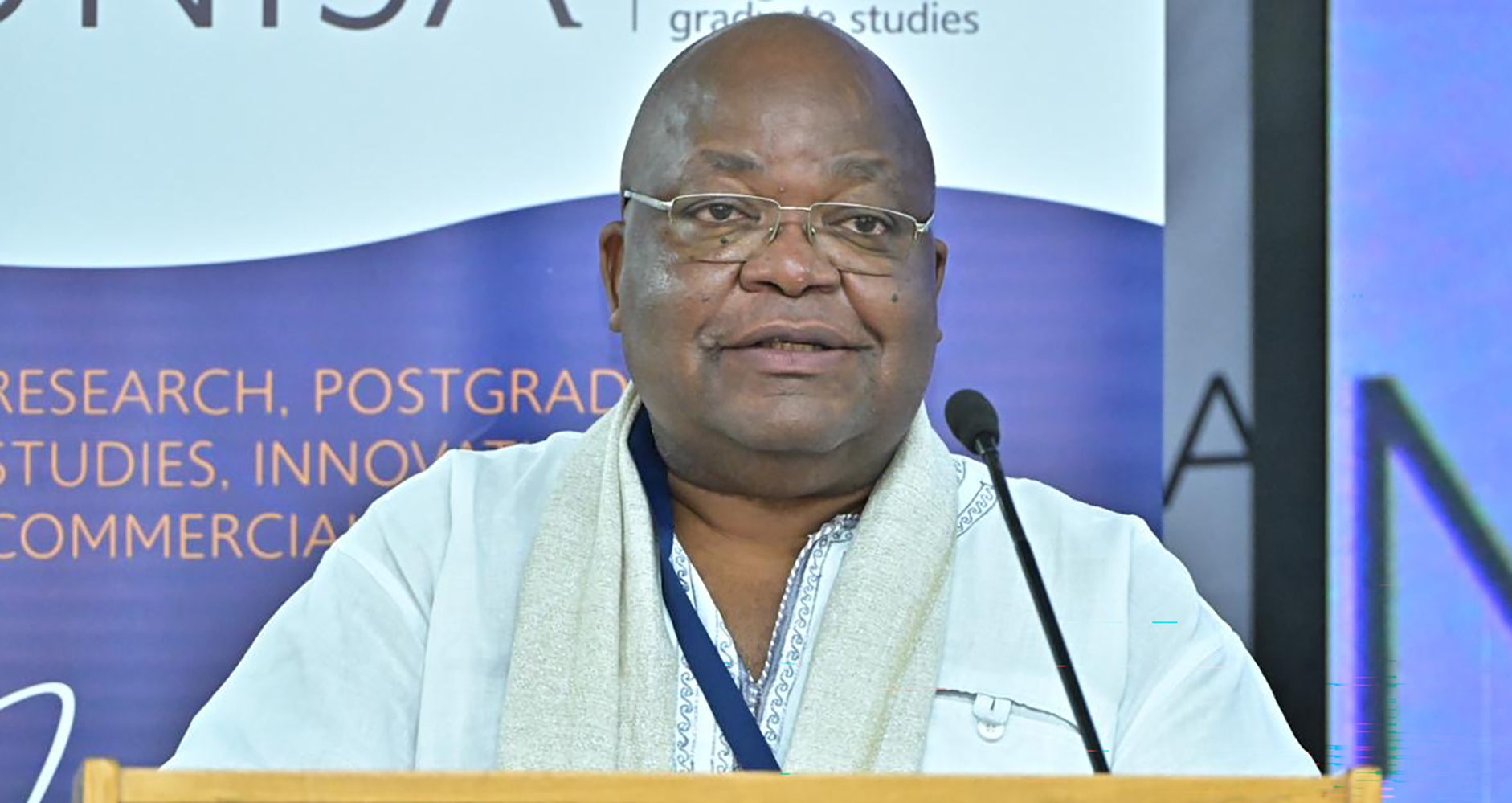
Prof Patrick Ngulube
The University of South Africa's (Unisa) Innovation Festival is strengthening its role as a platform for postgraduate students and academics to engage with pressing social challenges and explore how research and innovation can contribute to meaningful change.
Held under the theme "It is still in our hands to combat poverty and inequality", this year's festival emphasised the importance of collaboration and the responsibility of the academic community to ensure that research responds to society's needs. Delivering the keynote address, Prof Dennis Ocholla from the University of Zululand challenged postgraduate students to see themselves as agents of change and use their research to address real-world problems.
Drawing inspiration from Nelson Mandela's address at Trafalgar Square, Ocholla emphasised the importance of asking difficult questions as part of serious academic inquiry. He said researchers had a responsibility to confront society’s challenges rather than limit their work to theoretical discussions. "This generation can rise to greatness," he said, urging graduates to ensure that their research benefits the communities that helped shape them, including schools, clinics and townships.
Since its establishment in 2022, the Innovation Festival has grown into a platform for encouraging interdisciplinary collaboration across academic disciplines and sectors. Its underlying message is that complex social challenges such as poverty and inequality cannot be addressed through isolated efforts. They require different forms of knowledge, expertise and experience to come together. Prof Patrick Ngulube from Unisa's Department of Interdisciplinary Research and Postgraduate Studies reinforced this point, highlighting how poverty and inequality affect education, healthcare and employment.
He argued that society already has much of the knowledge, skills and collective capacity needed to address these challenges. The task is to bring these resources together and translate them into practical solutions. Ngulube pointed to the diversity of postgraduate research topics, ranging from the use of drone technology in education to women’s economic empowerment, as evidence of the value of interdisciplinary thinking.
"We need to come together beyond the academy," he said. His remarks highlighted the importance of connecting academic research with the wider community, ensuring that innovation is not treated simply as an intellectual exercise but as a means of responding to social and economic challenges. The festival also provided master's and doctoral students with an opportunity to present their work, exchange ideas and build relationships with fellow researchers, academics and potential collaborators. Rather than viewing one another as competitors, participants were encouraged to recognise the value of shared knowledge and collective problem-solving.
Students were urged to participate actively, strengthen their ability to communicate research findings and make use of networking opportunities with peers and mentors. These skills are important in helping researchers explain the relevance of their work to audiences beyond the university. Ocholla also highlighted the role of research supervision in developing the next generation of scholars. Drawing on his own experience in academia, he stressed that innovation flourishes in environments where students receive appropriate guidance, encouragement and support.
The participation of colleges from across Unisa reflects the festival's growing reach and the University's efforts to create an inclusive space for research and innovation. By bringing together students and academics from different disciplines, the event encourages the exchange of ideas that could inform responses to challenges across society. The festival's theme is closely connected to the United Nations Sustainable Development Goals (SDGs), particularly SDG 1: No Poverty and SDG 10: Reduced Inequalities. Both goals call for action to address the structural and economic conditions that leave people excluded from opportunities and resources.
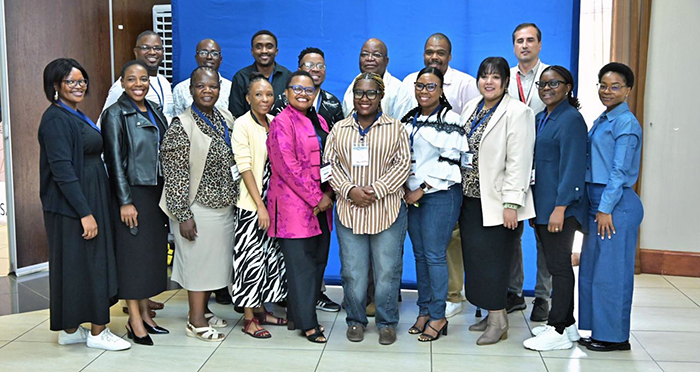
Participants of the Innovation Festival held at the University of South Africa (Unisa)
The festival also speaks to SDG 4: Quality Education. By providing postgraduate students with opportunities to develop, present and communicate their research, Unisa contributes to the development of knowledge, critical thinking and problem-solving skills. The emphasis on research supervision and collaboration further recognises the importance of quality postgraduate education in preparing researchers to respond to complex challenges. These priorities are also reflected in the African Union's Agenda 2063, which sets out a vision for an integrated, prosperous and peaceful Africa, driven by its own citizens. Its focus on inclusive growth, human development, education, innovation and the empowerment of communities reinforces the importance of research that responds to Africa’s development needs.
In South Africa, the National Development Plan (NDP): Vision 2030 identifies poverty, unemployment and inequality as major challenges requiring sustained and coordinated action. It emphasises the importance of education, skills development, innovation and a capable knowledge-based society in building a more inclusive economy. Unisa's Innovation Festival provides a platform through which the University can contribute to these priorities. By bringing together postgraduate researchers from different disciplines and encouraging them to engage with communities and other sectors, the festival supports the development and exchange of knowledge that can inform practical responses to social challenges.
The focus on collaboration is also important to sustainable development. Poverty and inequality are interconnected problems that require long-term responses, rather than isolated interventions. Research can help identify the causes of these challenges, assess possible solutions and provide evidence to guide policy and community initiatives. However, its wider value depends on whether findings are shared, understood and applied beyond academic institutions.
As Ocholla emphasised, research should not remain on library shelves. Its findings must reach the communities and institutions where they can be applied to improve people’s lives. The festival's message was therefore clear: tackling poverty and inequality requires more than identifying problems. It demands collaboration, practical innovation and a commitment to ensuring that knowledge contributes to lasting change.
* By Sipho Jack, Journalist, Department of Institutional Advancement
Publish date: 2026-11-27 00:00:00.0

 3MT: The art of explaining complex research in three minutes
 Unisa Innovation Festival brings researchers together to tackle poverty and inequality
 Unisa and Eskom Foundation STEM partnership makes a difference in 2026
 Unisa brings global aviation experts together to explore the future of aircraft financing
 Advocate Vuyiswa Mathaba makes history as first woman to chair Unisa Bargaining Forum