
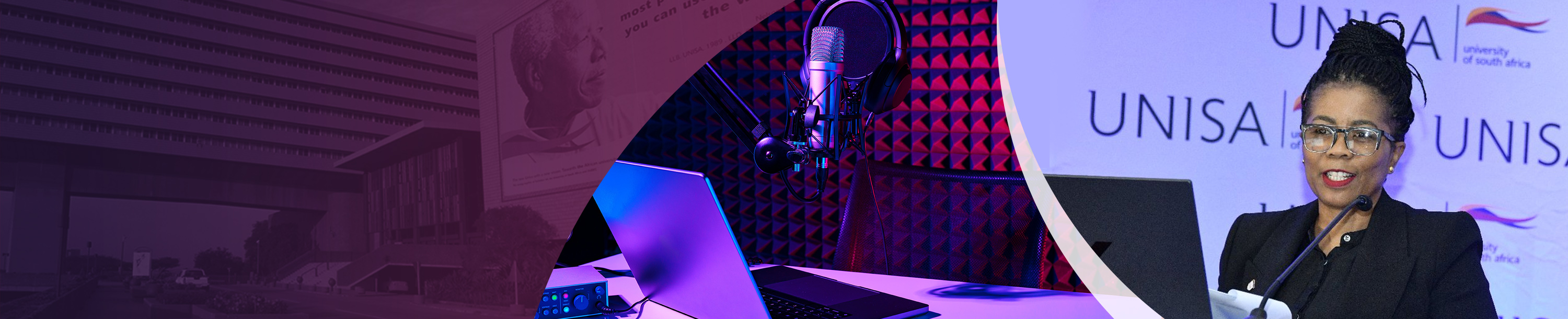

Advocate Vuyiswa Mathaba, the first woman to chair Unisa's Bargaining Forum.
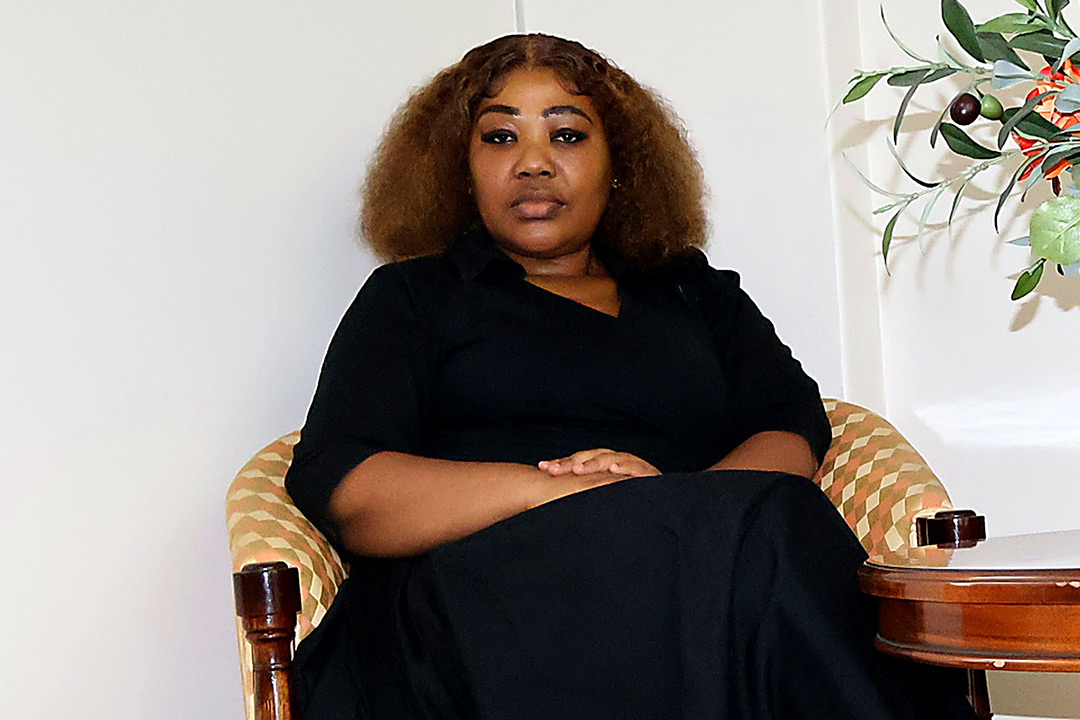
The University of South Africa (Unisa) has appointed Advocate Vuyiswa Mathaba as the new Chairperson of the Unisa Bargaining Forum (UBF), making her the first woman to lead the forum.
Her appointment marks an important milestone for the University and for women's representation in labour relations leadership, a field in which senior positions have traditionally been dominated by men. She takes up the role at a time when constructive engagement between management and organised labour remains essential to maintaining stable workplace relations and ensuring that collective agreements are effectively concluded, implemented and upheld. Mathaba brings extensive experience in employee relations, collective bargaining, dispute resolution and strategic leadership. Her career includes serving as a commissioner at the Commission for Conciliation, Mediation and Arbitration (CCMA), and she is an accredited master mediator.
She holds an LLB from Unisa, a Postgraduate Diploma in Industrial Relations from the University of KwaZulu-Natal (UKZN), a Postgraduate Diploma in Public Law from the University of the Western Cape (UWC), and a Master of Policy Development and Practice from the University of Cape Town (UCT). She is currently pursuing a PhD in Law at UKZN, where her research examines strategic minority union strikes and municipal service disruption. Her career began in the trade union environment before moving into dispute resolution and bargaining council operations. She later took on senior employee relations leadership roles, gaining experience from both labour and management perspectives.
This combination of experience, she believes, has given her a broad understanding of the dynamics involved in collective labour relations and the different interests that need to be balanced during negotiations. Reflecting on her appointment, Mathaba said her experience in trade unions, alternative dispute resolution (ADR), bargaining councils and senior employee relations leadership had prepared her to lead the forum. "This appointment is both an honour and a responsibility. I look forward to bringing this breadth of experience to the UBF to facilitate fair, constructive and meaningful engagement between Unisa management and organised labour," she said.
As chairperson, her priorities include strengthening the effectiveness and credibility of the UBF, promoting meaningful collective bargaining and fostering constructive engagement between management and organised labour. She wants the forum to provide a space where difficult issues can be addressed proactively and professionally, within an agreed framework, to reach sustainable outcomes. For Mathaba, fairness in collective bargaining depends on the independence and consistency of the process, as well as ensuring that all parties have an equal opportunity to be heard.
"As Chairperson, my role is to protect the integrity of the process, facilitate balanced engagement, and ensure that differences are managed constructively," she explained. She acknowledged that differences in interests are an inherent part of collective bargaining. However, she said professionalism, mutual respect and good-faith engagement are essential to managing disagreements and reaching workable agreements.
Looking ahead, Mathaba hopes to leave behind a stronger and more effective UBF, one that is trusted by both management and organised labour as a credible platform for dialogue and collective bargaining. Her message to the Unisa community is that sound labour relations are central to the University’s stability and ability to fulfil its institutional responsibilities. "Robust labour relations sustain the institution, and meaningful dialogue, even where there are differences, can help us build a stronger university," she said.
Mathaba's appointment has particular relevance to Unisa's Catalytic Niche Area (CNA) of Feminist, Womanist, Bosadi Theorisations, which promotes African-centred scholarship exploring gender justice, social transformation and the lived experiences of women. The niche area recognises that gender inequality does not exist in isolation, but intersects with other forms of marginalisation shaped by race, class and culture. Bosadi theory, in particular, provides a South African framework for examining the experiences of Black women within these overlapping systems of inequality. Through this niche area, Unisa seeks to develop knowledge that advances inclusion, equality and social justice.
Mathaba's appointment as the first woman to chair the UBF provides an institutional example of women's participation in leadership and decision-making. Her achievement is relevant to the questions explored through the CNA, particularly women's access to leadership positions and their role in shaping workplace policies and institutional processes. Unisa advances this area of scholarship through research, education and engagement initiatives. These include the WOMANDLA Symposium and entrepreneurship programmes that support women’s innovation, skills development and business creation. The Institute for Gender Studies in the College of Human Sciences conducts interdisciplinary research into gender-based violence, homophobia and transphobia, as well as discrimination against women in workplaces and political spaces. The College of Education also contributes through engaged scholarship and publications, while the Graduate School of Business Leadership offers a short learning programme on Women in Leadership.
Together, these initiatives demonstrate how the University approaches gender equality through research, education and practical opportunities for women's empowerment. Mathaba's appointment adds a further institutional dimension to this work by placing a woman in a leadership position responsible for facilitating engagement between management and organised labour. The appointment also connects with the United Nations Sustainable Development Goal 5 (SDG 5): Gender Equality, which calls for women's full and effective participation and equal leadership opportunities. The work of the Bargaining Forum relates to SDG 8: Decent Work and Economic Growth, through its focus on fair workplace processes, collective bargaining and constructive employer-employee relations. Its role in promoting inclusive dialogue and accountable institutional processes also speaks to SDG 16: Peace, Justice and Strong Institutions.
These priorities are reflected in the African Union's Agenda 2063, particularly its commitment to an Africa whose development is driven by its people, with women participating equally in all spheres of life. The agenda's emphasis on inclusive governance and capable institutions reinforces the importance of leadership that promotes participation, fairness and accountability. In South Africa, the National Development Plan: Vision 2030 recognises the importance of a capable state, effective institutions and a more equal society. Within a university, constructive labour relations contribute to the institutional stability needed to sustain teaching, research, student support and community engagement.
For Unisa, the effective functioning of the UBF is therefore more than an internal labour relations matter. A credible bargaining process can help management and organised labour address workplace concerns, manage disputes and reach agreements that support the University's broader responsibilities. This contributes to a more stable and productive institutional environment, although the success of that process will depend on the actions of all parties and the consistent implementation of agreements. Mathaba's appointment brings professional experience and an important milestone in women's leadership to the forum. Her challenge will be to turn that experience into a bargaining environment in which differences can be addressed fairly, dialogue is sustained and agreements are respected.
* By William Thubakgale, Department of Institutional Advancement | Photography: Victor Malatji, Department of Institutional Advancement
Publish date: 2026-11-26 00:00:00.0

 Unisa and Eskom Foundation STEM partnership makes a difference in 2026
 Unisa brings global aviation experts together to explore the future of aircraft financing
 Advocate Vuyiswa Mathaba makes history as first woman to chair Unisa Bargaining Forum
 Affirming the lives of South African women and girls in efforts to end GBVF
 Five young entrepreneurs turn a passion for books into a growing business