
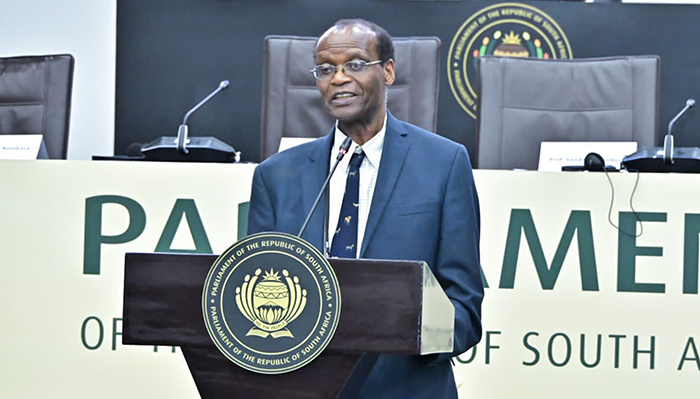
Prof Muna Ndulo, Professor of International and Comparative Law at Cornell Law School, delivered the keynote address
To celebrate 30 years of the Constitution and Africa Day, Unisa, in partnership with the Parliament of the Republic of South Africa and the Thabo Mbeki Foundation (TMF), held an academic colloquium on 22 May 2026 under the theme "Celebrating 30 years of South Africa’s Constitution in a rapidly changing world" at the temporary National Assembly Chamber in Cape Town.
Serving as a precursor to the 16th Annual Thabo Mbeki Africa Day Lecture, the colloquium brought together more than 250 participants, including Thabo Mbeki, Unisa Chancellor and Former President of South Africa, alongside a diverse, multi-sector delegation of experts and leaders engaged in constitutional advancement, democratic governance and public discourse.
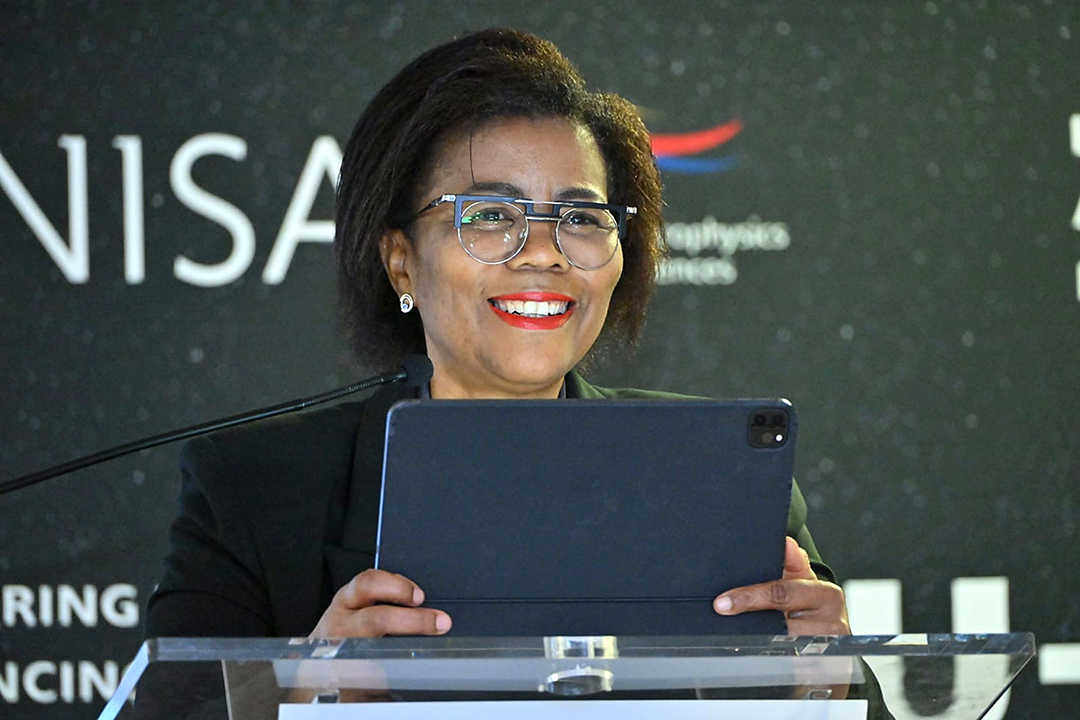
Thoko Didiza, MP and Speaker of the National Assembly, acknowledged how far the Constitution has come, noting the country's historical challenges, achievements and institutional strength. Didiza also highlighted how the government has tirelessly worked to integrate the legislative, judicial and executive sectors towards building the Africa they want. She said that the colloquium aimed to examine progress and challenges in South Africa’s role in Africa, the broader global community and its partnership with higher education institutions.
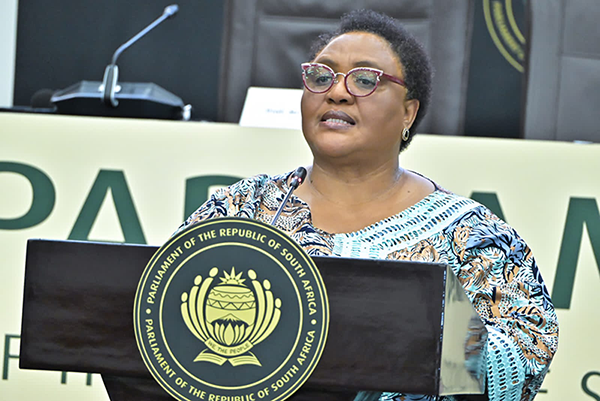
Thoko Didiza, MP, Speaker of the National Assembly
Prof Puleng LenkaBula, Unisa Principal and Vice-Chancellor, outlined the theme as an intellectual agency of South Africa’s historical lineage. She highlighted the disparities, including structural failures, persistent inequality and a racialised economy. LenkaBula said the Bill of Rights is a landmark legal jurisprudence as it is the most progressive in the world.
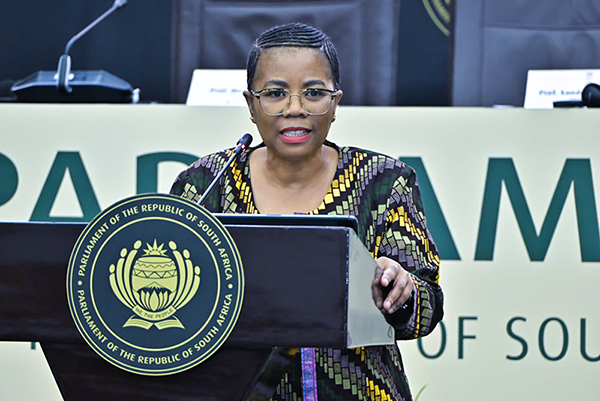
Prof Puleng LenkaBula, Unisa Principal and Vice-Chancellor
She underscored Unisa’s mandate to shape futures in the service of humanity, positioning it as a driving force in advancing Pan-Africanism and sustainable development. She implored academics to fulfil their aspirations to contribute to the development of South Africa and the continent. Concluding, LenkaBula called for a decolonised curriculum and the rebuilding of higher education institutions.
Delivering the keynote address, Prof Muna Ndulo, Professor of International and Comparative Law at Cornell Law School, outlined the crucial aspects regarding a democratic constitution after 30 years.
Referring to a contested history, Ndulo stated that the policies in place were imposed to excuse past mistakes and continue to perpetuate structural gaps. While he noted that the shift towards democratisation across Africa, particularly in South Africa, signals a positive step forward, he clarified the notion by breaking down what democracy truly entails. Issues such as national identity, the economic structure and the vulnerability of the economy and its environment form part of what a democratic constitution should uphold, he said.
Ndulo reaffirmed the South African Constitution as a source of legitimate power exercised by the government. "Hence," he said, "South Africa’s Constitution cannot be understood without reflecting on the challenges of the country." Ndulo condemned the public’s over-dependency on the government, arguing that it stifles active participation and citizenship. Additionally, he emphasised that state policies must align with the socio-economic promises made by the Constitution.
Facilitated by Prof Tshepo Madlingozi, Commissioner of the South African Human Rights Commission (SAHRC), and Prof Grace Khunou, Acting Executive Director of the Department of Leadership and Transformation at Unisa, panel discussions fostered critical and robust ideation.
Key contributions highlighted how a shift towards global diplomacy does not bring about liberation in a rapidly changing world. However, through the consolidation of African agency and political unification, global powers should be "managed" to bring about order. Participants stated that global interdependence masquerading as multipolarity undermines Africa's voice and standing.
Another key message running throughout the panel discussions was that the legislature should work for those it was established for. Drawing on the discussions, the panellists maintained that transformation must be embodied in legal jurisprudence to ensure an instrumental role in social transformation, strategic independence and human development.
Delivering the vote of thanks, Prof Solomon Magano, Unisa’s Vice-Principal of Institutional Development, acknowledged the inclusivity shown by the organisations in hosting the joint academic colloquium and thanked the delegation of experts and leaders who engaged in the dialogue.
Read also:
Africa Day Lecture champions African unity
* By Nontsikelelo Ndebele, Communications Intern, Department of Institutional Advancement
** Photography by Shooheima Champion, Multimedia Centre
Publish date: 2026-05-26 00:00:00.0

 Astronomy lecture highlights Africa's role in advancing space science at Unisa
 Students take centre stage as Unisa hosts National Multilingual Student Debate
 Es'kia Mphahlele's legacy lives on as Unisa hosts 17th Annual Memorial Lecture
 From waste tyres to shoe polish: Unisa Professor turns waste into opportunity
 Beyond barriers: Dr Nozuko Langa's decade-long journey to a PhD