

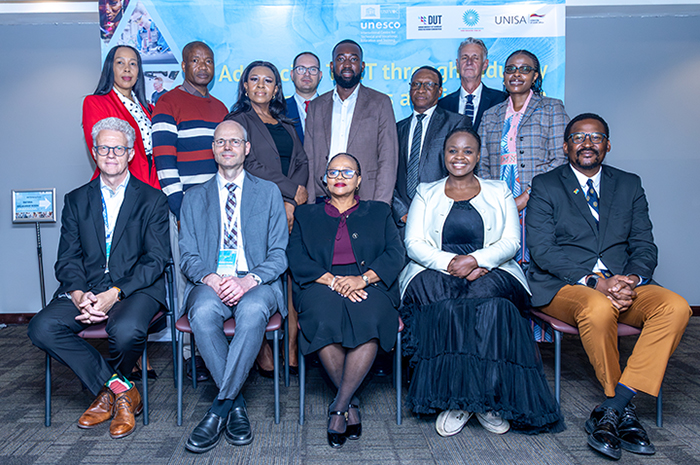
Front, from left: James Keevy, Chief Executive Officer, JET Education Services, South Africa; Friedrich Huebler, Head of UNESCO-UNEVOC; Dr Matsheliso Molapo, Acting Vice-Principal: Strategy, Risk and Advisory Services, Unisa; Dr Pinkie Ntola, Director: Technology Transfer and Innovation, DUT; and Sanele Zondi, TVETCGC Secretary
Back, from left: Lebogang Mpye, Executive Manager: Learning Programmes, CATHSSETA; Mutopi Rampedi, South African National Commission for UNESCO; Hellen Shube, Executive Manager: Corporate Services, CATHSSETA; Kenny Muscat, Programme Officer at UNESCO-UNEVOC; Chigozie Emmanuel Okonkwo, Education and Skills Advisor, African Union Commission; Prof Sello Mokoena, UNISA-UNEVOC Centre Coordinator; Peter Wels, Head of Education at UNESCO; and Prof Vaola Sambo, UNEVOC Centre Manager at Unisa
In exploring how technical and vocational education and training (TVET) can be repositioned as a key driver of economic resilience, social cohesion and inclusive growth, UNESCO-UNEVOC and Unisa, in collaboration with the Durban University of Technology (DUT) and JET Education Services, have commenced their three-day Bridging Innovation and Learning (BILT) conference under the theme Advancing TVET through Industry Partnerships and Innovation.
Unisa is a key partner, having recently launched a UNESCO-UNEVOC International Centre for Technical and Vocational Education and Training at its Science Campus. The conference takes place from 19 to 21 May 2026 at the Coastlands Umhlanga Hotel and Convention Centre in Umhlanga, Durban, KwaZulu-Natal.
The BILT event is a high-level global forum focused on strengthening TVET through industry collaboration and innovation. The event aims to advance TVET reform by sharing knowledge, strengthening industry partnerships, advancing innovations like AI-enabled learning and micro-credentials, and fostering collaboration across institutions, industries and regions. Notably, it features international guests, fellow UNEVOC Centres, regional skills development networks and partners from multilateral organisations.
The event builds on the recent launch of the Unisa Centre, which is central to developing responsive education systems that address national priorities while aligning with global workforce demands. As argued by Prof Puleng LenkaBula, Unisa Principal and Vice-Chancellor, during the establishment, "the launch represents more than an institutional milestone; it signals a commitment to shaping a future in which education is inclusive, innovative, and responsive to the demands of a rapidly evolving world of work".
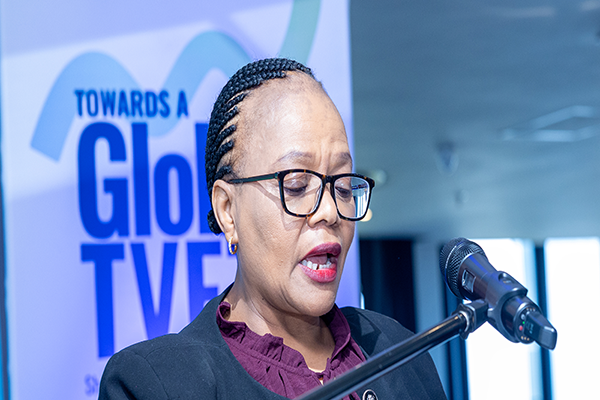
Dr Matsheliso Molapo
In her opening remarks, Dr Matsheliso Molapo, Acting Vice-Principal for Strategy, Risk and Advisory Services at Unisa, extended a warm welcome to everyone present. She stressed that the BILT conference comes at a crucial moment for TVET systems both in Africa and globally. "In ensuring that TVET becomes a true driver of sustainable development, social justice and employability across the continent," she said, "countries are reforming programmes, strengthening engagement with industry, and integrating digital and green skills into training pathways."
Underscoring the rationale of the event, Molapo noted that it aims to provide a platform for dialogue and knowledge exchange to support national TVET reform processes to facilitate cross-regional peer learning on models for co-designing, delivering and scaling programmes with employers, especially in response to digitalisation, the green transition and emerging occupations.
A further objective is to examine the enabling conditions for sustainable TVET industry partnerships, including policy frameworks and incentive mechanisms, as well as quality assurance for work-based learning and alignment with changing labour market needs.
Notably, Molapo emphasised that the forum contributes directly to the African Continental TVET Strategy 2025-2034 and the UNESCO Strategy for TVET 2022-2029, and supports the aspirations of the African Union’s Agenda 2063, which recognises skills development as a foundation for inclusive growth, industrialisation, and youth employability.
Emphasising the strengthening of collaboration among UNEVOC Centres, Molapo shared her hope that the event will culminate in a discussion paper with insights, case studies, and recommendations for innovative TVET programme design and delivery in collaboration with industry. "May your deliberations and relationships forged in the forthcoming days be impactful and continue to grow in support of learners, workers and communities across our continent and beyond," she concluded.
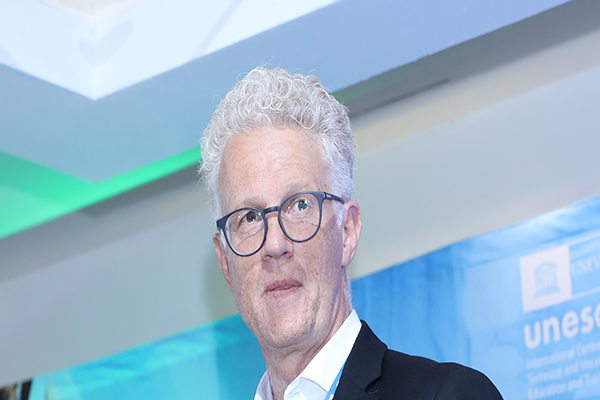
James Keevy
James Keevy, Chief Executive Officer of JET Education Services, outlined what a UNEVOC Centre can achieve through cooperation and engagement in the international space. On this basis, he highlighted JET’s involvement in the UNEVOC TVET leadership programme, its appointment to contribute to UNESCO-UNEVOC's global TVET strategy, and its work to enhance TVET through digital transformation.
He said that JET assists with the development and implementation of the African Continental TVET Strategy, and currently serves as an expert advisor on integrating AI into TVET practise. "The pathways into TVET are weak," he said. "South Africa needs an international youth transition system that provides TVET with workplace learning to unlock youth potential while advancing national development priorities."

Dr Nomcebo Mthombeni
Dr Nomcebo Mthombeni, Interim Director of Research and Postgraduate Support at the Durban University of Technology, indicated that the gathering cannot simply be another conference where challenges are merely discussed without moving towards solutions.
She argued that current partnership models are no longer fit for purpose in a rapidly changing world. "Across Africa and globally, TVET systems are being challenged to become more innovation driven and inclusive," Mthombeni continued. "The programme rationale calls for stronger partnership, digital transformation, and innovation, and work-based learning as foundational pillars for sustainable development. We cannot operate in silos; the future requires integrated ecosystems where universities, TVET colleges, industries, government, communities and international partners co-create."
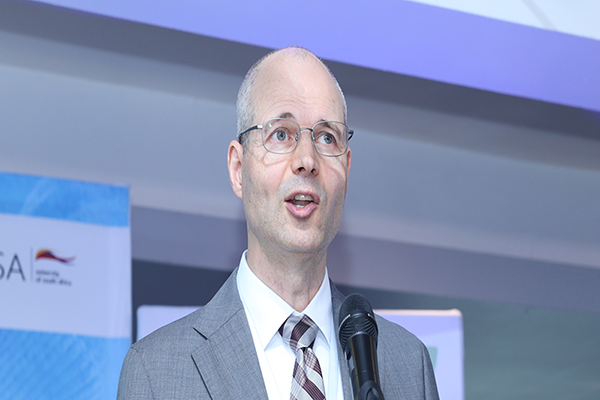
Friedrich Huebler
Friedrich Huebler, Head of UNESCO-UNEVOC, maintained that the event brought together partners who share a common vision for advancing TVET in Africa and across the globe. He highlighted that the collaboration among the three South African UNEVOC Centres in organising the event reflects UNESCO’s commitment to its two global priorities in the education sector: Africa and gender.
The three-day engagement will feature presentations from speakers across all regions and panel discussions covering different thematic areas.
* By Moleboheng Mpafa, Communication Intern, Department of Institutional Advancement
** Photography by Khathamzi Mduduzi, Unisa Multimedia Centre
Publish date: 2026-05-20 00:00:00.0

 Unisa SBL calls for shift from building houses to creating sustainable communities
 From law graduate to student leader: Tshegofatso Mmope's commitment to justice and empowerment
 Unisa Western Cape honours retirees and celebrates their enduring legacy
 South Africa's transport recovery faces its toughest test: Delivering reliability for all
 Unisa brings higher education opportunities closer to Central Karoo learners