

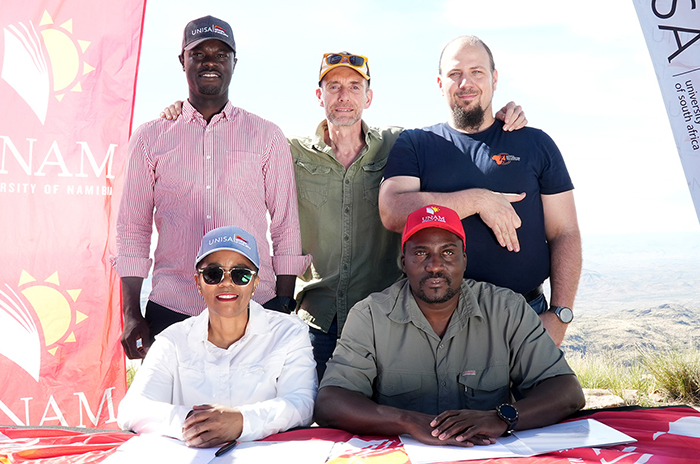
Looking on as the agreement is signed by (front, from left) Prof Puleng LenkaBula, Unisa Principal and Vice-Chancellor, and Prof Kenneth Matengu, UNAM Vice-Chancellor, were (back, from left) Prof James Chibueze, Distinguished Professor: Centre for Astrophysics and Space Sciences, Unisa, Prof Marc Klein Wolt, Project Director: Africa Millimetre Telescope, and Prof Michael Backes, Research Chair in Astronomy and Head of the Namibian H.E.S.S. Group, UNAM
The University of South Africa (Unisa) has strengthened its continental research footprint following a high-level visit to Namibia, culminating in the signing of a significant agreement with the University of Namibia (UNAM), advancing the Africa Millimetre Telescope (AMT) project.
On 24 and 25 February 2026, Unisa Principal and Vice-Chancellor, Prof Puleng LenkaBula, accompanied by senior management, academics and student researchers in astrophysics, and professional staff, engaged with UNAM Vice-Chancellor, Prof Kenneth Matengu, to affirm a joint commitment to advancing African-led research infrastructure, fostering postgraduate development and deepening long-term scientific collaboration.
The visit began with a joint media engagement at the Namibian Broadcasting Corporation (NBC) Studios, where the two vice-chancellors outlined the continental significance of the AMT and the broader institutional partnership.
LenkaBula emphasised that the collaboration represents more than a scientific initiative. "The Africa Millimetre Telescope is not simply a scientific instrument; it is an expression of Africa’s intellectual ambition," she said. "Through this partnership, we are strengthening African-led research infrastructure and ensuring that our continent contributes meaningfully to global knowledge production."

From left: Lot Ndamanomhata, Good Morning Namibia Anchor, with Prof Puleng LenkaBula, Unisa Principal and Vice-Chancellor, and Prof Kenneth Matengu, UNAM Vice-Chancellor (Photo credit: UNAMTV)
She further noted that Unisa’s participation reflects a strategic commitment to research excellence and continental cooperation, saying: "We are investing not only in a telescope, but in people, in postgraduate development, and in sustainable scientific ecosystems that will serve Africa for generations."
Matengu underscored Namibia’s readiness to host world-class scientific infrastructure, "Namibia offers exceptional observing conditions and a proven astronomy footprint. This partnership consolidates our role as a continental hub for advanced astrophysics while strengthening regional collaboration."
A central moment of the visit was the formal signing of an addendum to the existing memorandum of understanding between Unisa and UNAM. The signing took place on Gamsberg in Namibia’s Khomas Highlands, the future site of Africa’s first millimetre-wave radio telescope. Gamsberg has an elevation of 2 347 metres above sea level. This flat-topped mountain closely resembles Table Mountain in South Africa.

The Unisa and UNAM delegations getting ready for the four-hour journey to Gamsberg
The location itself symbolised the partnership's ambition. Positioned at high altitude with exceptionally arid air and minimal interference, Gamsberg is considered one of the world’s premier astronomy sites.
Under the agreement, Unisa has committed a foundational financial contribution of N$4 million and will provide technical expertise during the telescope's commissioning and operational phases. The partnership prioritises postgraduate training, skills transfer, joint research initiatives and public science outreach.
Unisa Registrar, Prof Moloko Sepota, highlighted the importance of the collaboration for students, "For our postgraduate and emerging researchers, this partnership creates access to world-class infrastructure and provides experiential learning opportunities that are transformative, enabling our students to participate directly in frontier science rather than observing it from a distance."
The delegation also visited the High Energy Stereoscopic System (H.E.S.S.), one of the world’s leading gamma-ray observatories, located near the future AMT site. The visit reinforced Namibia’s established scientific credibility and the region's growing astronomy ecosystem.
For both institutions, the collaboration signals confidence in Africa’s ability to host and lead complex research infrastructure projects. Participation in the AMT consortium positions Unisa and UNAM within a powerful international network, while ensuring that African institutions remain central to decision-making, innovation and discovery.
As engagements moved from the broadcast studio to the summit of Gamsberg, the message was clear: Africa is not standing at the margins of global science; it is building the instruments that will define its future.
* By Nolwazi Mwabi, Director: Communication, Marketing and Events, Department of Institutional Advancement
Publish date: 2026-03-02 00:00:00.0

 From Maramanzhi to master's: Unisa graduate champions Tshivenda through scholarship
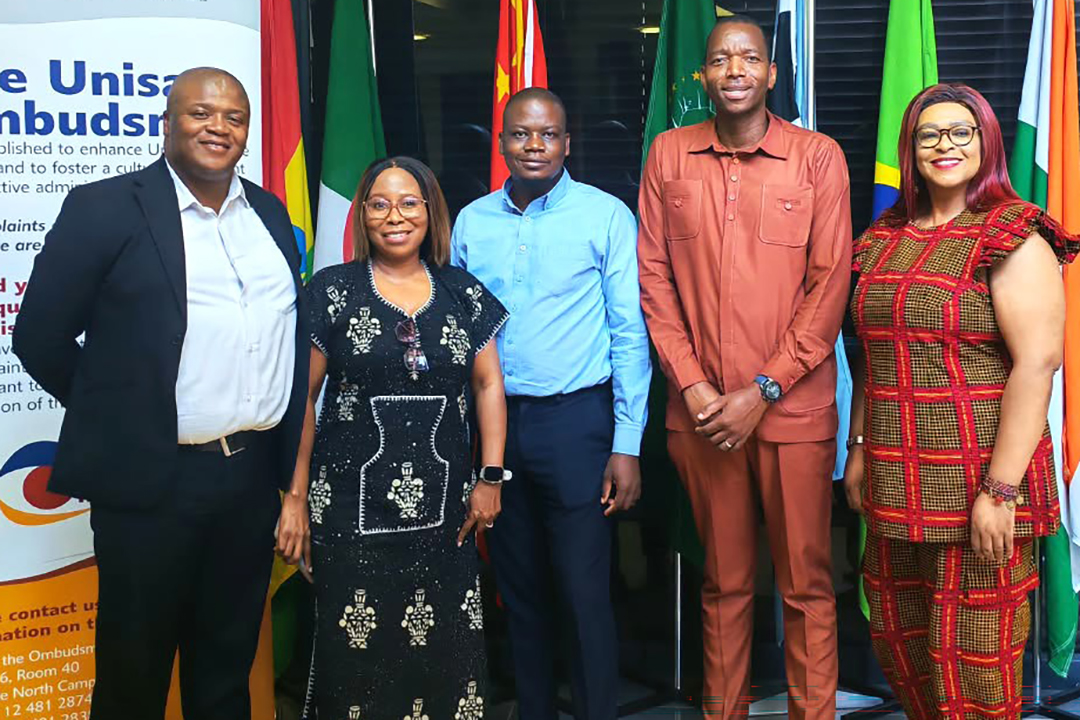 Unisa students help shape digital complaints system to improve accountability and service delivery
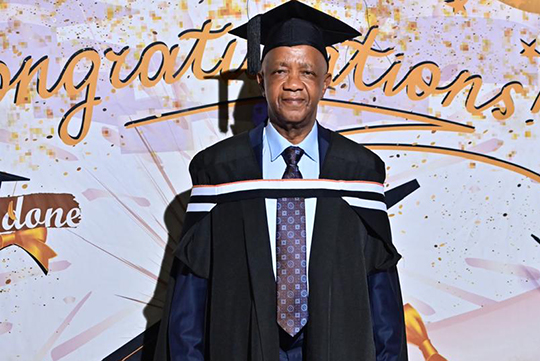 Age is no barrier to success: Former NAFCOC president earns Unisa master's degree at 71
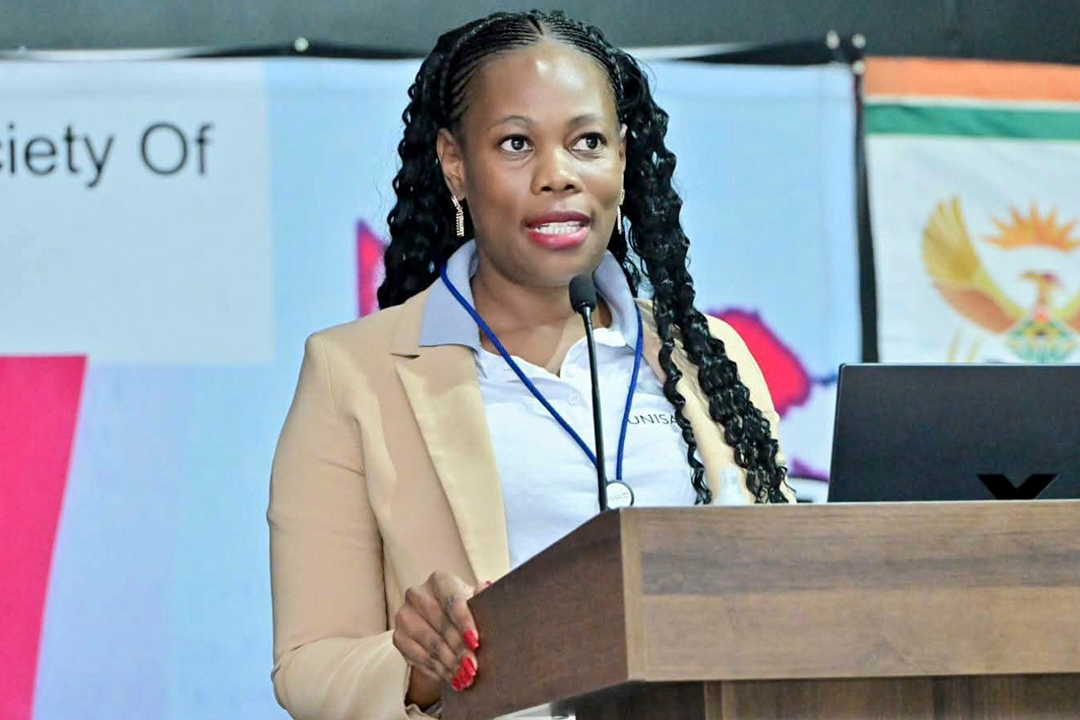 From academic setbacks to master's distinction: Unisa graduate's journey of resilience
 Ethiopian doctoral graduates highlight Unisa's growing impact across Africa