
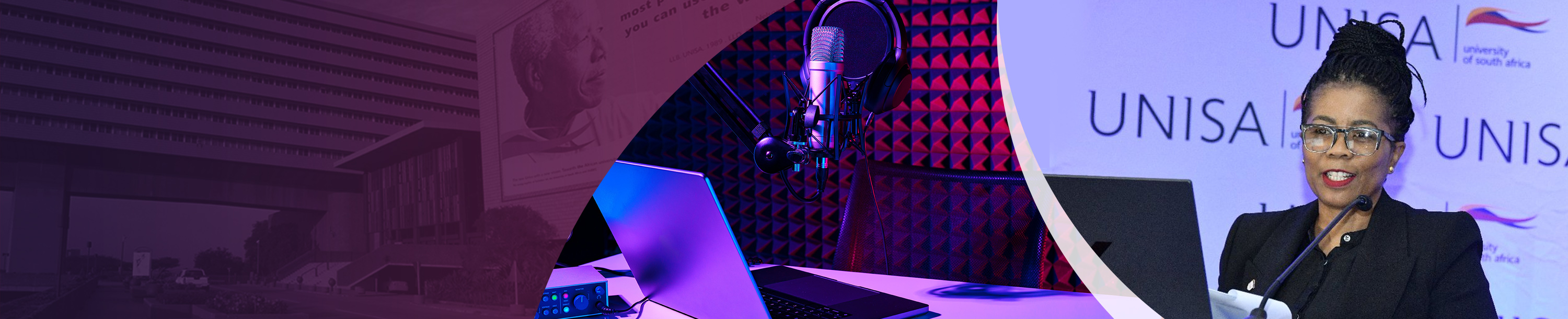
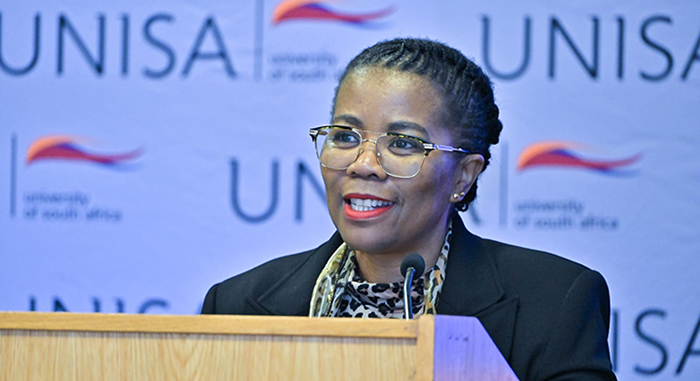
Prof Puleng LenkaBula, Unisa Principal and Vice-Chancellor
As the world confronts deepening urban inequalities, climate pressures, housing crises and growing demands for integrated urban development, Unisa Principal and Vice-Chancellor, Prof Puleng LenkaBula, will stand alongside international leaders at one of the most influential sustainable development platforms at the United Nations (UN), bringing a higher education perspective to global efforts to accelerate sustainable urban development.
LenkaBula is set to address the UN Local2030 Coalition Special Event, titled "Advancing SDG 11 and the New Urban Agenda: Local Action for Global Acceleration", during the High-Level Political Forum (HLPF) on Sustainable Development at the United Nations Headquarters in New York. The gathering will bring together representatives from UN Member States, local and regional governments, UN agencies, civil society organisations, development partners, academia and leaders committed to accelerating progress towards the Sustainable Development Goals (SDGs).
Her participation places Unisa and South African higher education at the heart of a critical global conversation about how local action can drive solutions to some of humanity’s most pressing challenges.
The 2026 HLPF arrives at a pivotal juncture. This year marks the 10th anniversary of the New Urban Agenda, adopted in Quito, Ecuador, during the Habitat III Conference in 2016. The milestone has prompted renewed international reflection on the progress, shortcomings and opportunities associated with sustainable urbanisation.
At the centre of these discussions is Sustainable Development Goal 11, which seeks to make cities and human settlements inclusive, safe, resilient and sustainable. Increasingly, policymakers and development practitioners regard SDG 11 not merely as another of the 17 goals, but as a critical catalyst for achieving the broader 2030 Agenda.
From access to adequate housing and basic services to sustainable urban planning, climate adaptation and resilience and economic justice, the state of cities has become a powerful indicator of whether global development ambitions are succeeding or failing.
Rooted in Unisa’s longstanding commitment to engaged scholarship and societal transformation, Prof LenkaBula will highlight the strategic role of universities as connectors between development data, knowledge and action. She will argue that higher education institutions are uniquely positioned to bring together urban development theorists and practitioners, government, industry, civil society and communities in collaborative ecosystems that co-create innovative, locally grounded solutions to complex urban challenges.
She will share how Unisa hardwired transdisciplinary and cross-sectoral ecosystems into its institutional strategy and planning to transcend traditional institutional boundaries and forge meaningful urban development alliances. At a time when many cities face interconnected challenges related to housing, water security, energy transitions, social cohesion and economic inclusion, LenkaBula is expected to advocate for approaches that recognise local territories not simply as beneficiaries of global development but as co-creators of development knowledge and innovation.
The emphasis on collaboration reflects growing international recognition that sustainable development must emerge from the realities of local communities and territories rather than from top-down policy frameworks alone.
The Coalition’s 2026 Special Event serves as an opportunity to showcase progress, share practical examples and mobilise stronger commitments toward locally driven development. Importantly, while SDG 11 remains the primary focus, the discussions intersect with other goals under review at this year’s HLPF, including SDG 6 (Clean Water and Sanitation), SDG 7 (Affordable and Clean Energy) and SDG 17 (Partnerships for the Goals). Each highlights a fundamental reality: the success of global development efforts depends on the strength of local institutions, partnerships and communities.
Recognised as a global leader in engaged scholarship and sustainable development, Unisa has built a strong reputation for co-creating and translating knowledge into meaningful, measurable impact through collaborative efforts that advance social, economic and environmental development objectives.
The invitation to participate in this prestigious United Nations platform reflects Unisa’s growing international standing as a mega-university committed to development significance. By embedding measurable development impact at the heart of its mission, the institution continues to demonstrate how higher education can serve as a powerful catalyst for sustainable development across local, national and global contexts.
For South Africa, Prof LenkaBula’s presence at the UN headquarters represents more than an institutional achievement. It highlights the increasingly important role African universities are playing in shaping global development discourse and in providing intellectual leadership on issues affecting communities across the majority world. Her participation in New York reinforces the institution’s growing influence in international conversations on sustainability and transformative development.
As global leaders gather to assess progress towards the 2030 Agenda, Prof LenkaBula’s message is expected to be unequivocal: achieving sustainable cities and communities requires a collective commitment that harnesses the strengths of government, academia, industry, civil society and citizens alike.
In a decade defined by complex urban challenges and widening inequalities, the University of South Africa’s Vice-Chancellor will bring a compelling reminder to the world stage that lasting solutions emerge when knowledge, partnerships and communities work together to shape a more just, resilient and sustainable future for all.
* By Dr Genevieve James, Deputy Director of Engaged Scholarship at Unisa
Publish date: 2026-07-13 00:00:00.0
 Too few vets, too many outbreaks: South Africa's FMD challenge
 Unisa sparks critical conversation on South Africa's unfinished land question
 From Unisa graduate to global fraud intelligence investigator
 Studying at Unisa was the right decision
 More than a game: Unisa is building health, teamwork and lasting connections through sport