
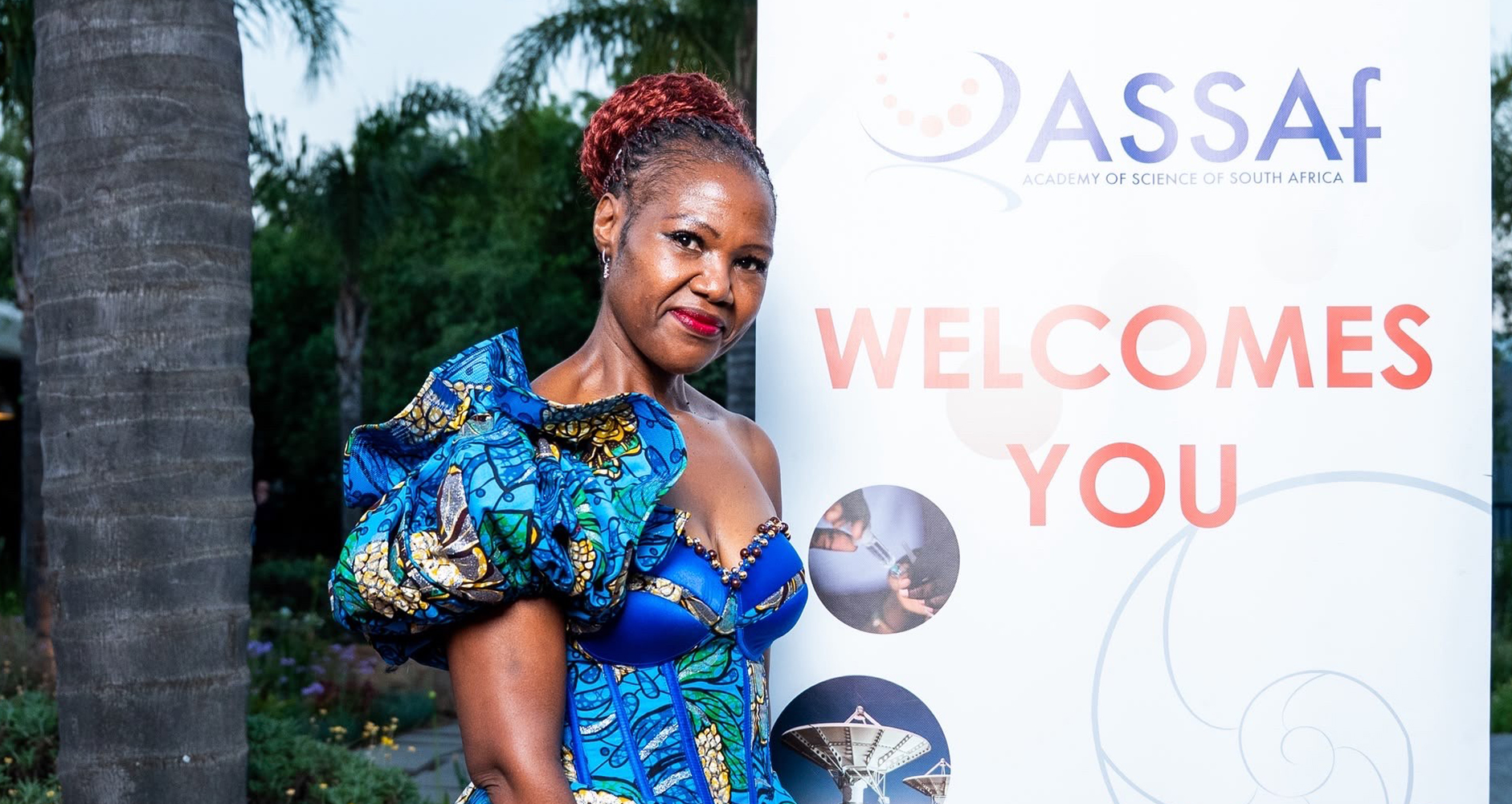
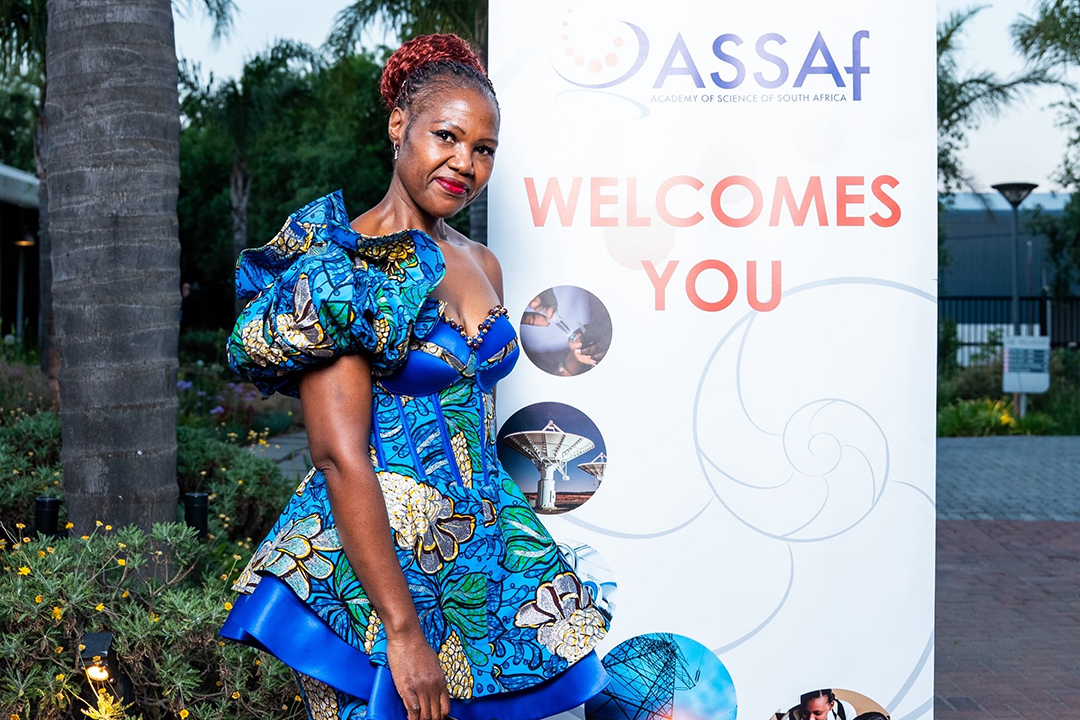
Seven academics associated with Unisa have been recognised among South Africa's leading scholars, joining the Academy of Science of South Africa as it celebrates three decades of advancing science and scholarship for the public good. In picture: Prof Patience Mthunzi
The Academy of Science of South Africa (ASSAf) has welcomed 78 new members, including seven academics identified by the University of South Africa (Unisa), during its 30th anniversary year.
The scholars were formally inaugurated as members at ASSAf's Annual Awards Ceremony on 29 October 2026. Their election recognises outstanding academic contributions and service to society across a wide range of disciplines. Established in May 1996, ASSAf is South Africa's official academy of science. It was formed in response to the need for an institution that would promote science and scholarship in support of the country's democratic development and the public good.
Its mandate covers all scholarly disciplines and is grounded in open-minded, evidence-based approaches to building knowledge. Election to ASSAf membership is one of the highest honours a South African scholar can receive. Candidates are selected through a rigorous peer-review process involving the Academy's full membership. The latest induction brings ASSAf's total membership to 843, strengthening its role in promoting intellectual leadership and evidence-based knowledge in South Africa.
The seven academics identified in the original Unisa submission represent a range of research fields, including nanoscience, biotechnology, photonics, computing, psychology, diplomacy and statistics.
They are:
Prof Malik Maaza: College of Graduate Studies, holds the UNESCO UNISA-iThemba LABS/NRF Africa Chair in Nanosciences and Nanotechnologies. His work contributes to research in nanoscience and nanotechnology. His distinctions include the ICO Galileo Galilei Medal and the Order of Mapungubwe: Silver.
Prof Michael Pillay: College of Education, is a Distinguished Professor in the Department of Life and Consumer Sciences. His academic work is in the life and consumer sciences.
Prof Patience Mthunzi: Kufa, College of Science, Engineering and Technology (CSET), leads the Centre for Photonics. Her work is in the field of photonics.
Prof Karen Renaud: College of Science, Engineering and Technology (CSET), is a computing scientist whose research focuses on human-centred security and privacy. Through international collaborations, her work seeks to improve end-user behaviour and strengthen digital security.
Prof Jo-Ansie van Wyk: College of Human Sciences, is a Research Professor in the Department of Political Sciences. Her scholarship focuses on political science and international relations, including nuclear diplomacy.
Prof Puleng Segalo: College of Human Sciences, is the Chief Albert Luthuli Research Chair and Professor of Psychology. Her work examines the intersections of historical trauma, gender and societal healing.
Prof James Allison: CSET, is a Distinguished Professor in the Department of Statistics and the Centre for Augmented Intelligence and Data Science. His work contributes to statistical research and data science.
Their recognition reflects the range of academic expertise represented across the university and the contribution of research to addressing complex social, scientific and technological challenges. Alongside the induction of its new members, ASSAf announced the election of Prof Tan Tieniu as an Honorary Foreign Associate Member. The category recognises distinguished scientists and scholars based outside South Africa who have made significant contributions to the country's scientific and scholarly landscape.
Prof Tan is recognised for his academic achievements and contributions to science, higher education and technological development. Through leadership positions at the Chinese Academy of Sciences and Nanjing University, he has helped strengthen institutional cooperation between Chinese and South African universities, science academies and government departments. His election brings the total number of ASSAf Honorary Foreign Associate Members to seven.
As the Academy marks 30 years of advancing science and scholarship, the induction of its latest members highlights the importance of research excellence, international collaboration and the application of knowledge for public benefit. For Unisa, the recognition of its academics reinforces the university's contribution to South Africa's research landscape and the development of knowledge across disciplines.
* By Sipho Jack, Journalist, Department of Institutional Advancement
Publish date: 2026-11-10 00:00:00.0

 How Unisa's research support helped Dr Janice de Wee complete her PhD
 From call centre agent to MBL graduate: Mashudu Munzhedzi's journey of determination
 Seven Unisa academics recognised by ASSAf as Academy marks 30 years
 Unisa champions disability inclusion and sign language accessibility ahead of International Day of Persons with Disabilities
 Unisa PhD student Gosego Sedikelo wins prestigious 2026 Eni Award for sustainable battery recycling research