

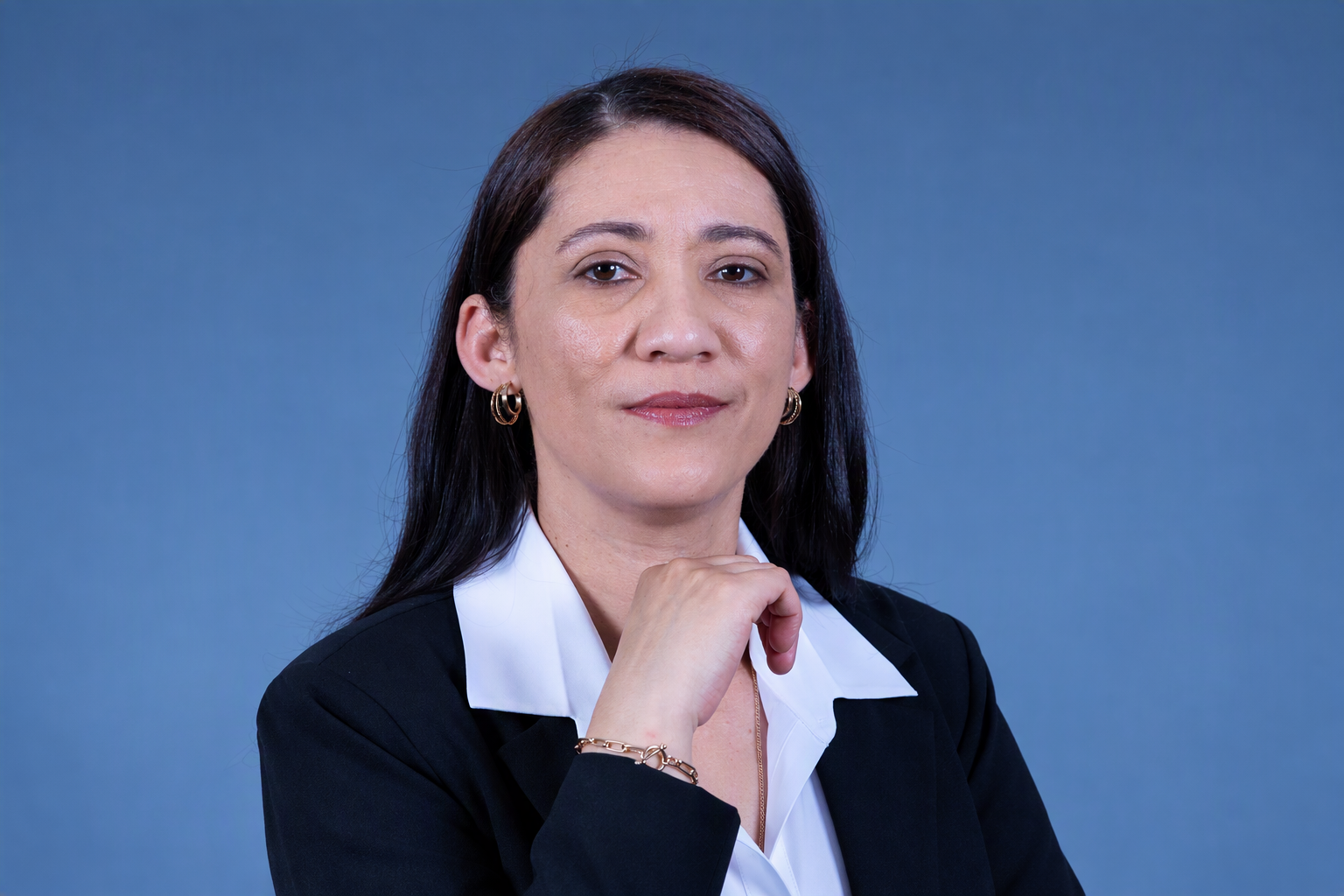
Dr Janice de Wee of the Unisa Library credits the university's Postgraduate Research Committee with providing invaluable practical, financial and research support during her PhD journey.
Completing a PhD is demanding under any circumstances, but doing so while managing a senior professional role, raising a family and navigating a global pandemic requires exceptional commitment. For Dr Janice de Wee of the Unisa Library, the journey was made possible not only by determination and careful planning, but also by the practical, financial and academic support she received from Unisa's Postgraduate Research Committee (PRC). Her experience highlights the importance of institutional support in helping professional and administrative staff turn their research ambitions into reality.
A member of Unisa's Postgraduate Research Group (PRG), Dr De Wee credits the support she received from the group's Postgraduate Research Committee (PRC) as invaluable in helping professional and administrative staff pursue postgraduate studies. Her journey in academic librarianship began after she completed a bachelor's degree in Information Science at the University of Pretoria. In 2003, she joined the university's Health Sciences Library, marking the beginning of a career that would shape her professional interests.
"This was my first working experience, and from the first day I walked in, I fell in love with academic libraries," she recalls. She completed her honours degree at the University of Pretoria in 2005 before focusing on family life. In 2011, she enrolled in the Carnegie-funded master's programme in Information Technology for librarians, graduating cum laude in 2013, shortly before the birth of her third daughter. Dr De Wee joined Unisa in June 2016 and took responsibility for the Library's Research Planning and Quality section. The section provides management support in areas including operational and strategic planning, monitoring and reporting, quality assurance, risk management, business continuity and compliance. It also supports strategic research activities and projects within Library and Information Services (LIS).
The role exposed her to broader institutional governance practices, processes and the interdependencies that contribute to effective team management. In October 2026, she was seconded to serve as Acting Executive Director: Library and Information Services. Dr De Wee began her PhD studies at the University of Pretoria in 2017. Her research focused on developing a risk-focused social media governance framework for academic libraries. The topic brought together her interests in social media, risk management, governance and strategic planning. It was also informed by her earlier experience as a library and information services risk champion and social media trainer.
She wanted to explore a research area that would take her beyond the traditional boundaries of library science and allow her to contribute new thinking to the profession. "When I was thinking of doing my PhD, I wanted to move beyond the traditional library sciences space and push the boundaries. One must have a topic that will keep you interested over the duration of your studies. One must also keep in mind that you're planning for something that has not happened, and that's what makes it so fascinating, as you can be so creative in your response." Her research addresses the need for academic libraries to manage social media platforms within appropriate governance and risk management frameworks. It offers strategic and policy-driven guidance on the use of digital communication tools in library environments.
Pursuing doctoral research while managing professional and family responsibilities presented considerable challenges. These became even more demanding when her fieldwork coincided with the COVID-19 pandemic, bringing remote working and homeschooling into an already busy schedule. "It was a very difficult time to do doctoral studies, but my husband and mother were my strength at home. They were a huge part of my personal support system," she says. Support from her department also made a difference. She was granted four months of research development (RD) leave, which allowed her to concentrate on data collection, analysis and writing.
At the time, the PRC was responsible for approving RD leave applications from PRG members. Although this process is now overseen by Human Resources, Dr De Wee encourages colleagues to factor research leave into their doctoral planning from the outset. She believes that having dedicated time for research can make a significant difference, particularly for employees who must balance demanding jobs with academic commitments. Dr De Wee describes the practical and financial assistance she received from the PRC as an important part of her doctoral journey.
"The support that the PRC gave me was invaluable," she says. She also acknowledges the guidance and responsiveness of Ms Amisha Benode, Programmes and Projects Officer of the PRG and PRC, particularly in helping her navigate information requirements and research processes. The assistance extended beyond administrative guidance. Dr De Wee successfully applied for funding towards data analysis and the editing of her thesis, support that helped her complete important stages of the research.
"The support extended beyond guidance. I applied for funding for data analysis and the editing of my thesis, and this assistance made a significant difference to my doctoral journey. I will be forever grateful to Unisa and the PRC for that support," she says. She also received assistance with matters relating to ethical clearance and opportunities to participate in international conferences. Although travel-related complications prevented her from attending one conference, the experience encouraged her to continue developing her research into an article for publication. For Dr De Wee, the support available to professional and administrative staff through the PRG and PRC is an important institutional resource. She believes Unisa should take pride in providing a structured support system for this staff category, which she says is not always catered for at other South African universities.
Beyond institutional assistance, Dr De Wee emphasises the importance of peer support in navigating the demands of doctoral studies. She encourages colleagues considering postgraduate research to plan carefully, build relationships with people who understand the process and recognise that completing a doctorate requires both personal commitment and support from others. "My advice to other professional and administrative staff is to plan carefully, build a support network and find people who understand the doctoral journey. Never underestimate the importance of surrounding yourself with supportive people."
Her experience demonstrates how targeted institutional support can help professional and administrative staff overcome some of the practical and financial barriers associated with postgraduate research. For Dr De Wee, completing her PhD was not only a personal academic milestone but also an opportunity to develop research that responds to challenges within the academic library sector. Her journey highlights the value of combining professional experience with academic inquiry, while showing how family support, peer networks and institutional programmes can help turn doctoral ambitions into achievement.
* By Rivonia Naidu-Hoffmeester, Professional Research Committee (PRC) Marketing and Communications Convener
Publish date: 2026-11-10 00:00:00.0

 How Unisa's research support helped Dr Janice de Wee complete her PhD
 From call centre agent to MBL graduate: Mashudu Munzhedzi's journey of determination
 Seven Unisa academics recognised by ASSAf as Academy marks 30 years
 Unisa champions disability inclusion and sign language accessibility ahead of International Day of Persons with Disabilities
 Unisa PhD student Gosego Sedikelo wins prestigious 2026 Eni Award for sustainable battery recycling research