
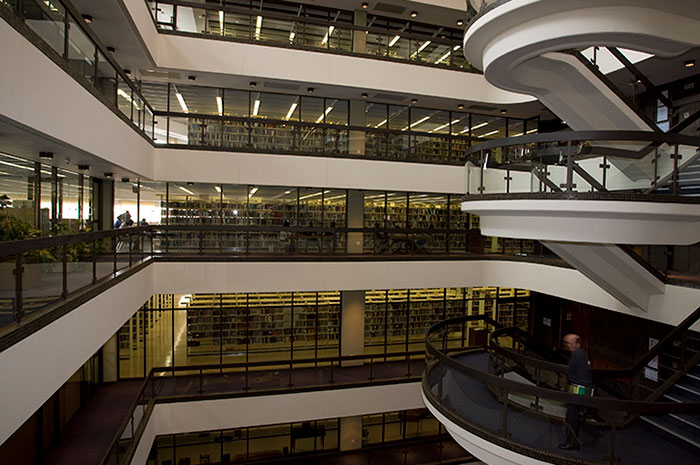
In this article, Professors Mpho Ngoepe and Lorette Jacobs discuss the Unisa Library’s identity as both a heritage institution and a forward-looking knowledge infrastructure.
In his Hiddingh-Currie award-winning autobiography, His story is history, published by Unisa Press, Dr Tlou Setumu asked a daring question: When does life begin? In the same text, Setumu offers different answers from different people. Some say life begins at 40, others say at birth. Some say it starts in the womb, while others say it begins when a person starts to stand on their own. Indeed, people perceive the beginning of life differently. This is also true of the establishment of many entities. For example, some universities which merged in 2004/05 only recently celebrated their 20th anniversary despite the existence of their precursor institutions.
The relevant question here is: what marks the birth of a university library? Too often, institutional histories settle for a single, convenient date – the moment when a library is formally established, funded and housed within governance structures. While this moment is undoubtedly important, it offers only a partial truth. For example, the history of the Unisa Library and Information Services (LIS) demands a more nuanced reading, one that recognises not just a point of origin, but a process of becoming.
This year, Unisa LIS celebrates its oak jubilee (80 years), being counted among the strongest in the voice of King David, under the theme Timeless treasures of empowering futures: Unisa LIS 1946 to 2026. However, it should be noted that the oldest record in Unisa LIS's custody is dated 1841, making it 185 years old. As the mother institution, Unisa itself was formally established in 1873, which complicates matters and makes Setumu's question more relevant. The LIS celebration will include a mini-documentary, murals depicting the history of the LIS, a coffee table book and a symposium.
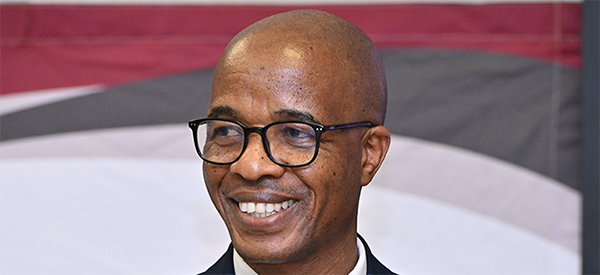
Prof Mpho Ngoepe, Acting Vice-Principal: Research, Postgraduate Studies, Innovation and Commercialisation
Now, the concept of 185 in 80, an improper fraction, captures this layered reality as approximately 185 years of intellectual heritage intertwined with 80 years of formalised LIS. This duality invites us to rethink what a library or archive is. Too often, libraries and archives are defined as buildings or administrative units, established at specific dates in the organisation's or unit's history. The "formal date" of inception is the moment marked by charters, budgets, staffing and governance structures, all clear indicators of institutional maturity and legitimacy. The "formal date" provides a neat narrative that aligns well with accreditation requirements, donor expectations and administrative reporting.
However, this "formal date" narrow interpretation excludes the evolving knowledge ecosystem rooted in both material practice and institutional intention. Limiting the inception of a library to its formal opening date erases the intellectual labour, informal networks and early knowledge practices that precede formalisation. If we shift our gaze from governance to materiality, a different history emerges.
At Unisa, as in many universities, the library did not suddenly emerge fully formed. It was preceded by quieter, less visible acts of accumulation, organisation and access. The true beginnings of the library lie in the early collection of sources – donations, acquisitions and the gradual formation of catalogues and access systems. This "material origin" tells us far more about the institution's intellectual ambitions than any charter ever could. It reveals the knowledge valued as important to preserve, how access to information was mediated and whose voices and disciplines were prioritised. Following the "material origin" implies that the library was not born in a boardroom; rather, it was born in the circulation of information to advance knowledge constructs.
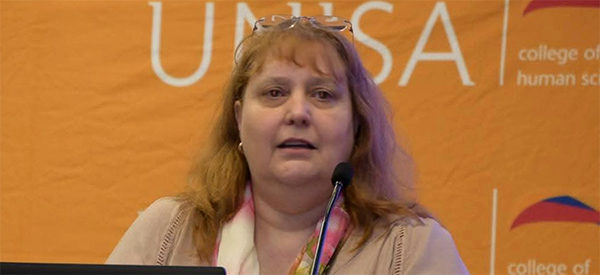
Prof Lorette Jacobs, Tuition Manager: College of Human Sciences
For Unisa, this notion of a "material origin" is not merely an interesting historical aside - it is foundational to understanding the institution’s identity as moving from being a pioneer of correspondence education to a comprehensive open, distance and eLearning institution. Long before the formalisation of LIS, the university’s intellectual project was already shaped by a fundamental constraint and opportunity: how to provide students who were not physically present on campus with access to information. The early circulation of information through distributed texts, correspondence-based learning materials, donated collections and rudimentary cataloguing practices reflects an emergent philosophy of access.
These early practices of circulation effectively prefigured the core principles that would later define Unisa’s CODeL model. The decentralisation of access, the mediation of information through systems rather than spaces, and the prioritisation of reach over proximity were already present in embryonic form. What may appear, in retrospect, as fragmented or informal processes (loan systems, mailed materials, early catalogues) can, in fact, be read as proto infrastructures of distance learning. As the Unisa LIS evolved, these foundational practices were progressively formalised and scaled. Such scalability created the foundation of a library service that became a central infrastructure in the realisation of a CODeL university.
The "material origin" of the Unisa LIS should be understood as the moment where access was first enacted, not declared. It is in these early acts of gathering, organising and circulating information that the DNA of Unisa’s contemporary digital and open-access strategies can be found. The scale may have changed dramatically, but the underlying logic remains consistent: to move information resources to the student, rather than require the student to move to the information resources. Now it is even done through the library app.
Rather than choosing between "formal date" and "material origins", a more compelling approach is to hold both in tension as LIS celebrates. The history of Unisa LIS is best understood as a continuum; a movement from roots to reach. The root phase commenced with collection building, informal cataloguing and early access practices, whilst the formal governance of the library services can mark the rooted phase. This dual timeline reframes the library as a dynamic system rather than a static entity, where formal structures do not replace early intellectual practices but are instead absorbed, scaled and sustained by them.
The dual-timeline narrative embedded in "185 in 80" provides a compelling account of continuity, growth and sustained institutional impact. By tracing both the early material accumulation of knowledge and the later formalisation of library services, the narrative demonstrates a trajectory of development that is both deep and resilient. This has tangible value in contexts of accreditation and funding, where institutions are required to evidence not only current capacity but also historical depth, stability and ongoing relevance. The "185 in 80" narrative strengthens the library’s identity as both a heritage institution and a forward-looking knowledge infrastructure.
* By Prof Mpho Ngoepe, Acting Vice-Principal: Research, Postgraduate Studies, Innovation and Commercialisation, and Prof Lorette Jacobs, Tuition Manager: College of Human Sciences
Publish date: 2026-04-09 00:00:00.0
 Africa Day Lecture champions African unity
 Cross-institutional collaboration delivers lasting learning impact
 Unisa hosts high-profile business breakfast in buildup to Africa Day Lecture
 Unisa conference continues to strengthen pathways from learning
 Revival of COMSA's Polokwane branch marks new age for communication students