

Success at university involves more than attending lectures, completing assignments and passing examinations. It requires students to develop the knowledge, confidence and skills needed to navigate academic challenges, remain engaged with their studies and progress towards graduation.
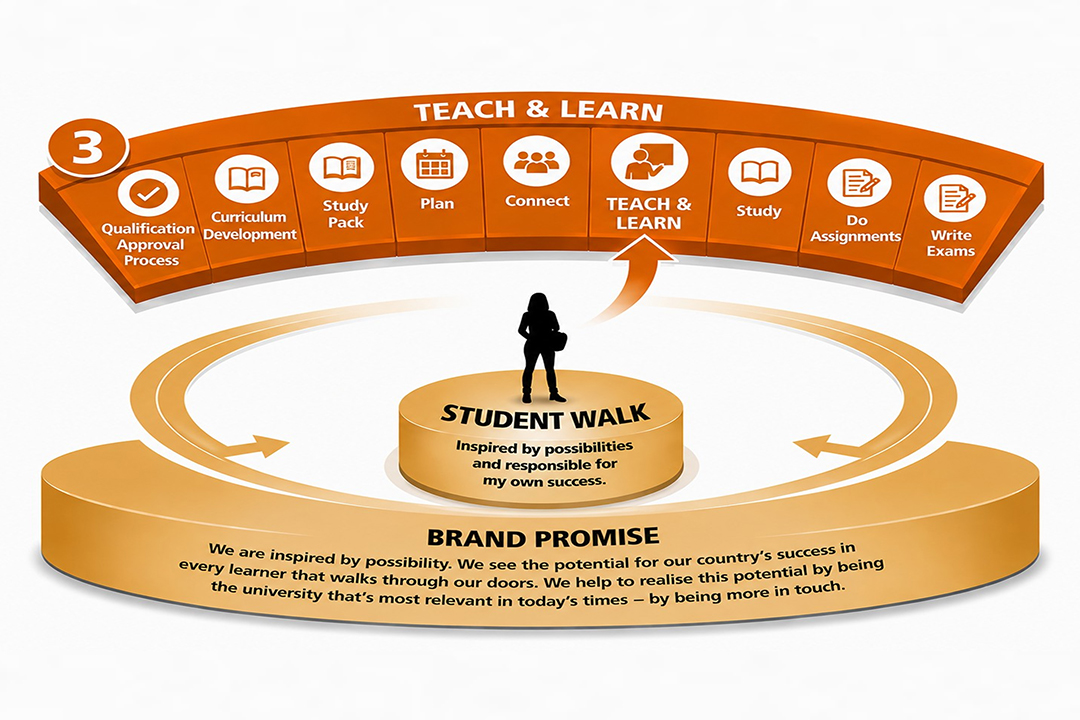
Teaching and learning form the longest and arguably most demanding phase of a student's journey at the University of South Africa (Unisa). From planning study schedules and engaging with course material to submitting assignments, preparing for examinations and interacting with lecturers and fellow students, each activity contributes to academic development.
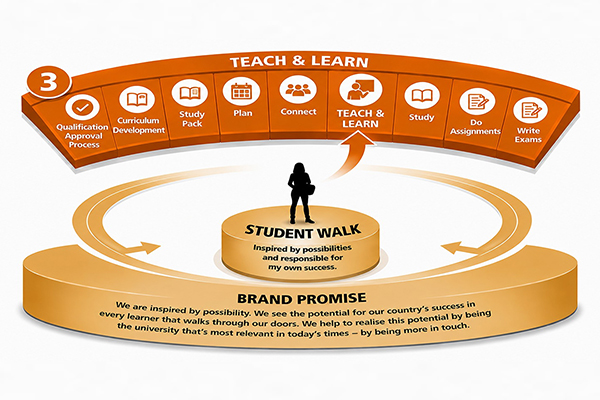
From numeracy skills and early academic support to peer-assisted learning, Unisa helps students overcome challenges and progress towards graduation.
For students studying through open distance and e-learning (ODeL), this journey also requires independence, self-discipline and the ability to manage competing responsibilities.
Recognising these demands, Unisa's Student Retention Unit (SRU) offers a range of programmes and support mechanisms designed to strengthen students' academic skills, identify potential difficulties early and provide appropriate assistance when challenges arise.
These initiatives form part of the university's broader commitment to student success, inclusive education and lifelong learning, contributing to the objectives of Sustainable Development Goal 4 (Quality Education) and South Africa’s National Development Plan 2030, which recognises education and skills development as essential to expanding opportunities.
Numerical skills are important across many fields of study, including disciplines that do not require students to specialise in mathematics.
Whether interpreting graphs, calculating percentages, analysing statistics or working with measurements, students frequently encounter numerical information in their academic work.
For those who have not studied mathematics for some time, completed Mathematical Literacy at school or simply need to refresh their skills, these tasks can sometimes present difficulties.
To help students build confidence, the SRU developed the Numeracy Course, a self-paced learning programme that provides an accessible environment in which students can strengthen their understanding of fundamental mathematical concepts.
The course covers arithmetic, geometry and statistics, allowing students to practise calculations, interpret numerical information and develop problem-solving skills.
Its flexible structure enables students to revisit lessons, repeat exercises and spend additional time on concepts they find challenging. This is particularly valuable in an ODeL environment, where students enter higher education with different educational backgrounds and levels of mathematical preparation.
The course also introduces students to digital learning tools such as ThatQuiz, Wolfram Alpha and ChatGPT, which can provide additional explanations, support practice and help students explore difficult concepts.
Importantly, students are encouraged to use these technologies to deepen their understanding rather than simply obtain answers.
By strengthening foundational numeracy and encouraging responsible technology use, the programme supports independent learning and helps students approach academic tasks with greater confidence.
Even well-prepared students may encounter difficulties during their studies. Academic pressures, personal responsibilities, limited connectivity and other circumstances can affect their ability to remain engaged.
However, students do not always seek assistance when these challenges first arise.
In an ODeL environment, where lecturers and students may not interact face to face regularly, early signs of disengagement can also be difficult to identify.
To address this challenge, the SRU developed the Early Alert System (EAS), which helps lecturers, regional staff and other university support structures identify patterns in student engagement that may require attention.
The system brings together information relating to students' academic participation and progress, including registration patterns, learning platform activity, assignment participation and previous academic performance.
Rather than relying on a single indicator, the EAS considers combinations of information that may suggest a student requires additional support.
For example, a student who has not accessed a learning platform recently may be studying offline and progressing well. However, limited platform activity combined with missed assignments or other indicators of disengagement may warrant further investigation.
The system does not automatically assume that a student is likely to fail. Instead, it provides information that helps university staff make informed decisions about when and how to intervene.
Lecturers can use these insights to monitor participation in their modules, while regional staff and other support structures can identify opportunities for timely communication and assistance.
This approach supports Unisa's efforts to use digital technologies responsibly to strengthen student support and improve the learning experience.
Identifying a student who may be experiencing academic difficulties is only the first step. Effective support also requires appropriate action, communication and follow-up.
The Referral Mechanism (RM) provides authorised university staff with a structured way to respond to concerns identified through student engagement and academic progress information.
Through the system, authorised users can access relevant student information and determine whether further assistance may be necessary.
For instance, when a student misses an assignment or shows reduced engagement with learning activities, a lecturer or support staff member may decide to contact the student, encourage participation, arrange additional assistance or continue monitoring progress.
An important feature of the RM is its ability to document interventions.
When a lecturer, regional staff member or another authorised user contacts or assists a student, the action can be recorded in the system. This creates a history of the support provided, promotes continuity and helps prevent unnecessary duplication of interventions.
Where specialised assistance is required, referrals can also be documented, together with feedback on the action taken.
This creates a more coordinated process, linking the identification of a concern with the support provided and the subsequent outcome.
Although the RM is a digital platform, its primary purpose is to strengthen human interaction and responsive student support.
Data can indicate that a student's participation has changed, but it cannot always explain why. University staff therefore remain essential in understanding individual circumstances, engaging with students and identifying appropriate solutions.
Together, the EAS and RM demonstrate how data-informed approaches can complement personalised support in an open distance learning environment.
While early identification and intervention are important, student success also depends on opportunities to engage actively with academic content and develop effective learning strategies.
Building on initiatives such as the Academic Integrity Course (AIC), which promotes ethical and responsible academic engagement, the SRU oversees additional learning support programmes aimed at strengthening academic performance.
Among these is Supplemental Instruction (SI), an internationally recognised peer-learning approach that encourages students to learn collaboratively.
SI is based on the principle that students can deepen their understanding of academic content by discussing ideas, asking questions and working through challenges with their peers.
The programme provides structured learning opportunities facilitated by trained SI Leaders, who are senior students who have demonstrated strong academic performance in the relevant modules.
Rather than repeating lectures or simply providing answers, SI Leaders guide discussions and encourage participants to explore complex concepts, share perspectives and develop their own understanding.
These sessions create a supportive environment in which students can ask questions freely, test their knowledge and learn from one another.
The approach is particularly valuable in modules where students may struggle with challenging concepts or require additional opportunities to engage with course material.
Beyond strengthening subject knowledge, SI encourages critical thinking, problem-solving, academic confidence and independent learning.
It also creates opportunities for students to develop a sense of academic community, an important consideration in an ODeL environment where opportunities for informal interaction may be limited.
By promoting collaborative learning and peer support, the programme contributes to a more inclusive learning experience while empowering students to take an active role in their academic development.
Although the Numeracy Course, EAS, RM and SI serve different purposes, they contribute to a shared objective: helping students develop the skills, confidence and support networks needed to succeed.
The Numeracy Course strengthens foundational academic competencies, while the EAS helps identify potential difficulties before they become more serious.
The RM enables university staff to respond through coordinated interventions and follow-up, and SI creates opportunities for students to strengthen their understanding through structured peer learning.
Together, these initiatives reflect a student-centred approach that recognises academic success as a continuous process rather than a single outcome measured at examination time.
They also demonstrate the value of combining digital innovation, academic guidance and human support to address the different needs of students studying through open distance and e-learning.
By helping students remain engaged and overcome academic barriers, these programmes contribute to Unisa's commitment to widening meaningful participation in higher education.
This work supports SDG 4's emphasis on inclusive and equitable quality education and lifelong learning, while responding to the National Development Plan's ambition to strengthen educational achievement and develop the skills required for personal and national development.
Ultimately, student success depends not only on access to higher education but also on ensuring that students receive the support needed to progress, complete their qualifications and apply their knowledge beyond the university.
The journey towards academic success does not end when students complete their final examinations.
In the next instalment of this series, Step 4: Graduate and Lifelong Learning, we explore additional SRU support programmes and the transition from university studies to the next stages of students' professional and personal development.
The focus will be on how students can build on their academic achievements, prepare for future opportunities and continue developing the knowledge and skills needed in a changing world.
* By Jaroslaw Adamiak, Student Success Practitioner (DTSFL), Student Retention Unit
Publish date: 2026-10-14 00:00:00.0

 From law graduate to student leader: Tshegofatso Mmope's commitment to justice and empowerment
 Unisa brings higher education opportunities closer to Central Karoo learners
 From learning to success: Supporting students throughout their studies
 Eight Unisa scholars among Africa's Top 100 education researchers
 Unisa to host global experts to advance ocean research and coastal resilience