

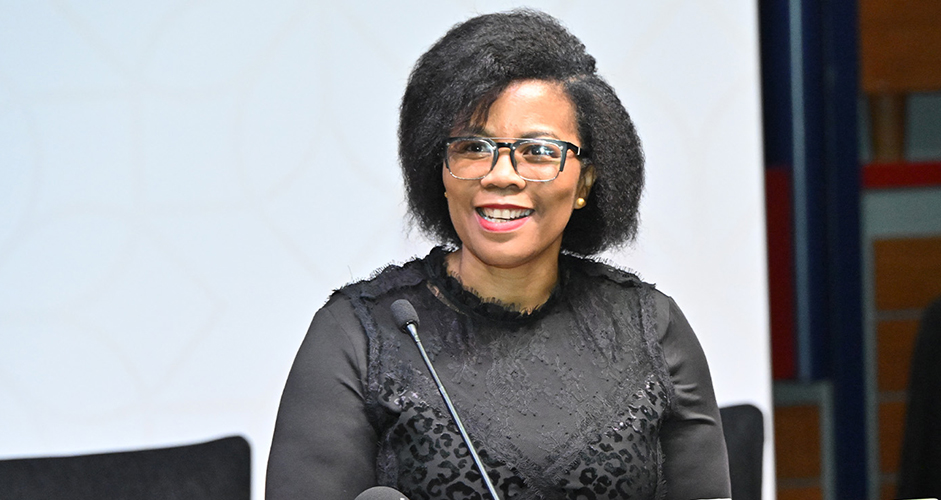
Prof Puleng LenkaBula: Unisa Principal and Vice-Chancellor Prof Puleng LenkaBula has congratulated eight university researchers recognised among Africa's top 100 education scholars.
The University of South Africa (Unisa) has emerged as one of the continent's leading institutions for educational research representation, with eight of its academics featuring among Africa's top 100 education researchers and Prof Paul Prinsloo securing third position in Africa and second in South Africa.
According to the AD Scientific Index's 2027 rankings, updated on 10 October 2026, Unisa has the second-highest number of researchers on the continental Education top 100 list, behind the University of Johannesburg.
The achievement places Unisa ahead of several prominent South African universities in terms of representation on this list, highlighting the breadth of its research expertise and contribution to educational scholarship.
Congratulating the eight academics, Unisa Principal and Vice-Chancellor Prof Puleng LenkaBula said their recognition demonstrated the university's intellectual strength and contribution to global knowledge production.
"This recognition affirms the calibre, depth and international relevance of scholarship produced at the University of South Africa. To have eight of our academics recognised among Africa's 100 leading education researchers is a significant achievement, not only for the individuals concerned but for the university and the broader African higher education sector," she said.
"What makes this recognition particularly meaningful is the diversity of scholarship represented. Our researchers are contributing to important conversations on education, digital transformation, student success, educational leadership, Indigenous knowledge systems, decoloniality, social justice and sustainable development."
Prinsloo, a Research Professor specialising in open and distance learning in Unisa's College of Economic and Management Sciences, is the university's highest-ranked academic in the Education category.
He occupies third position in Africa and second in South Africa, with a career H-index of 50 and a five-year H-index of 40.
The H-index measures research productivity alongside citation impact. An H-index of 50 means that at least 50 of Prinsloo's publications have each been cited at least 50 times by other researchers.
His five-year H-index provides a separate measure of more recent scholarly influence.
Prinsloo's research examines learning analytics, the ethical use of student data, digital identity and student success in open distance education.
His work addresses important questions about how universities can use technology responsibly to improve learning experiences while protecting students' rights and promoting equitable access to education.
These areas are particularly relevant to Unisa's open distance e-learning model, where digital innovation and student support are central to widening access to higher education.
His scholarship also intersects with the university's research priorities in the Fourth Industrial Revolution and Digitalisation, particularly the responsible use of emerging technologies to address educational and societal challenges.
While Prinsloo leads Unisa's representation, the inclusion of seven additional academics demonstrates the university's research strength across different disciplines.
The University of Johannesburg leads institutional representation on Africa's top 100 Education list with nine researchers, followed by Unisa with eight and Stellenbosch University with seven.
The universities of the Witwatersrand, KwaZulu-Natal and North-West each have six researchers, while the University of Cape Town has five and the University of Pretoria four.
Unisa therefore occupies second position among South African universities by the number of researchers appearing on this particular continental list.
This is a measure of representation among the top 100 researchers, rather than an overall ranking of universities.
The eight Unisa-affiliated academics and their continental positions are:
|
Researcher |
African rank |
Career H-index |
|
Prof Paul Prinsloo |
3 |
50 |
|
Prof Norma Romm |
28 |
34 |
|
Prof Harrison Atagana |
47 |
29 |
|
Prof Vuyisile Msila |
50 |
28 |
|
Prof Eleanor Lemmer |
55 |
28 |
|
Prof Victor J. Pitsoe |
75 |
25 |
|
Prof Micheal M. van Wyk |
77 |
25 |
|
Prof Ashley Gunter |
98 |
23 |
LenkaBula said the collective recognition demonstrated Africa's capacity to contribute meaningfully to international intellectual debates.
"This achievement demonstrates that African universities are not merely consumers of knowledge produced elsewhere in the world. We are producers of knowledge, contributors to global intellectual debates and active participants in shaping the future of education and society," she said.
"Our scholars are ensuring that African experiences, perspectives and intellectual traditions occupy their rightful place in the global knowledge economy."
The eight researchers represent different fields of scholarship, reflecting Unisa's contribution to educational transformation, research innovation and knowledge production.
Among them is Prof Norma Romm, ranked 28th, whose research focuses on transformative research practices, Indigenous research ethics and participatory approaches to knowledge production.
Her work challenges conventional research practices and advances more inclusive approaches that recognise the importance of African and Indigenous knowledge systems.
Prof Ashley Gunter, ranked 98th, contributes scholarship in geography, spatial development, decolonial education and distance learning.
His recognition follows his election as a Fellow of the Society of South African Geographers in September 2026, acknowledging his contribution to advancing geographical scholarship.
The inclusion of Profs Harrison Atagana, Vuyisile Msila, Eleanor Lemmer, Victor J. Pitsoe and Michael M. van Wyk further illustrates the breadth of research expertise associated with Unisa.
LenkaBula emphasised that academic excellence must be accompanied by a commitment to addressing the challenges facing society.
"Their collective scholarship addresses questions that are fundamental to the future of higher education and society. These include how we make education more accessible and inclusive, how technology can be harnessed responsibly to improve learning outcomes, how educational institutions can become more responsive to changing social and economic realities, and how African and Indigenous knowledge systems can inform new approaches to research, teaching and development."
She said the importance of these questions extended beyond universities.
"These are not simply academic questions. They are matters that affect the lives and opportunities of millions of people, particularly on a continent where access to quality education, digital inclusion, inequality and the development of human capabilities remain central development challenges."
Unisa's research priorities are closely connected to international, continental and national development ambitions, particularly those concerning education, innovation and the advancement of human capabilities.
The United Nations Sustainable Development Goal 4 promotes inclusive and equitable quality education and lifelong learning opportunities, while the African Union's Agenda 2063 identifies education, science and innovation as essential to Africa's transformation.
South Africa's National Development Plan 2030 similarly emphasises education, research and skills development as foundations for reducing poverty, inequality and unemployment.
LenkaBula said these commitments were central to Unisa's academic mission.
"At Unisa, our commitment to research excellence is inseparable from our responsibility to contribute to the United Nations 2030 Agenda for Sustainable Development, particularly Sustainable Development Goal 4, which calls for inclusive and equitable quality education and lifelong learning opportunities for all."
She added that universities had a critical responsibility to contribute to Africa's development.
"Our research agenda also contributes to the aspirations of the African Union's Agenda 2063, which envisions a prosperous, integrated and peaceful Africa driven by the knowledge, skills, creativity and aspirations of its people. We recognise that African universities have a fundamental role to play in producing the research, innovations and intellectual leadership required to realise that vision."
Within South Africa, the National Development Plan 2030 identifies improvements in education, skills development, research capacity and innovation as essential to reducing poverty, inequality and unemployment.
These priorities also find expression in Unisa's commitment to African-centred scholarship, decolonial approaches to knowledge production and research that responds to the needs of society.
The university's Fourth Industrial Revolution and Digitalisation Catalytic Niche Area provides an additional focus for scholarship exploring how emerging technologies can contribute to addressing contemporary challenges.
LenkaBula said the university's ambition extended beyond achieving recognition in academic rankings.
"Our ambition is not simply to produce research that attracts citations, but to produce knowledge that influences policy, informs practice, advances innovation and contributes to improving people's lives. The recognition of our academics provides an important opportunity to celebrate their scholarly influence while reaffirming our commitment to research in the service of humanity."
The AD Scientific Index uses citation-based measures, including the H-index, i10-index and total citations, to assess researchers' scholarly output and influence.
The i10-index records the number of publications that have received at least 10 citations, while total citations indicate how frequently a researcher's published work has been referenced.
These measures help assess scholarly visibility and influence but do not independently establish teaching quality, overall research excellence or direct societal impact.
For Unisa, the inclusion of eight researchers offers recognition of their academic contributions and an opportunity to demonstrate how their work engages with educational and developmental challenges.
LenkaBula said rankings should be viewed as one measure of academic achievement rather than the ultimate purpose of research.
"Research rankings are not an end in themselves. They are one of several indicators through which we can appreciate the reach, visibility and influence of scholarly work. The true value of research must also be measured by its contribution to knowledge, its relevance to society and its ability to inspire new thinking and meaningful change."
Beyond recognising established academics, the achievement provides an opportunity to inspire emerging researchers and postgraduate students to pursue scholarship capable of influencing international academic debates.
LenkaBula congratulated the eight researchers and acknowledged the dedication required to sustain research excellence.
"I extend my heartfelt congratulations to all eight of our academics for this outstanding achievement. Their recognition is a testament to years of intellectual dedication, perseverance, collaboration and an unwavering commitment to academic excellence. They have made the university proud and demonstrated the capacity of African scholarship to compete, contribute and lead on the global stage."
She encouraged younger academics to draw inspiration from their colleagues' achievements.
"To our emerging researchers, early-career academics and postgraduate students, I hope this achievement serves as a powerful reminder that world-class scholarship can be produced here at Unisa and across the African continent. Our institutions possess the intellectual capacity, creativity and determination to generate knowledge that can shape the future."
LenkaBula said the university would continue to pursue research excellence while strengthening its contribution to society.
"Ultimately, our aspiration is to build a university whose intellectual contributions are recognised not only for their academic distinction, but for their enduring impact on communities, institutions and societies. This is the essence of scholarship in the service of humanity, and it is the standard to which we must continue to aspire."
* By Karabo Ngoepe, Editor, Department of Institutional Advancement.
Publish date: 2026/10/14

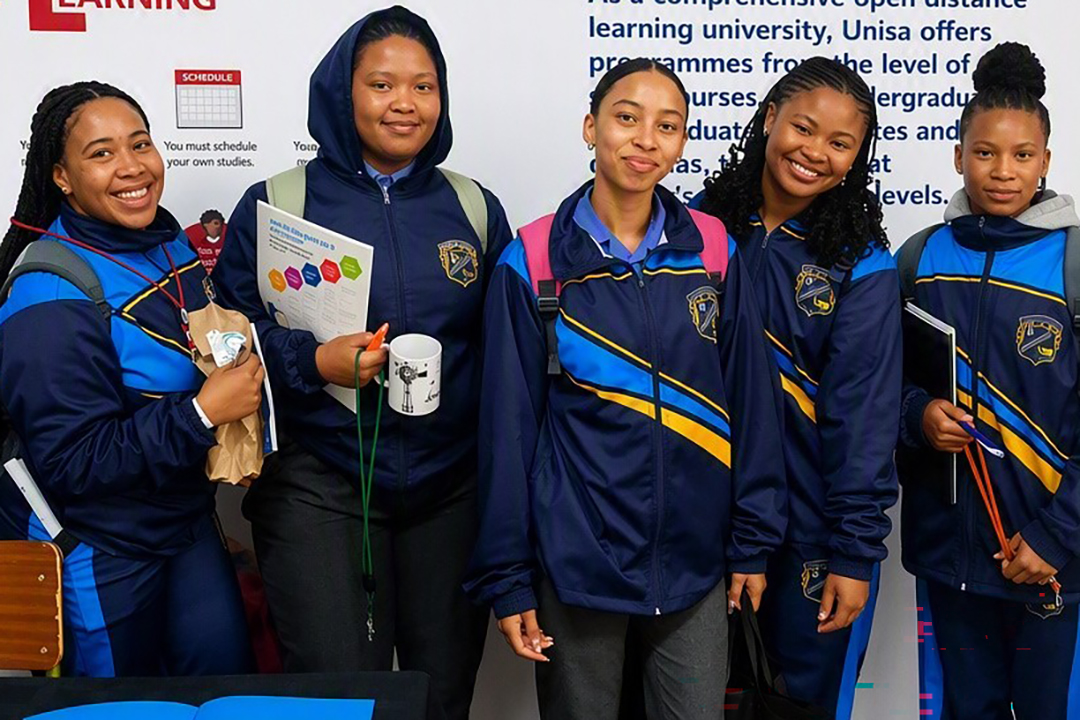 Unisa brings higher education opportunities closer to Central Karoo learners
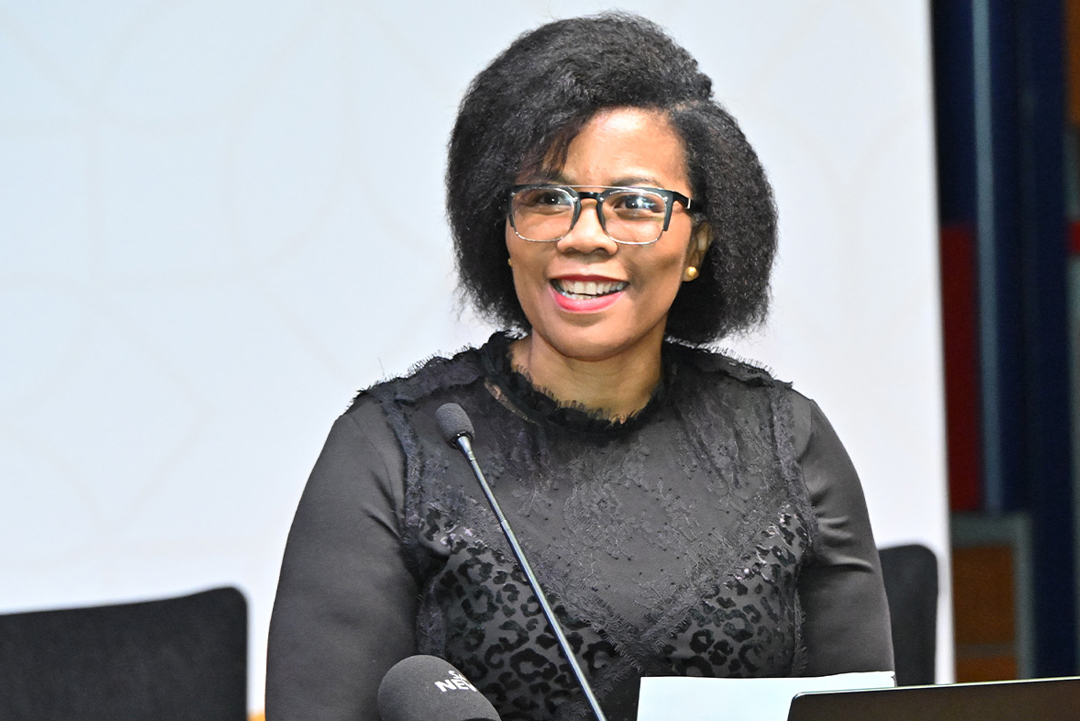 Eight Unisa scholars among Africa's Top 100 education researchers
 Unisa to host global experts to advance ocean research and coastal resilience
 Unisa and iThemba LABS researcher earns international recognition for climate innovation
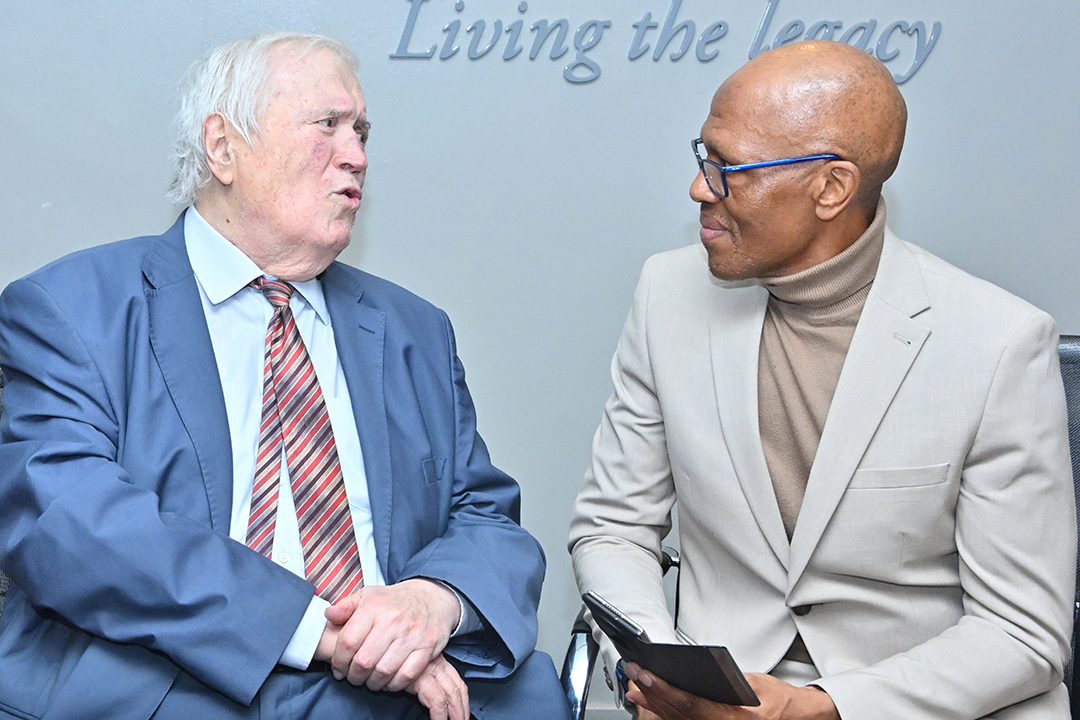 Unisa Press launches From Cairo to Cape, unpacking Soviet support for Africa's liberation struggles