
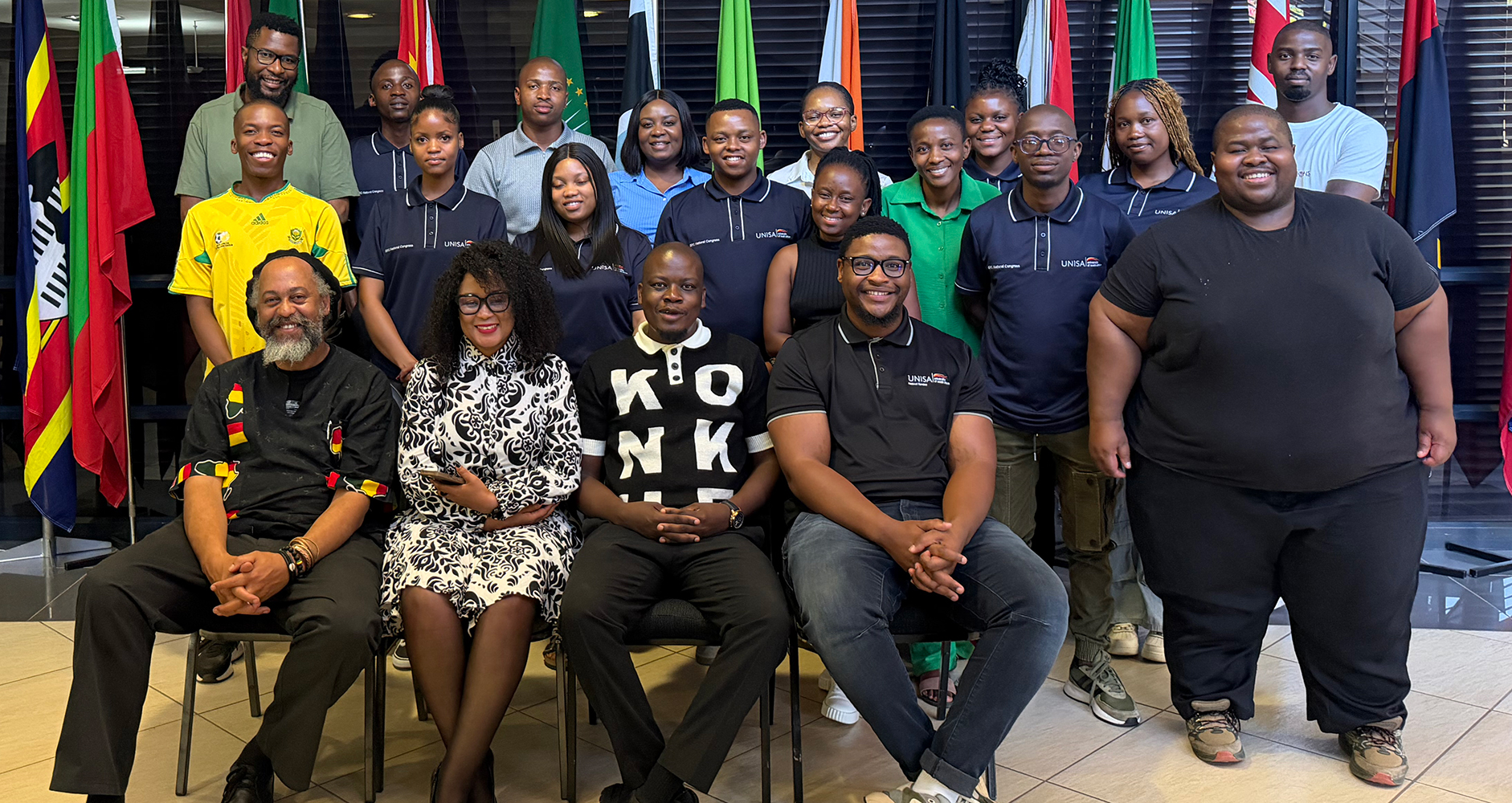
Newly elected Unisa Student Parliament Speakers and Deputy Speakers participated in a two-day leadership training programme focusing on parliamentary procedures, ethical leadership, dispute resolution and good governance.
Effective student leadership requires more than holding office or understanding parliamentary rules. It demands integrity, impartiality, accountability and a genuine commitment to representing the interests of students.
This message emerged from a two-day Student Parliament Office Bearers Training Programme hosted by the University of South Africa's (Unisa's) Office of the Dean of Students at Bambo Hall in the Kgorong Building. The programme brought together newly elected speakers and deputy speakers from across the University's regions to strengthen their leadership capabilities and equip them with the practical skills needed to manage parliamentary proceedings, resolve disputes and promote effective student governance.
Through presentations and interactive discussions, participants examined political neutrality, ethical conduct, human rights, democratic participation and institutional accountability. The training also created an opportunity for student leaders to reflect on their responsibilities and explore how Student Parliament can become more responsive to the needs of the University's diverse student community. Former Unisa Student Governance presiding officers Bayanda Ngcingwana and Ntwanano Mtileni shared lessons from their leadership experiences, emphasising the importance of fairness, independence and sound judgement.
They reminded participants that presiding officers have a responsibility to uphold parliamentary rules consistently, regardless of their political affiliations or personal preferences. Their role, they explained, is to ensure that all representatives are treated fairly and that parliamentary proceedings remain orderly, credible and inclusive. Drawing on their experiences, the former leaders highlighted the challenges of managing disagreements, disruptions and politically sensitive matters. They encouraged the newly elected office bearers to demonstrate patience, maturity and professionalism, particularly when faced with competing interests or difficult decisions.
Their message reinforced the principle that effective parliamentary leadership depends on the ability to exercise authority responsibly while maintaining the confidence of those being represented. Zibuyile Jafta, the deputy director of Unisa's Ethics Management Division, addressed the ethical challenges student leaders may encounter while carrying out their responsibilities. She cautioned participants against compromising their independence or principles for personal benefit, political interests or other forms of influence.
Jafta explained that unethical conduct could undermine a leader's credibility and weaken their ability to challenge wrongdoing. Leaders who become involved in questionable arrangements, she warned, may find themselves unable to hold others accountable, particularly when their own conduct is open to scrutiny. Her presentation encouraged office bearers to recognise that ethical leadership extends beyond compliance with institutional rules.
It requires honesty, responsible decision-making and a willingness to place the interests of students above personal or political considerations. The discussion highlighted the close relationship between integrity, public trust and accountability in student governance. Adv Sipho Mantula, a researcher at Unisa's Thabo Mbeki African School of Public and International Affairs and a former commissioner of the University's Independent Electoral Commission, delivered a presentation titled Presiding with integrity: Accountability, political neutrality, impartiality and respect for human rights in Student Parliament.
Mantula examined relevant provisions of the Student Representative Council (SRC) Constitution, explaining the responsibilities and authority of Student Parliament office bearers. He emphasised that speakers and deputy speakers must remain impartial when presiding over proceedings and ensure that parliamentary rules are applied fairly. He also encouraged participants to make student governance more inclusive by creating meaningful opportunities for students from different backgrounds and constituencies to participate in decisions affecting them. According to Mantula, effective representation should extend beyond formal parliamentary meetings.
Student leaders must remain connected to the broader student community, understand its concerns and ensure that different perspectives inform parliamentary discussions and decisions. His presentation reinforced the importance of protecting students' rights while maintaining the credibility and independence of governance structures. Abongile Moloi, the acting project manager of Unisa's Institutional Governance and Reporting, focused on the practical application of good governance principles. She encouraged participants to familiarise themselves with university policies, procedures and governance frameworks to ensure that their decisions remain consistent with institutional requirements.
Moloi explained that good governance is demonstrated through everyday actions, including how meetings are chaired, how decisions are recorded, how resources are managed and whether commitments are followed through. "For Unisa's Student Parliament, good governance matters in everyday conduct: fair chairing, informed participation, careful use of resources, and dependable follow-up. These practices strengthen student representation and help ensure that parliamentary decisions serve the students who entrust leaders with their voices," she said. She also emphasised the importance of responsible communication when dealing with student concerns.
"When students raise registration or funding concerns, representatives should verify the facts, refer matters to the authorised office and provide progress updates." Moloi cautioned student leaders against making commitments that fall outside their authority, explaining that credibility depends on communicating honestly about what has been achieved and what remains outstanding. She further highlighted the importance of accurate record-keeping, proper handovers and documenting unresolved matters to ensure continuity when leadership changes.
These practices, she explained, help prevent the loss of institutional knowledge and enable incoming office bearers to build on the work of their predecessors. David Letsoalo, the director of the Thabo Mbeki African School of Public and International Affairs, explored approaches to resolving disputes within student governance structures. He encouraged participants to approach disagreements objectively, considering the circumstances, intentions and interests of those involved before deciding on appropriate interventions.
Letsoalo also challenged the office bearers to critically examine the existing Student Parliament model and identify opportunities to improve its effectiveness. One proposal raised during the discussions was the possible establishment of a Student Governance Court to address disputes arising within student leadership structures. Although presented as an idea for consideration rather than an established mechanism, the proposal prompted discussion about strengthening fairness, accountability and access to dispute resolution. The session also highlighted the need for students to have accessible channels through which they can raise concerns and engage with their representatives.
Dr Lefatshe Moagi, Unisa's Political Science lecturer, examined the principles of parliamentary democracy and their relevance to student governance. Her presentation explored the legislative, administrative and judicial functions of government, drawing attention to the importance of clearly defined responsibilities, democratic processes and accountability. Moagi encouraged participants to consider how these principles could strengthen the functioning of Unisa's Student Parliament.
She also discussed the authority and responsibilities of parliamentary speakers, emphasising the importance of respecting established procedures while promoting inclusive participation. Linking student governance to the United Nations' 2030 Agenda for Sustainable Development, Moagi highlighted the principle of leaving no one behind. She stressed the importance of ensuring that women, young people, persons with disabilities, gender non-binary people and other marginalised groups have meaningful opportunities to participate in student leadership and decision-making.
Her contribution reinforced the need for student governance structures to reflect the diversity of the University's student population. This approach supports Sustainable Development Goal (SDG) 16, which promotes effective, accountable and inclusive institutions, as well as SDG 5, which advances gender equality and participation in leadership. By promoting inclusive representation and democratic participation, the training also contributes to the broader aspirations of the African Union’s Agenda 2063, particularly its emphasis on good governance, human rights and accountable institutions.
Beyond the presentations, the programme provided an opportunity for participants to exchange experiences, question existing practices and identify ways to strengthen Student Parliament across Unisa's regions. At the conclusion of the training, office bearers committed to reviewing and improving their respective parliamentary arrangements. They also expressed their intention to participate in follow-up engagements to assess progress, evaluate the implementation of lessons learned and identify areas requiring additional support.
Another commitment involved benchmarking Unisa's student parliamentary practices against those of other higher education institutions. This process could help identify approaches that improve the accessibility, effectiveness and accountability of student governance. However, the success of these commitments will ultimately depend on their implementation and the willingness of office bearers to translate the principles discussed into consistent leadership practices. The programme demonstrated Unisa's commitment to developing student leaders who understand the responsibilities that accompany elected office.
Through the Office of the Dean of Students, the university continues to strengthen student governance by promoting ethical conduct, democratic participation, institutional accountability and inclusive representation. The initiative also reflects the role of higher education institutions in preparing future leaders to contribute meaningfully to society. For the newly elected speakers and deputy speakers, the training provided an important foundation for navigating the complexities of parliamentary leadership.
Their effectiveness will be measured by how fairly they conduct proceedings, how responsibly they manage disagreements and how consistently they respond to the needs of the students they represent.
* By Mogau Malatjie, Student Governance Manager, Office of the Dean of Students and Lesego Chiloane, Journalist, Department of Institutional Advancement
Publish date: 2026-11-03 00:00:00.0

 Two Unisa professionals honoured for excellence in research and innovation management
 Unisa Astronomy researcher wins prestigious fellowship for her work on star formation
 Unisa equips Student Parliament leaders to champion ethical and accountable governance
 Two Unisa researchers inducted into South African Young Academy of Science
 Beyond borders: Unisa explores migration, African identity and the challenges of belonging