
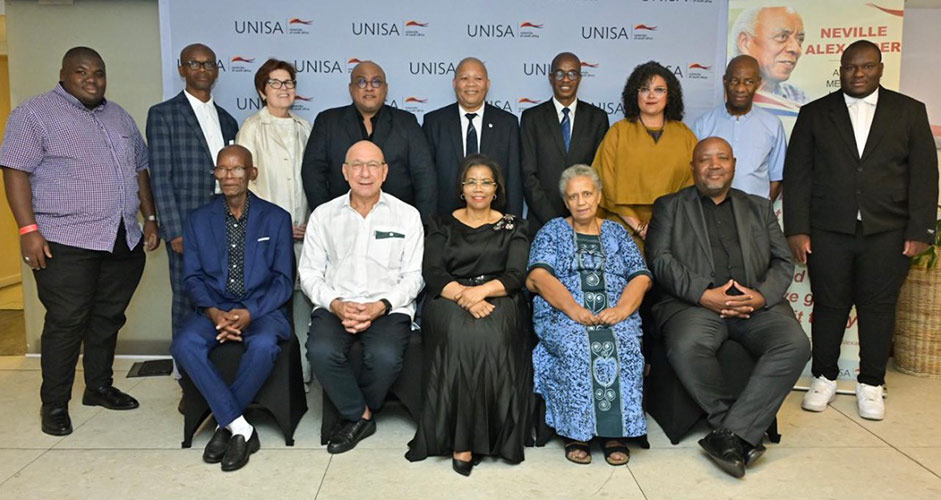
Unisa Vice-Chancellor Prof Puleng LenkaBula with keynote speaker Dr Trevor Manuel, panellists and guests at the university's 14th Neville Alexander Annual Memorial Lecture in Cape Town.
The questions of language, identity, equality and what it means to build a united South Africa remain central to the country's development, decades after the end of apartheid. These issues took centre stage at the University of South Africa’s (Unisa) 14th Neville Alexander Annual Memorial Lecture, held in Cape Town under the theme, 'The making and remaking of South Africa, the scholar and his thoughts'.
The annual lecture honours the life and intellectual contribution of Neville Alexander, the renowned scholar, educator and anti-apartheid activist whose work challenged inequalities rooted in language, race and class. It also provides an opportunity to revisit his ideas and consider their relevance to South Africa's changing social and political landscape. Former Minister of Finance Dr Trevor Manuel delivered the keynote address, reflecting on the country's democratic journey and the unfinished task of building a society in which everyone can participate fully and share in the benefits of freedom.
Welcoming guests, Unisa Vice-Chancellor Prof Puleng LenkaBula highlighted the importance of African languages in a world increasingly shaped by technology and artificial intelligence. She warned that languages excluded from digital spaces risk being left out of emerging forms of knowledge production and economic activity. The challenge, she suggested, goes beyond preserving languages as part of the country's cultural heritage. It is also about ensuring that people can use their languages in universities, research institutions and professional environments, and that these languages are recognised as capable of expressing complex ideas and producing knowledge.
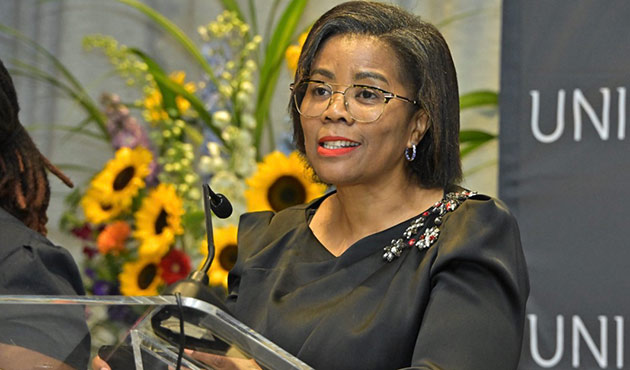
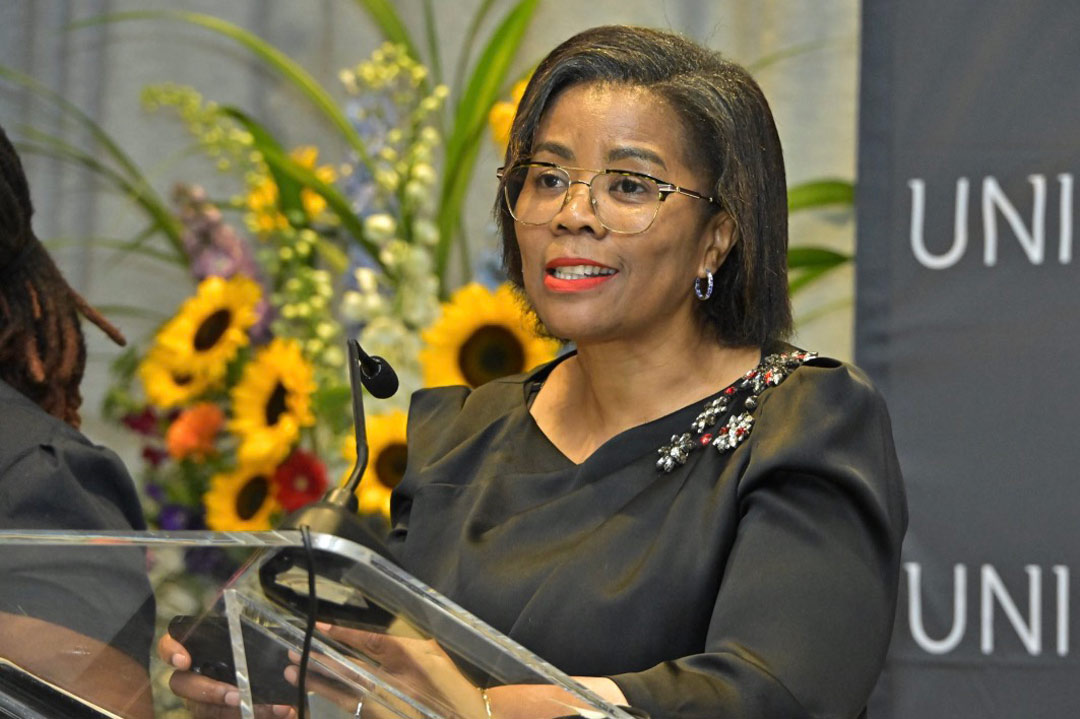
Unisa Vice-Chancellor Prof Puleng LenkaBula delivers the welcome address at the university's 14th Neville Alexander Annual Memorial Lecture in Cape Town.
Drawing on Alexander's scholarship, LenkaBula cautioned against South Africans becoming outsiders in the intellectual life of their own country. "We cannot afford to be intellectual outsiders in our lives," she said. She called on universities to give African languages a more prominent place in science, research, innovation and enterprise, rather than limiting their use to everyday communication and cultural expression.
Unisa's Multilingual Language Policy, launched in July 2025, embraces all 12 of South Africa's official languages. The university's initiatives include developing multilingual glossaries, training academic staff to champion multilingualism and encouraging postgraduate students to write their theses in their mother tongues. LenkaBula also highlighted the Multilingual Pedagogy Symposium and the National Multilingual Students' Debate, where students explored how artificial intelligence could expand the use of African languages in the digital economy. She challenged the higher education sector to move beyond acknowledging linguistic diversity and demonstrate the value of African languages in producing and applying knowledge.
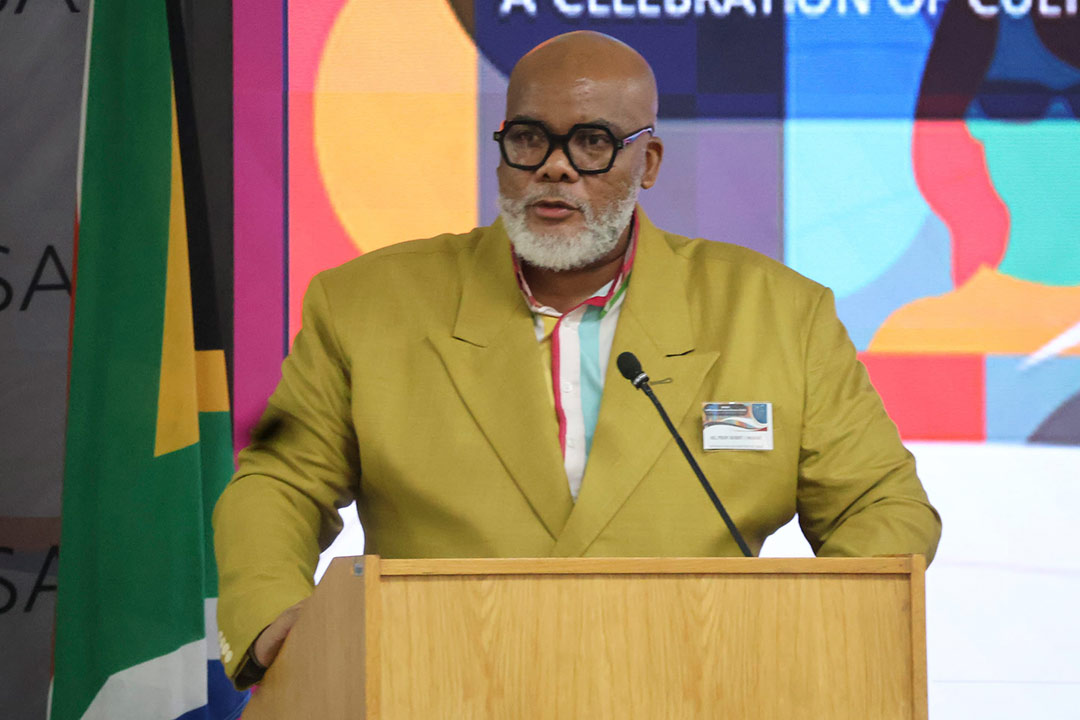
"How do we turn recognition into economic value? How do we make African languages the languages of science and enterprise, not only for translation and conversation?" she asked. Manuel’s keynote address turned to the promises of the liberation struggle and the extent to which they have been realised in democratic South Africa. He recalled the sacrifices made by generations of South Africans who fought for a country where people could live in peace, share in its wealth and build a better future for their children. The attainment of democracy was a significant achievement, he said, but it did not bring the country's responsibilities to an end.
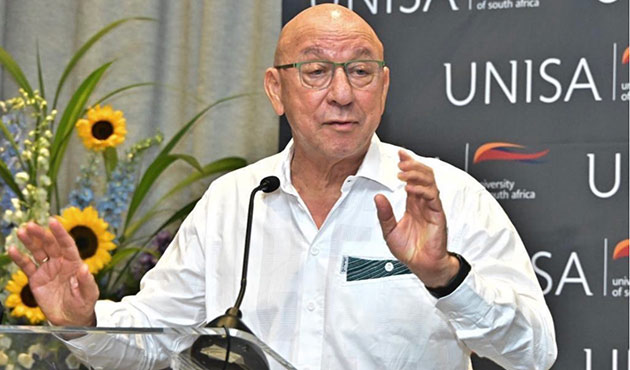
Keynote speaker Dr Trevor Manuel, Former Minister of Finance and Former chairperson of Old Mutual.
Reflecting on the 1955 Freedom Charter, Manuel highlighted its declaration that South Africa belongs to all who live in it, as well as its commitments to political rights and the equitable sharing of the country’s wealth and land. He also revisited May 8, 1996, when the Constitutional Assembly adopted the Constitution, describing it as a defining moment in the country's democratic transition. The Constitution set out a vision of a society committed to healing the divisions of the past, protecting the rights of all people and improving their quality of life. But constitutional commitments require more than recognition. They must be reflected in how people live and the opportunities available to them.
"It is not a set of beliefs, and you walk away. It is a set of active steps that must be taken to produce the kind of South Africans that will match up to that Constitution," Manuel said. He acknowledged the gains made since 1994, including expanded access to housing, education, healthcare and social grants. However, unemployment, inequality and social exclusion continue to affect millions of people, limiting their ability to benefit fully from democracy. "An idea that does not change the way in which people live, work and prosper has not earned that place," he said. Manuel warned that political movements that came to power in the name of liberation could not rely indefinitely on their history if they failed to address the everyday needs of citizens. Reliable electricity, safe communities and employment, he said, are among the basic expectations people have of a democratic government.
He also questioned how deeply the values of the Constitution had been reflected in the way South Africans treat one another. Violence, murder, road fatalities and gender-based violence raise difficult questions about respect for human life and the responsibility people have towards one another. Drawing on examples from Japan and Rwanda, Manuel spoke about community practices that encourage people to take responsibility for their surroundings. He referred to spectators cleaning stadiums after sporting events in Japan and community clean-up initiatives in Rwanda, where residents work together to maintain public spaces and engage with their neighbours. These examples, he said, demonstrate that nation-building cannot be left to government alone. Citizens also have a responsibility towards the communities in which they live.
"It’s an all-in-one effort, it’s how we relate to ourselves, our country and each other," he said. Reflecting on the National Development Plan (NDP), which he helped develop while chairing the National Planning Commission in 2012, Manuel said the plan provided a strong diagnosis of South Africa's challenges. The weakness, however, lay in implementation. The country had spent considerable time identifying what needed to change, he argued. The greater challenge was ensuring that the necessary work was carried out. The panel discussion following the keynote brought the conversation to the barriers people face in accessing education and economic opportunities.
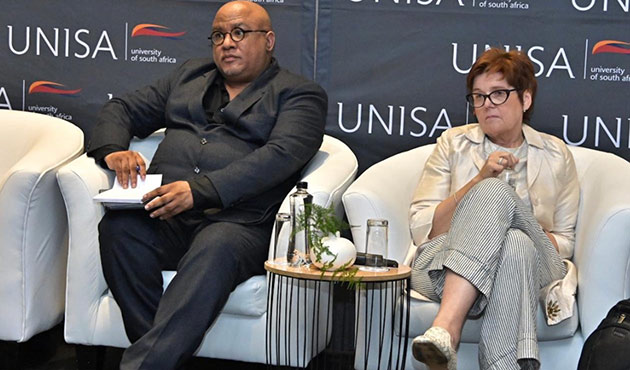
From left, Jacques du Toit, discussion moderator, and Prof Charlotte Buitendag.
Prof Charlotte Buitendag, Head of Simulation and Futuristic Studies at the Thabo Mbeki African School of Public and International Affairs, spoke about the influence of Alexander's work on her understanding of language. She described language as more than a means of communication, highlighting its relationship with identity, dignity and access to opportunities. "From his work, I learned that language is not only words. It is a door. It is a door to life. It is a door to dignity, identity, and it is a door to opportunities," she said. Buitendag challenged the audience to consider who remains excluded from economic opportunities and what prevents them from gaining access.
Drawing on her background in economics, she argued that unemployment should be understood beyond the statistics, with greater attention given to the experiences of people who actively seek work but repeatedly encounter barriers. She illustrated this through the example of a young woman who completes school, prepares herself each day to look for employment and returns home without success. The example raised questions about whether the problem lies only with those seeking work, or whether the opportunities and structures available are also failing to accommodate them. Buitendag used the image of a door that is too small and a room that cannot accommodate everyone trying to enter to illustrate the scale of the challenge.
She was joined on the panel by Prof Lejone John Ntema, Professor in Unisa's Department of Development Studies. The discussion was moderated by Jacques du Toit, a lecturer and PhD candidate in Applied Linguistics in Unisa's College of Human Sciences. The panellists also considered the experiences of first-generation university students, particularly the financial pressures they face and the challenges of adjusting to academic environments that may be unfamiliar to them. They emphasised that access to higher education must be accompanied by support that enables students to navigate their studies and complete their qualifications.
The issues raised throughout the lecture reflected the breadth of Alexander's intellectual contribution and its continuing relevance to South Africa. His work on language, education and social inequality remains important in examining who has access to knowledge, whose voices are heard and who gets to participate in shaping the country's future. These discussions also speak to Unisa's broader institutional priorities. The university's work on multilingualism and African languages has a direct connection to its Feminist, Womanist, Bosadi Theorisations Catalytic Niche Area through its engagement with questions of identity, power and social inequality. Its wider focus on multilingual teaching and knowledge production also raises important questions about inclusive education and the role of African scholarship in addressing the country's development challenges.
The lecture's emphasis on education, equality and social inclusion also connects with Sustainable Development Goal 4, which promotes inclusive and equitable quality education, and SDG 10, which calls for reduced inequalities. These priorities are reflected in the African Union's Agenda 2063 and South Africa's National Development Plan 2030, both of which place social inclusion, human development and shared prosperity at the centre of the continent's and country's development ambitions. The evening concluded with a vote of thanks by Unisa Registrar Prof Moloko Sepota, who acknowledged those who attended the lecture in Cape Town and those who joined online. Guests then enjoyed a live band performance and poetry, bringing the commemorative gathering to a close.
*By Noxolo Miya, Journalist, Department of Institutional Advancement | Photography: Shooheima Champion, Unisa Multimedia Centre
Publish date: 2026-11-23 00:00:00.0

 Unisa Founders Lecture examines Africa's leadership, agency and transformative potential
 Unisa honours Neville Alexander's legacy through reflection on South Africa's unfinished nation-building project
 Unisa–JAR Partner energy symposium puts internationalisation into practice
 Unisa Internationalisation Festival challenges universities to reclaim Africa's place in global knowledge production
 At 74, Unisa graduate Dr Pinkie Modisane proves it is never too late to chase a dream