

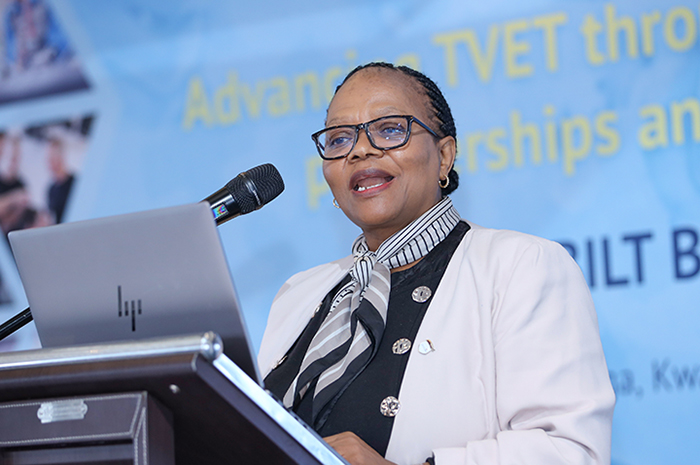
Dr Matsheliso Molapo, Acting Vice-Principal for Strategy, Risk and Advisory Services at Unisa
The Bridging Innovation in Learning in TVET (BILT) Conference hosted by UNESCO-UNEVOC and Unisa, in collaboration with the Durban University of Technology and JET Education Services, was successfully concluded in Umhlanga after three days of insightful presentations focused on Advancing TVET through industry partnerships and innovation.
As the programme entered its closing phase, the focus shifted towards preparing learners not just for current employment but for a future shaped by digital transformation and continuous change in the world of work. This was explored in interactive sessions in which participants were grouped.
Dr Matsheliso Molapo, Acting Vice-Principal for Strategy, Risk and Advisory Services at Unisa, expressed her deepest gratitude to everyone who contributed to the event’s success. She assured the organisers and sponsors that the efforts they invested in the event's success had yielded positive results in terms of the knowledge and practices gained. For her, the three-day engagements played a significant role in the country's development and students' future aspirations.
Reflecting on the study visits to local colleges, Molapo acknowledged the importance of leadership across sectors and highlighted the resilience, discipline, commitment, cooperation and ethical principles that accompany it. As such, she emphasised the importance of organisations working together to strengthen connections and shared commitments and determine the connective impact across sectors. "The focus on ecosystems also reminds us that no single institution can transform TVET alone," she asserted.
Notably, she shared that through participatory research, international organisations and local entities can enhance competency training in the TVET sector. Citing James Keevy, Chief Executive Officer of JET Education Services, and his concept for international youth transition systems, she argued that South Africa can learn from countries that have already implemented the idea. Gaining skills through such a programme can help students who cannot make it to tertiary gain the necessary skills to work upon completion. "We should consider this to see how advancement of skills and discipling among youth can be done," she affirmed.
Molapo also acknowledged the work done under the leadership of Prof LenkaBula, Vice-Chancellor and Principal of Unisa, South Africa’s UNEVOC Centres, Prof Thandwa Zizwe Mthembu, Vice-Chancellor of the Durban University of Technology, and James Keevy, CEO of JET Education Services. Notably, she remarked that the project ties in well with the aspirations of the National Development Plan, the African Union Agenda 2063, and the United Nations 2030 Agenda for Sustainable Development Goals.
"We are committed to making a concerted effort to ensure that our work meets objectives and contributes directly to the African Continental TVET strategy 2025-2034," said Molapo.
In closing, Molapo called for the continued development of TVET sectors where both academia and innovation can thrive and flourish through partnerships and collaboration.
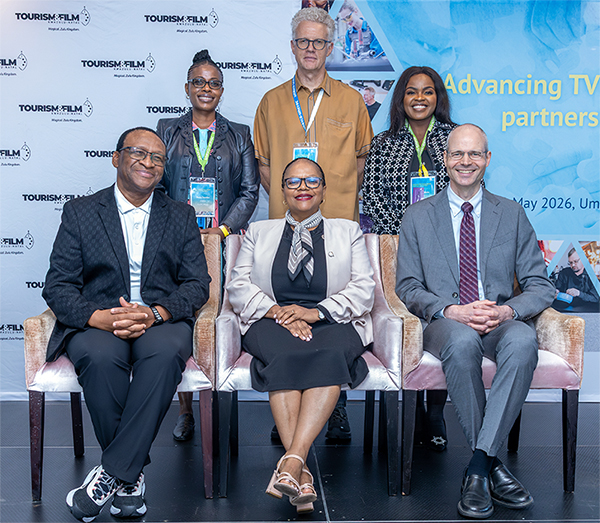
Front, from left, Prof Sello Mokoena, UNISA-UNEVOC Centre Coordinator; Dr Matsheliso Molapo, Acting Vice-Principal, Strategy, Risk and Advisory Services, Unisa; and Friedrich Huebler, Head of UNESCO-UNEVOC
Back, from left, Prof Vaola Sambo, UNEVOC Centre Manager, Unisa; James Keevy, Chief Executive Officer, JET Education Services; and Dr Pinkie Ntola, Director: Technology Transfer and Innovation, Durban University of Technology
Prof Vaola Sambo, Manager of Unisa’s UNEVOC Centre, affirmed that the past few days have seen strong co-created activity in industry partnerships. Furthermore, she remarked that challenges faced by the TVET sector are not only continental but also global.
In her reflection of the three-day engagement, Sambo gave recommendations for UNEVOC Centres and their implementation. She proposed strengthening the UNEVOC network as a platform for joint learning partnership centres, highlighting the three South African centres as a starting point.
In addition, she pointed out the ethical adoption of AI, the capacity of TVET colleges to offer green skills, the strategic use of the UNEVOC network for cross-regional peer learning classes, and the strengthening of mechanisms for monitoring and documentation. She remarked that the access to the global UNEVOC network that the centres have gives them an opportunity to support TVET colleges in South Africa.
"We are looking forward to empowering lecturers in the TVET sector and implementing programmes that have an impact on the youth in the TVET sector," she concluded.
Keevy underscored that this was the most successful BILT event ever. Consequently, he indicated that the three South African UNEVOC Centres are well polished and expressed his hope for future collaborations.
Dr Pinkie Ntola, Director of Technology Transfer and Innovation and UNEVOC Centre Coordinator at the Durban University of Technology, expressed her appreciation for the opportunity to work alongside Unisa and Jet Education Services. She argued that silos within the education sector are counterproductive. Additionally, she noted that boxing creative and innovative students hinders their motivation. "Students need to learn by doing," she stated.
Encouraging collaboration on intellectual property for colleges, Ntola stressed the need for college principals and managers to closely examine what students are doing beyond training and skill development.
Friedrich Huebler, Head of UNESCO-UNEVOC, said he hoped everyone who took part in the conference enjoyed it, as it offered an interesting mix of presentations, panel sessions, lively discussions among participants and a diverse set of TVET stakeholders during the study visits.
He hoped that the accumulated ideas would be utilised in institutions and communities. In reflecting the key role of TVET as a driver of social and economic transformation, he noted, "we need a new global development framework that will have a prominent role for TVET".
In conclusion, he expressed gratitude to the conference hosts, the organising team, delegates and participants who worked together to ensure the conference was a success.
and participants who worked together to ensure the conference was a success.
Read also:
Unisa co-hosts global forum on the future of TVET
Unisa conference continues to strengthen pathways from learning
* By Moleboheng Mpafa, Communication Intern, Department of Institutional Advancement
** Photography by Khathamzi Mduduzi, Unisa Multimedia Centre
Publish date: 2026-05-22 00:00:00.0

 Minister Manamela calls for systemic reset of South Africa's PSET sector
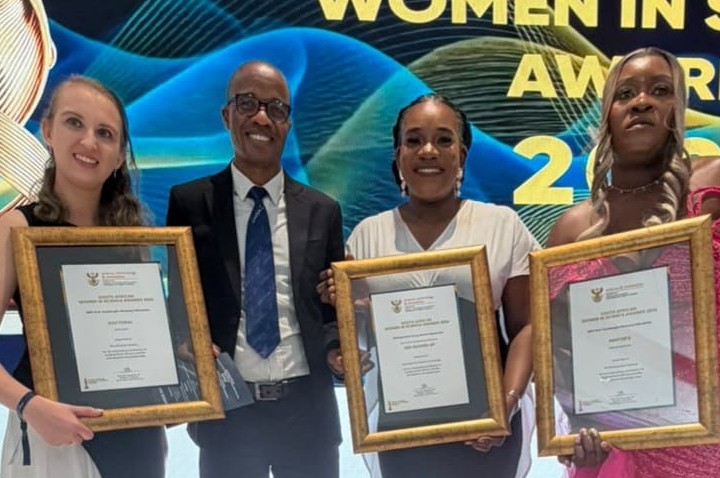 Three Unisa women putting science, research and innovation into action
 From preserving knowledge to shaping the future: Unisa Press and LIS mark 150 years of collective impact
 Supporting success: How Unisa's PRG helped Babalwa Ramncwana take the next step in her academic journey
 Wisdom that connects generations: Unisa celebrates its senior citizens