
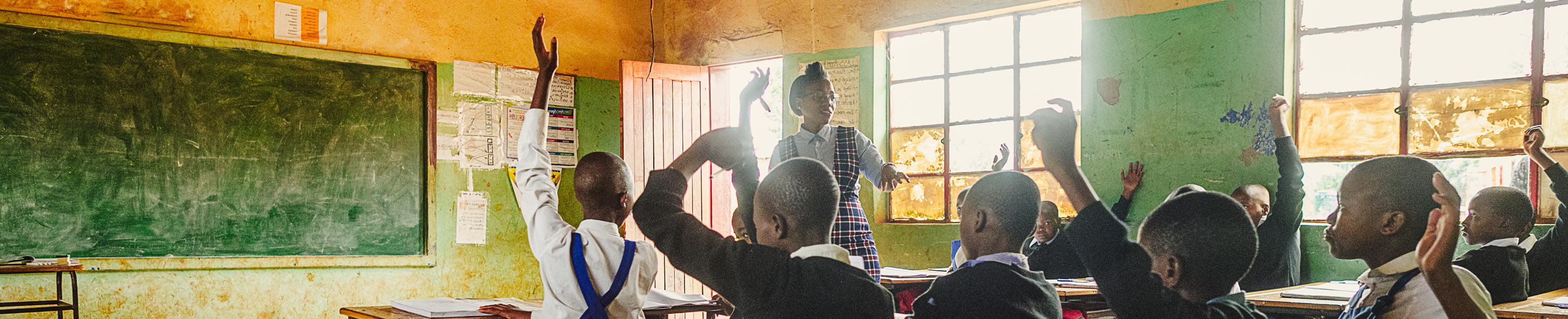
Producing over 40% of teachers in South Africa

Lerato Letsoalo, CEDU: DCIS – Adjunct Academic
For Lerato Letsoalo, the journey from online e-tutor to Adjunct Academic at the University of South Africa (Unisa) has been one of steady growth, academic risk-taking and a willingness to explore where education is heading.
She is among more than 600 adjunct academics who joined Unisa through a new programme aimed at strengthening the university’s teaching capacity in priority fields, including Mathematics, Science, Technology, Early Childhood Development, Inclusive Education and Language Education.
Welcomed by the Principal and Vice-Chancellor Prof Puleng LenkaBula when the programme was launched in February 2026, the new cohort represents an important addition to Unisa’s academic community. Letsoalo’s own journey offers a closer look at the people behind that expansion and the experience and ideas they bring to the university.
When Letsoalo joined the Department of Curriculum and Instructional Studies (DCIS) in Unisa's College of Education (CEDU) in 2026, she brought with her a combination of qualifications and professional experiences that spans education, business and logistics.
She holds a Bachelor of Education in Senior Phase and Further Education and Training, an Honours degree in Educational Management and a Master’s degree in Curriculum Studies from the University of Limpopo. She also holds a Bachelor of Commerce in Supply Chain and Operations Management and an Honours degree in Logistics from Unisa.
The combination has helped shape her research interest at the intersection of business and teacher education, giving her a multidisciplinary perspective on questions facing education and the workplace.
Her career has developed across different areas of the education sector. She began teaching in the Senior and FET phases in 2006 before moving into TVET college lecturing in 2015. In 2024, she joined Unisa as an online e-tutor and progressed to the role of adjunct academic in 2025.
In 2026, she became part of CEDU's new adjunct academic cohort while reaching another significant milestone: submitting her PhD thesis in Curriculum Studies to the University of Limpopo for external examination.
"It’s an incredibly exciting time," she says.
For Letsoalo, accepting the adjunct position was a calculated step towards academia.
"I decided to take the adjunct position because it gives exposure to people who want to be in academia and become lecturers," she explains. "It was a risk I was willing to take because my qualifications align well with academia."
While her teaching role is central to her work at Unisa, Letsoalo is also developing a research profile around one of the biggest questions facing education: how assessment should evolve as artificial intelligence becomes increasingly embedded in learning.
In May 2026, she presented a paper at Unisa’s 3rd International Higher Education Teaching, Learning and Student Support Conference titled "Preparing the Foundations for Responsible AI Integration in Higher Education Assessment: Evidence from School-Level Inequalities in South Africa."
The manuscript has since been submitted to a Springer Nature journal.
In August, she is scheduled to present at the 3rd DeSTE Connect Conference at Sun City, further extending her research networks and contributing to discussions around responsible AI integration in assessment.
At the heart of her research is a concern with making assessment fit for a changing educational environment while remaining responsive to inequality.
This is an area with particular relevance to Unisa's ODeL environment, where technology plays an increasingly important role in how students learn, engage with academics and complete assessments.
For Letsoalo, responsible innovation means looking beyond what technology can do to consider how it can be used fairly and meaningfully.
Working in Unisa’s Open Distance and e-Learning (ODeL) environment has given Letsoalo a first-hand understanding of the demands placed on academics who support a diverse student population.
Teaching across CEDU’s modules has been both rewarding and challenging.
"The Open Distance and e-Learning context presents unique workload demands, requirin g resilience and adaptability," she says. "Colleague support has been invaluable in navigating these complexities, reinforcing the importance of an inclusive and collaborative academic culture."
She identifies exposure to different teaching contexts, opportunities to develop her research niche and strengthening student support through Teaching Practice among the benefits of her experience at Unisa.
She has also used training programmes offered through the Research and Innovation Office (RIO) to strengthen her research capacity.
At the same time, her experience has highlighted areas where the adjunct academic programme can continue to develop.
Letsoalo believes sustainable assessment practices and consistent mentorship from senior academics are important in helping adjunct academics understand their roles, navigate the demands of ODeL teaching and develop professionally.
For newer academics, she says, structured guidance and encouragement can make an important difference as they build confidence and establish themselves within the university.
Letsoalo's approach to academia is rooted in optimism, responsibility and a willingness to find solutions.
"I embrace the future of higher education with optimism and a deep sense of responsibility," she says. "I am committed to creating solutions rather than waiting for them – innovating assessment practices, championing responsible AI integration, and building sustainable foundations for the next generation of students."
Her message to fellow adjunct academics is equally positive.
"The pie is big enough for all of us," she says.
The statement captures her belief that academic success does not have to come at the expense of others. Instead, opportunities can be created and shared as academics learn from one another and contribute to the development of students and the broader institution.
For Letsoalo, reaching the PhD submission milestone has strengthened rather than diminished her ambition to contribute to Unisa through teaching, research and community engagement.
"Tomorrow will not be the same as today," she says.
Letsoalo's journey from e-tutor to adjunct academic offers more than a personal story of career progression. It shows how different forms of experience can come together to create new academic pathways.
Her journey also offers an example to Unisa students and emerging academics: academic careers do not always follow a straight line. Teaching experience, further study, professional qualifications and research can intersect in ways that open new possibilities.
As she awaits the outcome of her PhD examination and continues developing her research in AI, assessment and education, Letsoalo is entering the next stage of her academic career with a clear sense of purpose.
Her story is still unfolding, but the direction is clear: to help shape an education system that is innovative, responsible and responsive to the realities facing students and educators.
* By Dineo Horner, Department of Curriculum and Instructional Studies, College of Education
Publish date: 2026-08-21 00:00:00.0

 Unisa and iThemba LABS researcher earns international recognition for climate innovation
 Unisa Press launches From Cairo to Cape, unpacking Soviet support for Africa's liberation struggles
 Unisa ICT leader earns global recognition at World CIO 200 Summit
 Unisa conference calls for new thinking to shape a changing world
 When books refuse to be silenced: Unisa revisits The Stone Country through a new generation