
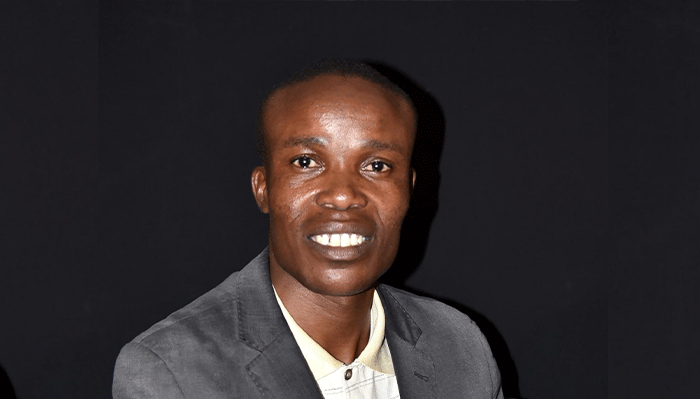
Dr Matome Maake
Dr Matome Maake's journey has been truly remarkable. From his humble beginnings to being awarded an NRF Y2 rating in 2025, his journey teaches us the extraordinary power of persistence, belief, and transformation. The path he has taken reminds us that your beginnings do not determine your destination. No matter what challenges or setbacks you encounter in life and in your academic journey, you are the author of your own story.
We often hear about someone achieving overnight success, but that is usually an illusion. Dr Maake's journey proves that slow progress, persistence, and unwavering faith can create monumental change. His story emphasises that it’s never too late to evolve and achieve greatness through perseverance and hard work. In this interview, Dr Maake shares his journey.
Can you tell us a bit about your background and what brought you to this department?
My name is Matome Maake, and I was born and bred in the Greater Letaba Local Municipality in the Limpopo Province of South Africa. I completed my primary and secondary education at the local schools in the village where I grew up. I joined the Department of Agriculture and Animal Health at Unisa because I have a passion for teaching and helping people improve their lives.
What sparked your interest in this field? Was there a particular moment or influence?
Like most boys in rural South Africa, I grew up looking after my grandparents’ livestock in the village. So, my passion for agriculture was influenced by my village upbringing in an area where the cultivation of food crops and the rearing of livestock were common in most households. Moreover, the cordial relationship I enjoyed with my Agricultural Science teacher (the late Mr Jan Nkuna) helped foster my interest in the field of agriculture.
How has your journey evolved since joining the department?
My academic journey has not been an easy one. I joined the Department of Agriculture and Animal Health as a Junior Lecturer while enrolled for a Master’s Degree, and, at the time, I was the youngest academic staff member in the Department. As the youngest academic in the Department, I had access to various institutional mentoring opportunities aimed at sharpening my academic skills and intellectual capacity. This meant that I had to participate in various academic and administrative activities to build my knowledge of the institutional ethos, the ODL environment and the higher education sector in general. Interestingly, my participation in various institutional activities also improved my academic maturity, emotional intelligence and even my intellectual capacity. Despite being a young academic, I received both respect and support from the senior staff members and my mentors, which improved my confidence and propelled me to greater heights.
What current projects or work are you most excited about right now?
I am currently working on various research projects with my postgraduate students (Master’s and Doctoral). These encompass themes such as the impact of climate change on agriculture, community gardens and household food security, farmer support programmes in South Africa, communication methods employed to render agricultural extension services, and the commercialisation of smallholder farmers. In general, I am conducting research in agricultural extension, climate change, food security and rural development.
Is there a particular achievement here that you're especially proud of?
My greatest achievements are my NRF-Y2 rating, acquired in 2025, and the completion of my Doctoral studies in 2023.
How do you see your work impacting others – in the department, the University, or beyond?
I know that my work has had an impact on the Department because I have seen how colleagues in various sub-disciplines of agriculture have started appreciating agricultural sociology studies. Our Department is very diverse because it is divided into four streams or groups. In the past, there were only a few scientists (plant, animal and veterinary) who conducted research that involved surveys. However, the trend has changed in recent years, and I am of the view that my research has influenced some agricultural scientists to value agricultural sociology studies and blend them with experimental research. Again, my advanced knowledge of statistics for social science research has opened collaboration opportunities in the Department and in the wider University, signalling that my academic prowess is highly valued and appreciated by my colleagues. The impact of my research has broadened in the academic sphere, and I have received several invitations to review research articles for national and international academic journals. Again, my citation indexes in Google Scholar, Web of Science, Scopus and Research Gate have improved significantly in the past five years. The recognition I have received on various digital academic platforms shows that my research work is having an impact on the academic fraternity globally.
What challenges have you faced along the way, and how did you overcome them?
The completion of my Master’s degree was delayed due to differences with my supervisor. I had to work very hard to prove to him that I am an independent thinker who pursues his dreams with dogged determination. When I joined the Department, the enormous workload was a great challenge. At the time, we were understaffed, and this meant that, for a while, I was teaching more than five modules at the same time. In addition, I was involved in curriculum development and review in the Department and also working on my Master’s degree. It was very difficult to balance the workload and postgraduate studies. This meant that I had to sacrifice my social life and dedicate most of my time to academic work.
How has being part of this department helped you grow personally or professionally?
Being part of the Department of Agriculture and Animal Health since 2010 has made me a better person. It is through my engagement with colleagues that I have learnt to appreciate people of different characters, social and academic status. I have learnt to embrace diversity because I work with people from various cultures and countries, as well as educational and social backgrounds. My social and academic interactions with these groups of people have left a significant mark on me. The spirit of Ubuntu, or botho, inside me has been energised because I have learnt to respect and appreciate other people.
What advice would you give to someone just starting out in this field?
My advice to someone who has just joined become a part of academia is never to compromise the quality of your academic work and always remain open to criticism. Again, do not develop animosity against people who disagree with you on various matters, socially, academically or any other, because different viewpoints make you a better person. You will never grow if you like only the people who always praise you and agree with you. Lastly, it is important to have good relationships with all your colleagues because this is how you will acquire a variety of knowledge, wisdom and skills.
If you could have told your younger self one thing before joining this Department, what would it be?
Always seek wisdom and guidance from the Lord before embarking on anything, whether a social or an academic activity. Doing so will let you avoid making unwise choices that will trouble you later. Hard work, an open mind, humility and respect are the key ingredients to a prosperous academic career. Lastly, learn to say “no” when you have to.
Do you have any passions or hobbies outside of your work that influence how you think or how you approach problems?
My passion is reading. Again, I always try my best to have exposure to various social elements of life such as culture, religion, language, politics and others. The quest to acquire more knowledge about a range of social elements has influenced my thinking and approach to problem-solving. For example, I have become more patient, impartial and sympathetic when helping students to solve their problems because I always put myself in their shoes. Again, my passion to learn other people’s languages and cultures has made me a polyglot. As a result, I often interact with students using their language and English interchangeably. I have found that students engage more comfortably with lecturers who relate to them at their level of understanding and social experience.
What’s something most people might be surprised to learn about you?
I nearly became a lawyer, but my conscience did not allow me to.
Is there a quote, philosophy, or mindset that guides your work?
My philosophy is always to execute the tasks allocated to me with distinction. Moreover, I try my best to be loyal to the institution, and I always strive to improve the quality of my work. Academic excellence and quality assurance are my key philosophies.
*By Department of Agriculture and Animal Health Website Committee
Publish date: 2026-02-16 00:00:00.0
 CRDB Bank CEO earns PhD from Unisa
 In a world of misconceptions, clarity is power
 CSET showcases research excellence at Unisa Research and Innovation Week 2026
 Celebrating a linguist in pursuit of greatness
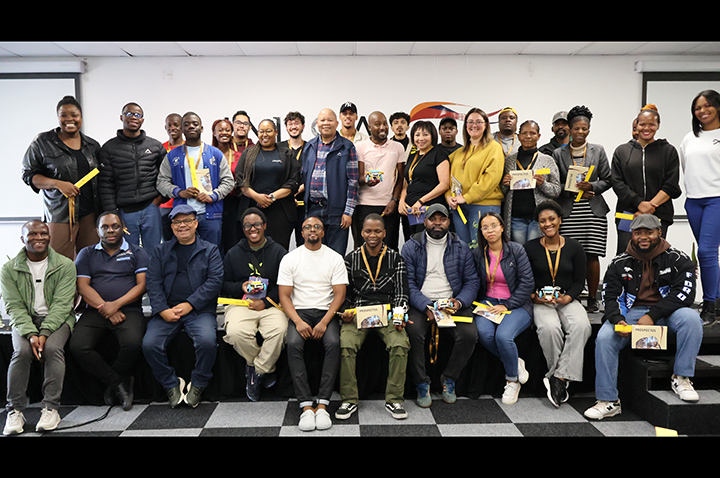 Unisa advances digital skills through robotics and coding initiative