

Providing affordable, accessible, high quality, relevant Science Engineering and Technology programmes
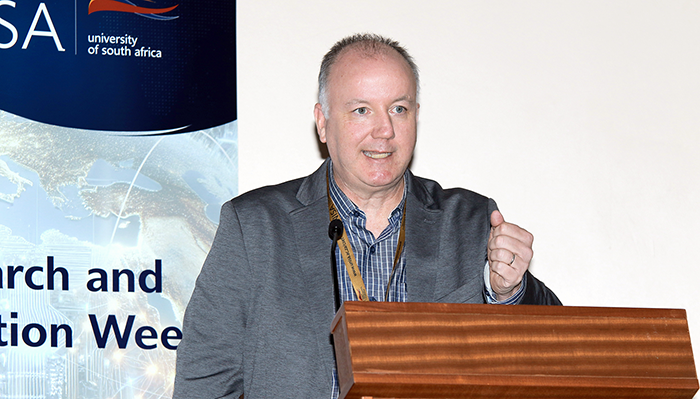
Prof Paul Westerhoff, Arizona State University, delivering the keynote plenary
From 26 to 29 May 2026, the College of Science, Engineering and Technology (CSET) at Unisa hosted its set of activities in response to the 2026 Unisa Research and Innovation Week’s theme "Unisa’s Catalytic Niche Areas: Powering Change". The four-day programme featured plenary lectures, oral and poster presentations by postdoctoral fellows and postgraduate students, innovation pitch sessions, and a FameLab science communication training workshop and regional heat competition.
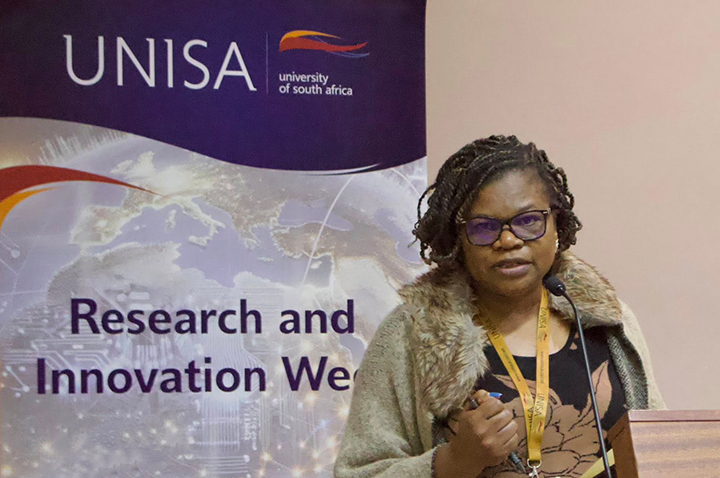
In her opening remarks, Prof Simiso Dube, Deputy Executive Dean of CSET, reflected on the institution’s research journey. "Today, we stand in a very different space, and the progress is evident in the growth in research outputs and our expanding community of scholars. From modest beginnings, we have grown into a vibrant research environment, producing thousands of accredited outputs annually," she noted.
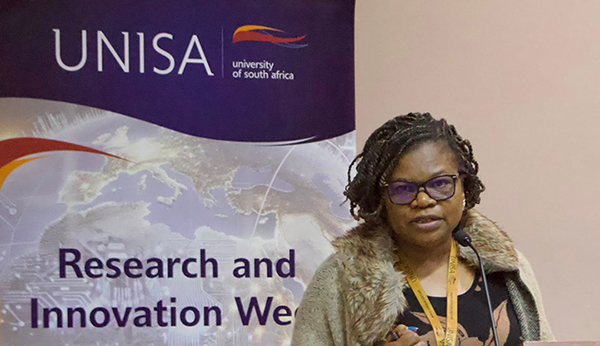
Prof Simiso Dube, Deputy Executive Dean of CSET
Dube also emphasised that this progress is the result of deliberate investment, strategic focus and the dedication of academics, postdoctoral fellows and students. While celebrating these achievements, she underscored the importance of research impact, urging scholars to address pressing societal challenges: "If our work does not improve lives or inform policy and practice, then we must question its impact."
The programme opened with a keynote plenary by Prof Paul Westerhoff from Arizona State University, who introduced innovative approaches to water sustainability. His talk, centred on atmospheric water harvesting, challenged conventional thinking: "Can we think differently about how we access water?"
Westerhoff presented the concept of a "pipeless water factory", where water is extracted directly from the air rather than transported over long distances. He explained that air contains water vapour that can be captured and converted into usable water using specialised materials and systems. While promising, he acknowledged current limitations. "Atmospheric water harvesting requires energy, and current systems are not yet as efficient as we would like. However, innovation in this area is progressing rapidly," said Westerhoff.
The programme featured a series of plenary lectures by CSET’s distinguished professors, covering diverse research areas:
In addition, postgraduate students and postdoctoral fellows actively contributed through oral and poster presentations, showcasing emerging scholarship within the college.
A highlight of the week was the FameLab science communication training and regional heat competition. FameLab, the world’s largest science communication competition, equips researchers with the skills to communicate complex scientific ideas clearly and engagingly without the use of PowerPoint slides.
From 21 compelling pitches, spanning topics such as water, astrophysics, and energy, the top achievers were:
Dube will represent Unisa at the national semi-finals in September 2026. Her winning three-minute presentation focused on antimicrobial photodynamic activation, a method that uses light to inactivate bacteria in water, including drug-resistant strains. Reflecting on her experience, she said: "The FameLab training was fun and informative. I discovered a side of myself that I did not know I had. What stood out the most was learning to communicate my science in a simple way so that people without a science background can understand it."
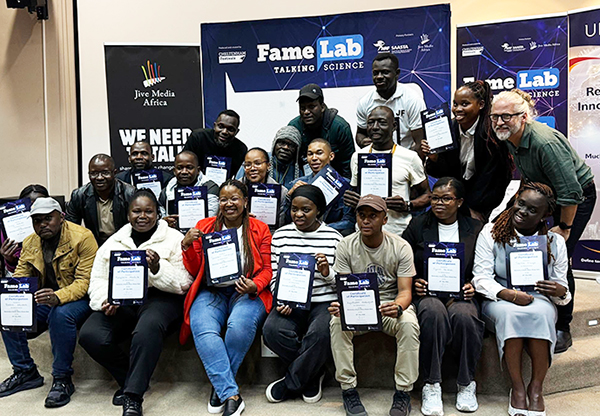
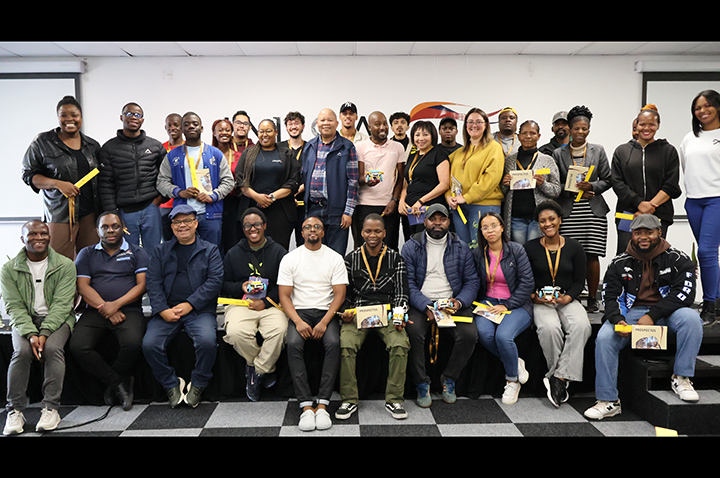
FameLab 2026 participants
The judging panel included Prof James Chibueze, Fuwani Jwara and Prof Patience Mthunzi-Kufa, all from Unisa.
In his closing remarks, Prof Bhekie Mamba, Executive Dean of CSET, highlighted the importance of collaborations. "This week has reinforced the importance of both inter- and intra-collaboration. There is no need to create isolated silos when strong synergies already exist." He encouraged strengthening partnerships across existing platforms to achieve shared goals and enhance impact. "Next year, we will build on this foundation and make the programme even bigger and better, with more international partners and broader participation."
* By Dr Nozipho N Madzivha, Communication and Marketing Specialist (acting), College of Science, Engineering and Technology
Publish date: 2026-06-12 00:00:00.0
 CRDB Bank CEO earns PhD from Unisa
 In a world of misconceptions, clarity is power
 CSET showcases research excellence at Unisa Research and Innovation Week 2026
 Celebrating a linguist in pursuit of greatness
 Unisa advances digital skills through robotics and coding initiative