

Providing affordable, accessible, high quality, relevant Science Engineering and Technology programmes
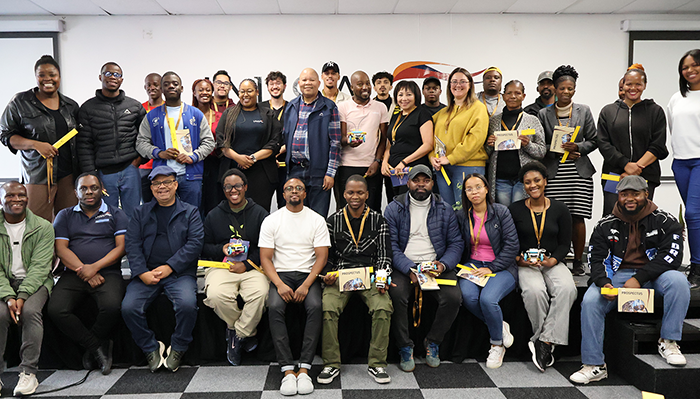
Unisa Western Cape Region and College of Science, Engineering and Technology staff with College of Science, Engineering and Technology and College of Education students
As higher education institutions continue to respond to rapid technological advancement and the demands of the digital economy, the development of future-ready graduates remains a strategic priority. Against this backdrop, the Unisa Western Cape Region hosted an interactive Robotics and Coding Workshop at the Cape Town Campus in Parow on Saturday 9 May 2026, in collaboration with the University Science Engagement Centre (USEC) of the School of Computing in the College of Science, Engineering and Technology (CSET).
The workshop formed part of a broader collaboration between Unisa's regional structures and USEC to promote robotics and coding among students, educators and communities. Through this partnership, students are provided with opportunities to develop valuable co-curricular competencies, such as problem-solving, teamwork, creativity and digital literacy while engaging with technology in practical and meaningful ways.
Facilitated by Andzani Sibiya and Kabelo Pheeha from USEC, the workshop introduced students to the foundational principles of robotics, coding and computational thinking through a hands-on learning experience. Students from CSET and the College of Education worked in teams to construct and program their own robots, learning how coding instructions can be used to control movement, navigate environments and respond to obstacles.
The workshop generated enormous enthusiasm among participants as they moved beyond theoretical discussions and engaged directly with technology. Working collaboratively, students were required to test, adapt and refine their coding instructions, reinforcing the importance of critical thinking, teamwork and perseverance in solving real-world problems.
Beyond the technical skills acquired, the workshop highlighted how robotics and coding can be used to solve practical problems, encourage innovation and support learning across a range of disciplines and community contexts. Participants were encouraged to view technology not only as a tool for personal advancement but also as a means of contributing to social development and community empowerment.
The initiative reflects Unisa's commitment to creating learning opportunities beyond the formal curriculum. Co-curricular activities play an important role in complementing academic learning by providing students with opportunities to develop practical skills and confidence and acquire real-world experience. Such initiatives help students bridge the gap between theoretical knowledge and practical application, while enhancing their personal and professional development.
The workshop also demonstrated the value of collaboration between Unisa's colleges and regional structures. Through partnerships between the regions, the School of Computing and USEC, students are able to access specialised expertise and innovative learning experiences that may otherwise remain outside their immediate fields of study. This collaborative approach expands the university's ability to deliver integrated student support while advancing student success and community engagement.
The Regional Digital Learning Advisors, Thabo Dayeni and Sivuyile Deyi, also participated in the workshop. Their involvement underscored the region's commitment to expanding opportunities for digital learning and exploring how robotics and coding initiatives can be incorporated into broader student development programmes.
The Regional Director of the Western Cape Region, Motale Nkgoang, expressed his appreciation to both the facilitators and the students for their commitment and active participation. Reflecting on the importance of the initiative, he noted:
"As technology continues to shape the future of work and society," he said, "it is important that our students are equipped with the skills and confidence to participate meaningfully in this changing environment. I encourage students to use the knowledge gained through initiatives such as these to contribute positively to their communities and to become agents of innovation and change."
John Abrahams, Head: Facilitation of Learning in the Western Cape Region, similarly acknowledged the initiative's value and highlighted its potential for future growth. "This workshop demonstrates the value of collaboration between the regions, academic colleges and external partners in creating meaningful co-curricular learning opportunities for our students," said Abrahams. "We hope to build on this momentum by expanding robotics and coding initiatives across the Cape Metropole and by encouraging students to use these skills to support innovation and development within their communities."
The workshop forms part of a broader collaboration between Unisa's regional structures, the School of Computing, USEC and community-based partners aimed at expanding access to robotics and coding opportunities. Through these partnerships, the university continues to create opportunities for students to develop the knowledge, skills and confidence required to contribute meaningfully to their professions, communities and society.
* Submitted by John Abrahams, Head: Facilitation of Learning, Western Cape Region
Publish date: 2026-06-12 00:00:00.0
 CRDB Bank CEO earns PhD from Unisa
 In a world of misconceptions, clarity is power
 CSET showcases research excellence at Unisa Research and Innovation Week 2026
 Celebrating a linguist in pursuit of greatness
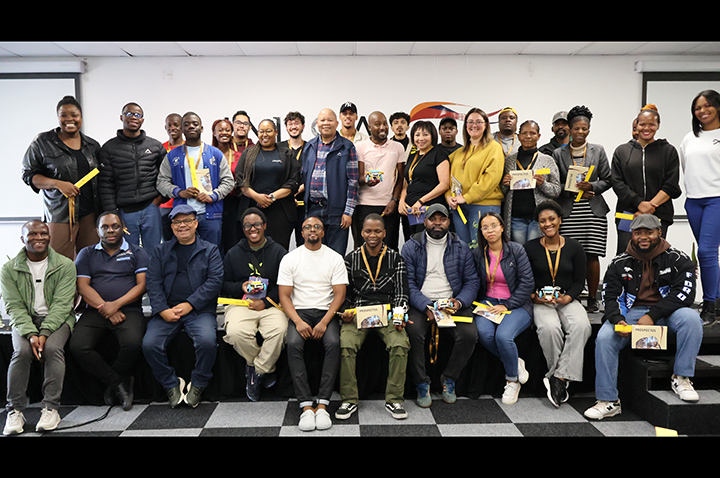 Unisa advances digital skills through robotics and coding initiative