
Equipped with state-of-the-art laboratories that provide students with hands-on experiences to bridge theory and practice
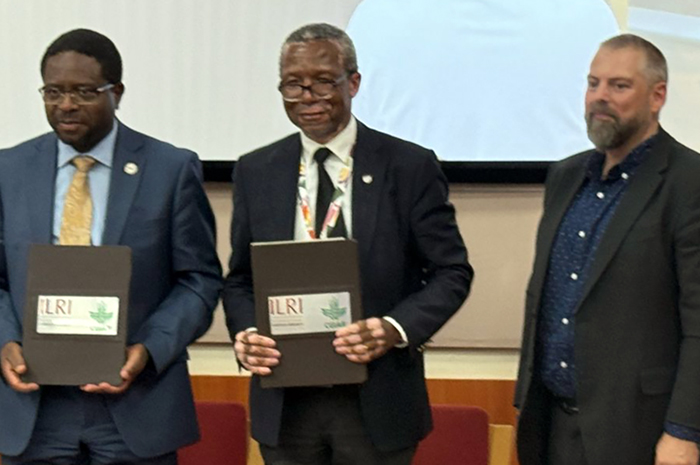
From left, Prof Appolinaire Djikeng, Director-General of ILRI, Prof Solomon Magano, Unisa Vice-Principal: Institutional Development, and Prof Ashley Gunter, Acting Deputy Executive Dean, Unisa College of Agriculture and Environmental Science
The University of South Africa (Unisa) has strengthened its continental research footprint by signing a memorandum of understanding (MoU) with the International Livestock Research Institute (ILRI) in Nairobi, Kenya.
The agreement was signed during a strategic visit from 19 to 21 February 2026, coinciding with the launch of the African Animal Breeding Network (AABNet) book, African Livestock Genetic Resource and Sustainable Breeding Strategies. Unisa researchers are contributors to the volume, reinforcing the university’s leadership in livestock genomics and biodiversity research across the continent.
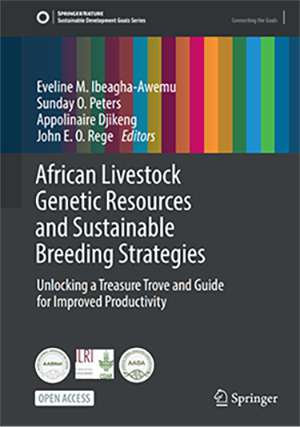
Livestock Genetic Resource and Sustainable Breeding Strategies is available as an open-access book on Google Play. Click here to download.
The Unisa delegation included Prof Solomon Magano, Unisa Vice-Principal: Institutional Development; Prof Ashley Gunter, Acting Deputy Executive Dean of the College of Agriculture and Environmental Sciences (CAES); and Dr Lucky Nesengani, Senior Research Academic in CAES. The MoU was signed by Magano and Prof Appolinaire Djikeng, Director-General of ILRI, in the presence of researchers and postgraduate students.
In his address, Djikeng challenged the global scientific community to rethink how African research is framed and valued. "Let us celebrate our contribution not merely as African science, but as science that shapes the world," he said. He emphasised that African genomic innovation is not peripheral but foundational to global knowledge systems, particularly in areas of biodiversity, adaptation and food security.
His message aligns closely with Unisa’s expanding work in mapping the biodiversity of African genomes. Through initiatives such as the African BioGenome Project, Unisa has made a significant contribution to genome sequencing efforts, with ambitious targets set for further expansion in 2026.
Unisa has emerged as a leader in cattle pangenome research, advancing understanding of indigenous African breeds uniquely adapted to diverse climatic and ecological conditions. This work supports biodiversity conservation while strengthening climate resilience and sustainable livestock systems.
The AABNet platform, spanning more than 20 African countries, focuses on strengthening animal breeding programmes and building genomic research capacity. The book launch at ILRI highlighted how collaboration across borders is transforming livestock genetics through shared training, infrastructure and innovation.
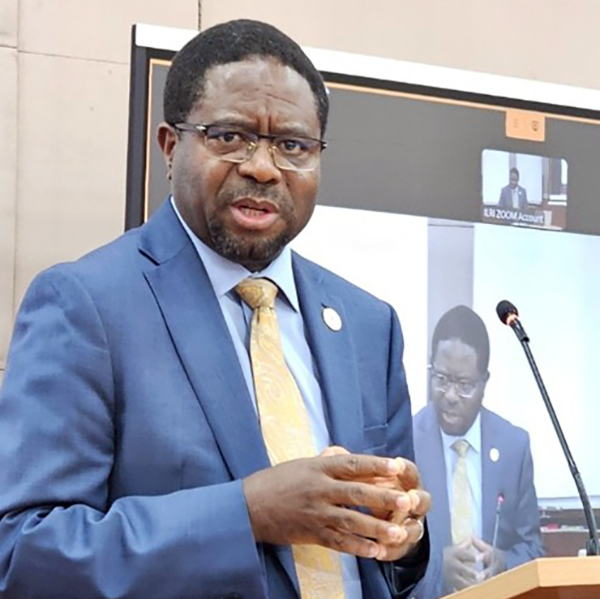
Prof Appolinaire Djikeng, Director-General of ILRI, delivering his opening remarks at the MoU signing
The new MoU formalises and deepens this collaboration. It creates a framework for joint research projects, postgraduate supervision, staff exchanges and institutional capacity development. It also supports collaboration in livestock landscape genomics, biodiversity sequencing and bioinformatics.
For Africa, the partnership strengthens smallholder livestock systems and enhances the continent’s ability to respond to climate pressures. By deepening genomic knowledge of local breeds, researchers are contributing to agricultural systems rooted in African ecological realities.
Human capital development is central to the partnership. Joint supervision arrangements and collaborative postgraduate pathways are already in place, strengthening both scientific training and institutional capacity.
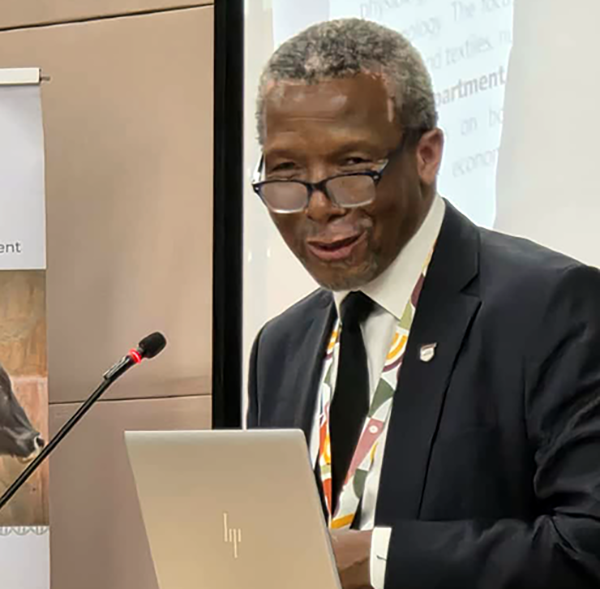
Prof Solomon Magano, Unisa Vice-Principal: Institutional Development, delivering his opening remarks at the MoU signing
For Unisa, the agreement expands its continental research presence and reinforces its engaged scholarship model. As a comprehensive, open, distance and eLearning institution, Unisa is well-positioned to extend genomic training and research participation through digital platforms.
Magano noted that the MoU reflects a shared vision for sustainable institutional growth. "This partnership is not a once-off engagement," he remarked. "It is a long-term commitment to building African scientific excellence, strengthening postgraduate development, and positioning our institutions as leaders in genomic research."
Beyond the formal signing, the partnership signals a commitment to advancing Africa’s genomic sovereignty, ensuring that African biodiversity is sequenced, analysed and interpreted by African scientists, for African priorities, with global impact.
By integrating Unisa’s cattle pangenome research with ILRI’s international livestock platforms, the collaboration positions both institutions at the forefront of genomic innovation.
The Nairobi signing affirms a shared ambition to strengthen Africa’s scientific leadership, deepen continental collaboration and celebrate Africa’s contribution, for Africa and the world.
* By Prof Ashley Gunter, Acting Deputy Executive Dean, College of Agriculture and Environmental Science
Publish date: 2026-03-05 00:00:00.0

 Unisa Law Clinic strengthens clinical legal education through UMP benchmarking visit
 Tony Kgoroge to headline launch of Unisa African Languages International Film Festival
 Department of Health Studies strengthens postgraduate research capacity in Ethiopia
 Unisa brings SARS services closer to employees
 Three structures, one college: Unisa CHS takes a united approach to student leadership in KwaZulu-Natal