

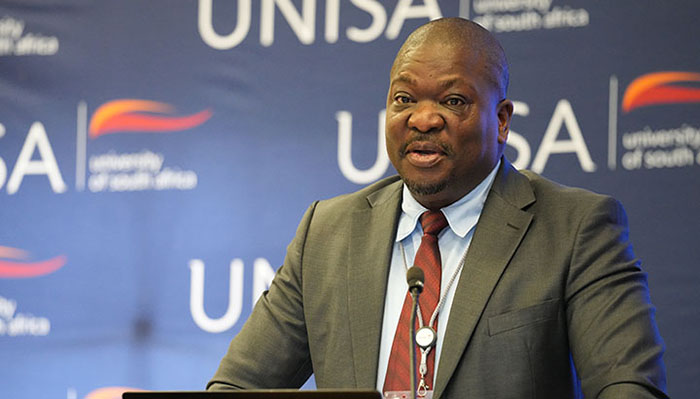
Ekurhuleni Executive Mayor Alderman Xhakaza
The University of South Africa (Unisa) has brought together academics, government officials and industry experts to explore how aviation can drive economic growth and urban development across the continent.
The discussions formed part of the university’s second annual Aerotropolis Symposium, which this year included a three-day seminar focused on the theme, "Aerotropolis and Africa’s Aviation Future: Bridging Global Standards with Regional Ambitions".
The symposium forms part of Unisa’s broader commitment to addressing national and global challenges through its 10 catalytic niche areas (CNAs), which prioritise research, teaching and innovation in strategically important fields.
Delivering the keynote address, Jonathan Fitzgerald called on African universities to play a greater role in developing specialised skills and academic programmes for the aviation sector.
He said institutions such as Unisa were well placed to pioneer specialised airport planning programmes that could improve project management and operational efficiency for airport authorities across the continent.
One of the key issues raised was the need to align airport master plans with municipal land-use planning. Fitzgerald said this integration was essential to developing successful aerotropolises, where airports function not simply as transport hubs but as catalysts for wider economic and urban development.
He also highlighted the potential of emerging technologies, including artificial intelligence, to support more innovative approaches to airport and urban planning.
Fitzgerald called for stronger partnerships between universities, industry and government to establish a comprehensive aviation and airport-planning training hub in Southern Africa.
"Ultimately, we advocate for incremental, practical steps starting with short learning courses," he said.

Keynote speaker, Mr Jonathan Fitzgerald
He pointed to Ethiopian Airlines as an example of what an integrated African aviation ecosystem could achieve, citing the airline’s approach to operations, training and maintenance.
Fitzgerald argued that greater integration across the continent’s aviation sector could support economic growth by improving regional connectivity, encouraging the development of low-cost carriers and creating strategically positioned aerotropolises.
He said Africa’s aviation industry was gaining greater international recognition as countries sought to reduce their reliance on foreign transport hubs.
However, he identified a significant gap in formal airport-planning education on the continent and said this needed to be addressed through sustained local capacity building.
He called for universities and specialised aviation facilities to work together to develop professionals in areas where demand is growing, including aircraft maintenance, piloting and airport planning.
Fitzgerald also reflected on his own journey into aviation. His childhood ambition to become a pilot was complicated by colour blindness, prompting him to pursue civil engineering at the University of Cape Town.
His interest in airport planning developed through a thesis on airport security and eventually led to a scholarship for a master’s degree at Cranfield University, which has specialised aviation facilities.
The symposium also provided an opportunity for Unisa to highlight its own plans to expand its contribution to aviation education, research and innovation.
Prof Eunice Seekoe emphasised the university’s commitment to research excellence through its catalytic niche areas and announced plans to acquire an airport facility in Pretoria East.
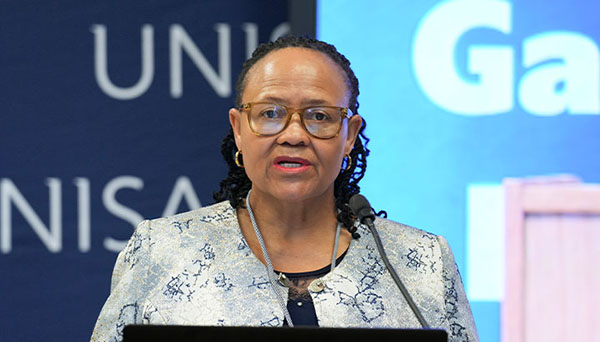
Prof Eunice Seekoe
If realised, the project would mark a significant milestone for Unisa and the higher education sector in Africa, providing a platform for training, maintenance organisations and multidisciplinary research.
The proposed Aerotropolis Project is intended to create opportunities for collaboration across different sectors while strengthening the university’s role in developing solutions to complex urban, economic and infrastructure challenges.
Seekoe said catalytic niche areas could serve as living laboratories where new economic, ecological and spatial approaches could be tested and developed.
The three-day programme brought together delegates from fields including law, engineering and economic sciences, with discussions covering artificial intelligence, logistics, sustainability and the future of airport-led development.
The City of Ekurhuleni also featured prominently in discussions about the future of airport-led development.
The city was represented by Executive Mayor Alderman Xhakaza, who outlined its 30-year master plan centred on OR Tambo International Airport.
The plan seeks to redefine the aerotropolis concept in a way that benefits communities surrounding the airport by improving connectivity and expanding access to economic opportunities.
"We must move past paper-based planning to actual execution on the ground," Xhakaza said.
He emphasised the importance of collaboration and investment in transforming traditional industrial areas into smart, interconnected economic ecosystems.
Dr Erin Naudé, Gauteng’s Regional Director, welcomed the participation of academics, government representatives and industry leaders, saying African airports needed to be transformed into engines of economic growth.
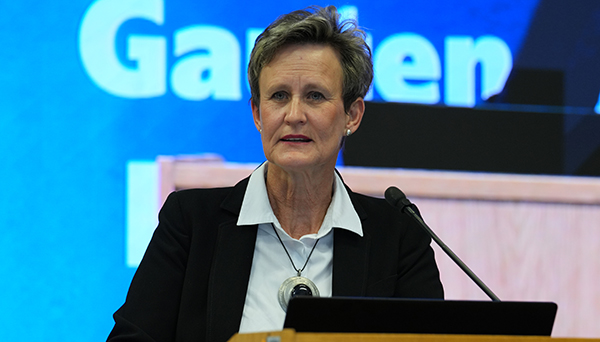
Dr Erin Naudé
She also acknowledged Unisa’s leadership and its partners for contributing to a conversation that supports broader continental priorities, including the objectives of the African Continental Free Trade Area.
For Unisa, the symposium reinforces the role of its catalytic niche areas in bringing together research, education, government and industry to address complex development challenges.
As Africa’s largest open distance e-learning institution, the university continues to position its teaching and research capabilities as tools for addressing the continent’s development priorities. The institution was recently recognised by the Department of Higher Education and Training as the leading producer of doctoral degrees.
* By Sipho Jack and Tshidiso Madiseng, Department of Institutional Advancement
Publish date: 2026-09-10 00:00:00.0

 From Maramanzhi to master's: Unisa graduate champions Tshivenda through scholarship
 Unisa students help shape digital complaints system to improve accountability and service delivery
 Age is no barrier to success: Former NAFCOC president earns Unisa master's degree at 71
 From academic setbacks to master's distinction: Unisa graduate's journey of resilience
 Ethiopian doctoral graduates highlight Unisa's growing impact across Africa