
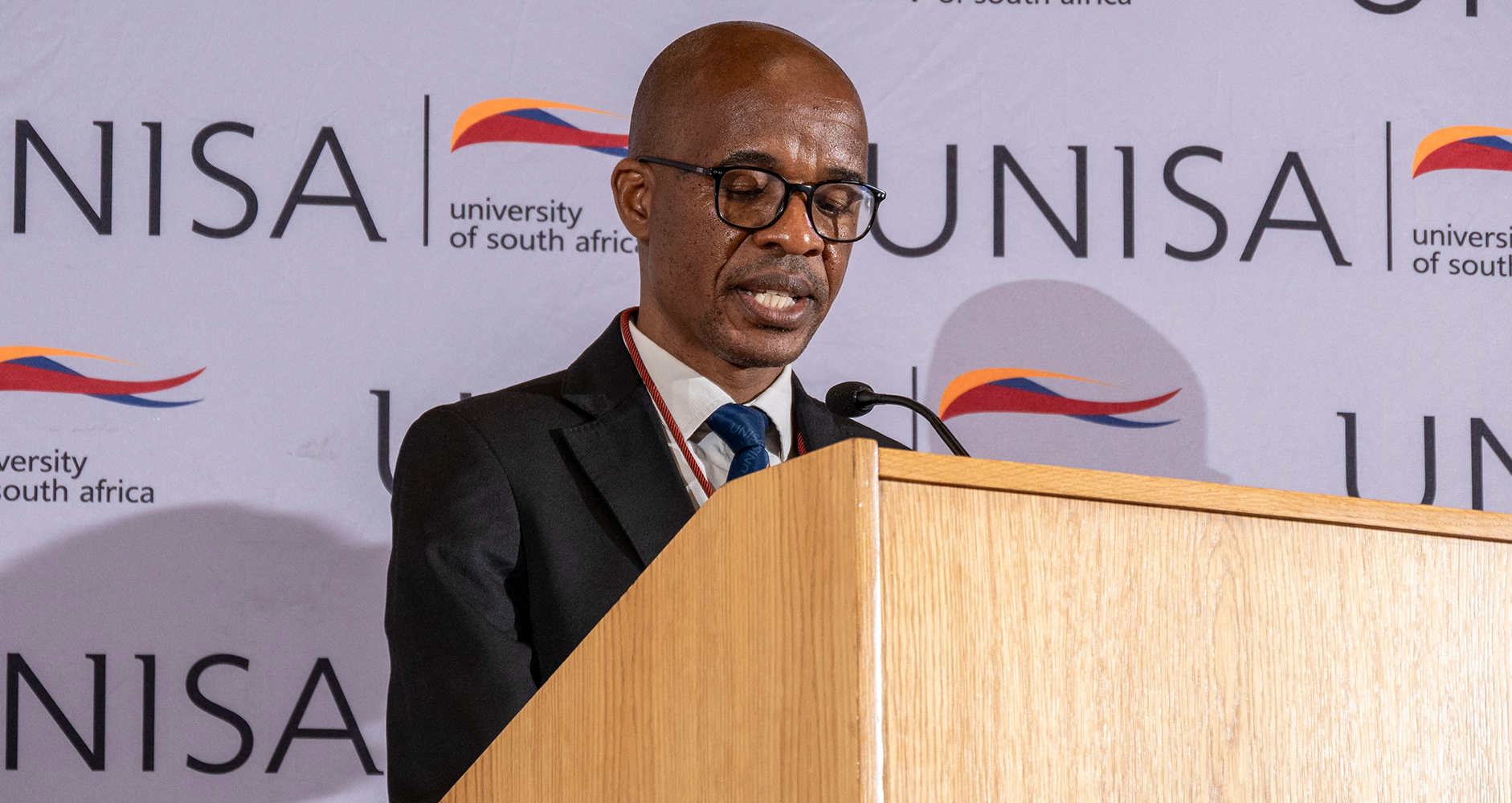
Prof Mpho Ngoepe, Unisa's Vice-Principal: Teaching, Learning, Student Support and Community Engagement, emphasised the need for universities to rethink established approaches to transformation and place students at the centre of teaching and learning.
The University of South Africa (Unisa) has called for a fundamental rethink of how knowledge is produced, how institutions respond to inequality and how emerging technologies can be harnessed to advance humanity.
The call emerged during the Department of Leadership and Transformation's (DLT) Biannual Conference, held under the theme "Shaping global change: Transforming theories and centring difference".
Located within the Office of the Principal and Vice-Chancellor, the department convened the three-day gathering to encourage scholars to challenge established ways of thinking and develop new theoretical approaches that respond to contemporary global challenges.
The conference brought together academics, researchers and other stakeholders to examine how dominant knowledge systems influence society and how alternative perspectives, particularly those grounded in African experiences, can contribute to meaningful transformation.
Central to the discussions was the recognition that addressing persistent inequality, technological disruption and social exclusion requires more than reforming existing institutions. It also demands a critical examination of the ideas, assumptions and structures that shape how societies understand and respond to these challenges.
Delivering the opening address on behalf of Unisa Principal and Vice-Chancellor Prof Puleng LenkaBula, Prof Mpho Ngoepe, Vice-Principal: Teaching, Learning, Student Support and Community Engagement, described the conference as an important platform for advancing transformation within the university and the broader higher education sector.
He said the gathering was particularly relevant to South Africa and the African continent, where universities continue to grapple with questions of institutional sustainability, social transformation and their role in shaping the future.
"The DLT has championed Unisa's mission of values by shaping global futures by building bridges between African scholars and the global academic community," he said.
Ngoepe noted that the conference theme was especially timely as rapid global developments continue to reshape institutions, economies and societies.
He described transformation as an ongoing process that must go beyond administrative reforms and institutional adjustments to fundamentally change how organisations operate and engage with society.
"It is a fundamental change in the logic through which our institutions, knowledge, and relationships are organised," he said.
He cautioned that changing the appearance of institutions without addressing their underlying structures and practices would not deliver meaningful transformation.
Although universities have introduced reforms in governance, curriculum development, funding and institutional sustainability, he acknowledged that progress has often been accompanied by setbacks.
"Universities now face questions of sustainability, and this moment demands that we change the world's trajectory by shaping global change through transformative theories that foreground difference," he said.
Ngoepe also highlighted the need for universities to respond to technological developments associated with the Fourth Industrial Revolution (4IR) and artificial intelligence (AI).
He encouraged scholars to reconsider traditional approaches to teaching, learning and institutional transformation, emphasising that diversity and difference should not be treated merely as institutional slogans.
Instead, these principles should inform how universities develop knowledge, formulate policies and engage with the communities they serve.
He further called for greater investment in student-centred education, arguing that universities must move away from traditional teacher-centred approaches towards models that encourage active student participation and recognise learners' changing needs.
Building on this argument, Prof Grace Khunou, Executive Director of the Department of Leadership and Transformation, challenged conventional approaches that measure institutional transformation primarily through numerical representation.
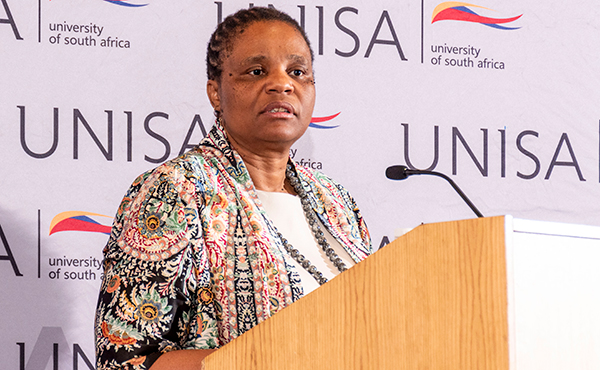
Prof Grace Khunou, Executive Director of the Department of Leadership and Transformation
While acknowledging the importance of addressing historical discrimination and exclusion, she argued that meaningful transformation also requires institutions to confront less visible barriers embedded in their cultures, practices and systems.
"These assumptions that suggest what transformation is must come to an end as they are not progressive," Khunou said.
She explained that although visible forms of discrimination and exclusion have historically received considerable attention, institutions must also examine the underlying practices and assumptions that allow inequality to persist.
For Khunou, transformation involves changing the less tangible aspects of institutional life, including attitudes, beliefs and practices that shape organisational culture and determine whose knowledge and experiences are valued.
She encouraged participants to question the theories that inform their understanding of society and consider whether established intellectual frameworks adequately reflect the diversity of human experiences.
Khunou described difference as an important means of exposing the limitations of dominant theories and creating opportunities for alternative approaches to knowledge production.
Drawing on South Africa's continuing crisis of femicide, she challenged scholars to examine not only why women are being killed, but also whose experiences and knowledge inform society's understanding of violence and the interventions developed to address it.
"The ways in which we think about vulnerability and power are shaped by particular histories and social context," she said.
Her reflections highlighted the influence of historical experiences, social inequalities and power relations on how societies define problems and develop responses.
She urged scholars to consider whose knowledge is recognised, who has the authority to develop theories and how academic thinking might change when perspectives from the Global South are treated as legitimate sources of intellectual authority.
These arguments reflect Unisa's Catalytic Niche Area of Feminist/Womanist/Bosadi Theorisations, which encourages critical engagement with gender, power relations, inequality and historically marginalised perspectives.
Prof Fatma Müge Göçek from the University of Michigan broadened the discussion by examining how historical narratives are constructed and how personal and collective experiences influence people's understanding of the world.
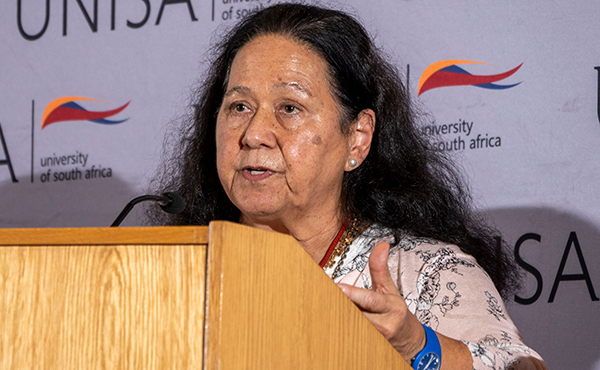
Prof Fatma Müge Göçek from the University of Michigan challenged conventional interpretations of global history and emphasised the importance of African and Asian perspectives in understanding social transformation.
She argued that interpretations of history are shaped by the perspectives of those who produce them, making it important to question dominant narratives and consider alternative ways of understanding global development.
Drawing on a five-stage framework of human history, Göçek challenged conventional Western interpretations of historical progress and encouraged participants to reconsider the experiences that have shaped contemporary societies.
She began with Africa, tracing humanity's origins on the continent approximately 300,000 years ago, before examining migration into Asia and the development of trade routes connecting different regions.
Her discussion then moved to the period commonly described as the Age of Discovery, which she linked to European efforts to establish alternative trade routes to Asia.
Göçek challenged the language traditionally associated with this period, arguing that European expansion was accompanied by the exploitation and dehumanisation of populations encountered during colonial exploration.
"In their discovery, they used the context of discovery to dehumanise all the people they encountered for exploitation and dominate racially," she said.
She subsequently examined the Age of Imperialism and what she described as the Afro-Asian stage, considering how colonialism, political independence and competing economic systems influenced the development of societies.
Reflecting on South Africa's democratic transition, she highlighted the country's movement from apartheid to democracy as an important historical experience.
"Because of the post-apartheid society, Africans have transitioned peacefully into a post-apartheid society which makes Africans stand out," she said.
She also examined Asian experiences of economic and political transformation, including the adaptation of capitalist, nationalist and socialist ideas within different societies.
Her presentation encouraged participants to consider how global history might be understood differently when African and Asian experiences are placed at the centre rather than the margins of historical interpretation.
Turning to artificial intelligence, Göçek raised concerns about the potential implications of technological advancement for human thought, identity and consciousness.
"My hope is that rather than having the body and mind be dominated by AI, we will through experiences have it dominated by critical consciousness so that we retain our spirits and don't turn into robots," she said.
Her remarks reinforced the importance of ensuring that technological progress strengthens rather than diminishes human experience, independent thought and critical consciousness.
The relationship between technological advancement and social transformation also featured prominently in a public lecture delivered by Unisa Vice-Principal: ICT and Chief Information Officer Mathabo Nakene-Mginqi.
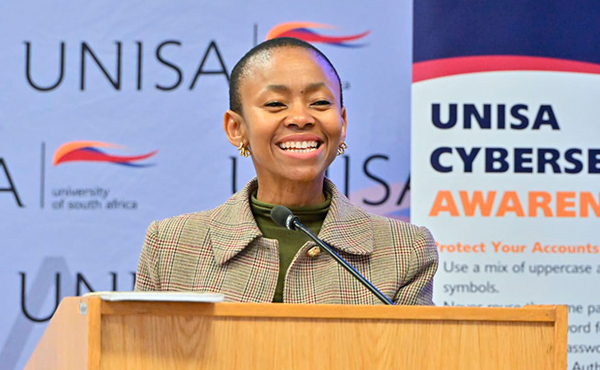
Unisa Vice-Principal: ICT and Chief Information Officer Mathabo Nakene-Mginqi highlighted the importance of responsible artificial intelligence and ensuring that technological innovation serves humanity.
Speaking under the subtheme "Science Innovation at the Service of Humanity", Nakene-Mginqi argued that the world is experiencing a period of profound change driven by several interconnected developments.
Advances in artificial intelligence, data science, biotechnology and digital platforms are creating new possibilities for education, research and economic development. However, these developments are unfolding alongside persistent inequality, exclusion, displacement and struggles for dignity and belonging.
She emphasised that digital transformation should not be understood simply as the introduction of new technologies, but as a process fundamentally concerned with people and their experiences.
According to Nakene-Mginqi, the central question is no longer whether technology will transform society, because that transformation is already underway. Rather, institutions must consider whether technological advancement will contribute to a more inclusive and equitable future.
Drawing on the work of digital transformation scholar David Rogers, she challenged universities to rethink how they adopt emerging technologies.
"David Rogers argues that successful digital transformation is not about digitising old processes, but about reimagining how organisations create value in a changing world. For universities, this means that AI should not merely make us more efficient, but should help us become more inclusive, responsive and transformed," she said.
Her argument highlighted the need for universities to look beyond the operational benefits of technology and consider how digital innovation can improve access to education, strengthen participation and respond to societal needs.
She also stressed that technological capability alone is insufficient without effective governance, ethical safeguards and accountability.
Universities, she argued, must establish appropriate rules and responsible practices to guide the development and use of artificial intelligence.
Nakene-Mginqi also challenged universities to reconsider how knowledge is produced, recognised and incorporated into emerging technologies.
She argued that African institutions should move beyond relying exclusively on knowledge developed elsewhere and create environments in which different intellectual traditions can coexist and contribute to technological advancement.
This challenge has become increasingly important as artificial intelligence systems depend heavily on the data used to train and develop them.
"The rise of AI makes this task even more urgent because the future of intelligence may depend on whose knowledge is included in the data," she said.
Her remarks raised important questions about whether African languages, histories, cultural experiences and knowledge systems are adequately represented in the information shaping emerging AI technologies.
Without deliberate efforts to address these gaps, she cautioned, artificial intelligence could reinforce existing inequalities in knowledge production and representation.
However, the technology also presents opportunities for African universities to contribute to the development of systems that recognise diverse intellectual traditions and respond to the needs of local communities.
Nakene-Mginqi encouraged participants to consider whether African institutions would remain consumers of technologies developed elsewhere or actively participate in shaping the digital systems that will influence future societies.
"The future will continue to be digital, but technology does not determine the future, our human choices do," she concluded.
Her contribution reflects Unisa's Catalytic Niche Area of the Fourth Industrial Revolution and Digitalisation, particularly its focus on harnessing technological innovation to address societal challenges and promote inclusive development.
Beyond the keynote addresses and public lectures, the conference featured academic presentations, panel discussions and roundtable engagements involving scholars, students, practitioners and activists.
These discussions created opportunities to interrogate established theories, challenge dominant intellectual perspectives and explore approaches that recognise the experiences of people from different social, cultural and academic backgrounds.
The conference's emphasis on inclusive knowledge production and educational transformation also supports the United Nations Sustainable Development Goal 4, which promotes inclusive and equitable quality education.
Its focus on challenging exclusion and recognising marginalised perspectives contributes to SDG 10, which seeks to reduce inequalities, while discussions on responsible technological development relate to SDG 9, which promotes innovation and resilient infrastructure.
The broader discussions also reflect the African Union's Agenda 2063 vision of an Africa driven by its people, drawing on its human potential, cultural heritage and intellectual capabilities to advance development.
For Unisa, these conversations are particularly relevant to its role as a comprehensive open distance e-learning institution serving diverse student communities across South Africa and beyond.
By encouraging African-centred scholarship, inclusive educational practices and responsible technological innovation, the university contributes to wider efforts to make higher education more accessible, relevant and responsive to societal needs.
Throughout the conference, speakers returned to a common message: meaningful transformation requires more than introducing new policies, technologies or institutional structures. It demands a willingness to question established assumptions, recognise diverse forms of knowledge and reconsider how universities serve society.
The gathering reinforced the responsibility of higher education institutions to participate actively in shaping social change rather than merely responding to it.
As universities navigate rapid technological advancement, persistent inequality and shifting global dynamics, the challenge is to ensure that innovation and knowledge production remain grounded in human dignity, inclusion and social justice.
*By Moleboheng Mpafa, Communication Intern, Department of Institutional Advancement
Publish date: 2026/10/13

 Unisa and iThemba LABS researcher earns international recognition for climate innovation
 Unisa Press launches From Cairo to Cape, unpacking Soviet support for Africa's liberation struggles
 Unisa ICT leader earns global recognition at World CIO 200 Summit
 Unisa conference calls for new thinking to shape a changing world
 Unisa lecturer earns PhD after exploring ancient Egyptian and biblical narratives