
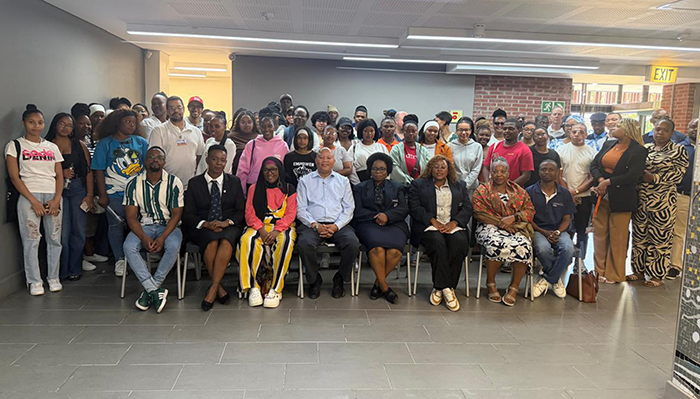
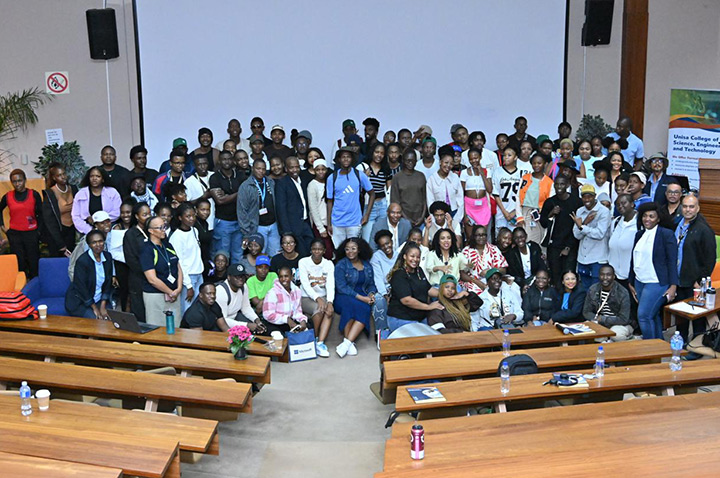
DTSFL staff, Parow Regional staff and Unisa students
The Department of Tuition Support and Facilitation of Learning (DTSFL) began the year with a project that is as emotionally taxing as it is deeply impactful: regional and correctional centre visits. These engagements are not ordinary institutional activities. These are moments when hope is restored, barriers are confronted head-on and students, often navigating learning under challenging circumstances, are reminded that their dreams remain valid and within reach.
The work is taxing, not because it is challenging to organise, but because it touches the human reality of student life. It places DTSFL and its partners face-to-face with the lived experiences behind academic performance, access and success. These visits offer students a better chance at success and, more importantly, affirm their belonging in the university system.
What makes this initiative powerful is the spirit of collaboration that drives it. Unisa departments and colleges work together to ensure that these interventions are meaningful and responsive. Through their own reflections and engagement, many have acknowledged a truth that cannot be ignored: these interventions are necessary and should not be occasional. They should begin on the very first day a student enters the university system and continue until their final day, ensuring that support is not reactive but built into the student journey itself.
The impact of the visits is not only felt; it is measured. In evaluation forms completed by thousands of participating students, whether attending virtually or in person, 100% of respondents confirmed that the teaching and learning interventions were necessary and impactful. For some, the experience became more than support; it became a turning point. Students shared that, through the interventions and motivation provided, they significantly improved their performance, with some even reporting passing with distinctions.
On 8 January 2026, just a day after the university reopened, DTSFL hosted a virtual workshop for beneficiaries of the National Student Financial Aid Scheme at correctional centres. The purpose was clear and urgent: to provide students with a practical, meaningful "touch-and-feel" of academic life, particularly the teaching and learning process, so that no student feels left behind because of their circumstances.
Students from various correctional centres attended the virtual meeting through their education coordinators.
At the heart of the engagement was a reminder that Unisa, as an academic institution, carries a responsibility beyond enrolments and administration. It must contribute meaningfully to its catalytic niche areas and remain committed to transforming society through education. The workshop served as a powerful reflection of that responsibility in action.
The session drew broad institutional participation, including representatives from the colleges, the Directorate of Student Assessment and Administration, the Directorate of Student Admission and Registration, the Department of Student Finance, Study Material, Production and Delivery, the Department of Student Development, Unisa regions, the Registrar’s Office, the Vice-Principal: Teaching and Learning, Community Engagement and Student Support, Department of Correctional Services (DCS) officials, and administrative and academic staff. Each department showcased its contribution to student support, demonstrating that student success is not a single office’s responsibility, but a shared institutional commitment from access to success.
DCS, represented by Dr Boyzar Moyo, Dr Metsing Khoabane, and education facilitators, expressed profound gratitude to Unisa and called for an even stronger relationship in the future. Their message reflected a shared understanding: when education is strengthened, lives are rebuilt and communities are transformed.
In a moving address, Dr Azwihangwisi C Tshivhase, Acting Vice-Principal: Teaching and Learning, Community Engagement and Student Support, motivated students and stakeholders, quoting the Vice-Chancellor, Prof Puleng LenkaBula’s end-of-year message: "Unisa remains the beacon of hope, opportunity for academic excellence for students across Africa and beyond".
His message reminded participants that these interventions are not merely programmes; they are deliberate attempts to reach every Unisa student, regardless of circumstance, and to affirm that no student should be excluded from success because of where they come from or where they find themselves.
Prof Meahabo Magano provided context and direction by presenting solid statistics on registered students, levels of success and those requiring additional academic support. In her message to both students and academics, the Executive Director of DTSFL encouraged all to strive to become "hundred percenters", a call not only to achievement but also to commitment, consistency and excellence.
On 19 January 2026, the DTSFL team travelled to Cape Town to visit Parow campus, and on 20 January, the team visited the Brandvlei Correctional Centre. Students were engaged directly, with 80 attending on campus and 65 at the correctional centre.
In the spirit of quality education without discrimination, students received practical and empowering support, including
For many new students, these interventions offered more than information; they provided a glimpse of what Unisa truly represents: an institution that does not merely enrol students but equips them for success.
Students also spoke honestly about what they still need. Their voices were clear and consistent: they want more lessons, more responsive academics, and teaching and learning support that prioritises student realities and challenges.
The regional director and staff at the Parow campus thanked the DTSFL for the initiative and committed to continuing to support our students beyond this visit. At the end of the session, 90% of the issues were resolved, and the remaining 10% require further engagement with relevant university departments. Magano will see these matters through and ensure that a student-favoured solution is sought.
* By Khongelani Chauke, DTSFL Quality Assurance Champion
Publish date: 2026-02-04 00:00:00.0
 Thought leader in research recognised for excellence
 Unisa hosts successful Library Week public lecture
 Unisa PhD candidate appointed to the FASSET Board
 Unisa connects academia and industry at career day
 Unisa pays tribute to iconic civil rights activist