

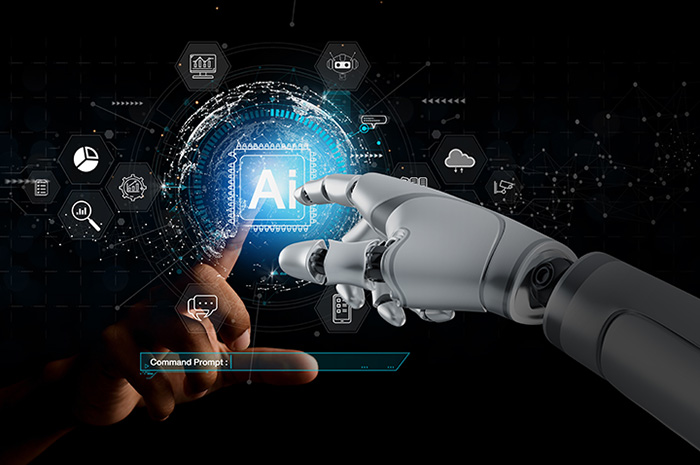
Research by two Unisans shows that artificial intelligence (AI) is rapidly changing how students learn, write and conduct research, and postgraduate supervision is no exception.
With student use of AI tools jumping from 55 to 78 per cent in just one year, universities worldwide are exploring how to embrace these technologies responsibly. A recent study by Prof Anthony Brown and Dr Jane Rossouw offers a grounded, South African perspective on what AI‑supported supervision can look like in practice. Brown is a Professor in the School of Interdisciplinary Research and Graduate Studies (SIRGS) at the College of Graduate Studies, and Rossouw is a researcher and lecturer in the Department of Psychology of Education at the College of Education.

Prof Anthony Brown, Professor in the School of Interdisciplinary Research and Graduate Studies (SIRGS), College of Graduate Studies
During Rossouw’s doctoral journey, the pair experimented with generative AI tools such as ChatGPT to enrich their supervisory conversations. Rather than replacing human judgment, AI became a thinking partner, helping to clarify complex theories, refine research questions and strengthen academic writing. For students working in emotionally or conceptually demanding fields such as sexuality studies, AI also offered a space to test ideas, check for bias and build confidence before formal supervision meetings.

Dr Jane Rossouw, Department of Psychology of Education, College of Education
Brown and Rossouw’s work draws on Kolb’s Augmented Experiential Learning Theory, which emphasises learning through reflection and active engagement. Used well, AI can support this process by offering immediate feedback, helping students structure arguments and encouraging more self-directed learning. This is especially valuable in multilingual contexts, where AI can assist with grammar, clarity and academic tone.
The study also highlights the pitfalls. AI can oversimplify, reinforce Western-centric assumptions, or produce information that sounds convincing but lacks nuance. For this reason, Brown and Rossouw emphasise ethical use: careful prompt design, critical evaluation of outputs, and transparent documentation of when and how AI is used. Their conclusion is clear: AI should not replace supervisors; it should free them to focus on deeper intellectual mentorship.
When used thoughtfully, AI can democratise access to support, strengthen research quality and help develop more independent, critically minded scholars.
Click here to read their full article as published.
* By Hanli Wolhuter (Communication and Marketing Specialist), College of Graduate Studies
Publish date: 2026-03-06 00:00:00.0

 Turning Africa's potential into human possibility: Reflections from 2026 Chief Albert Luthuli Founders' Lecture
 Prof LenkaBula calls for action on public service ills as 25th SAAPAM Conference opens
 Reimagining justice through Unisa's engaged scholarship
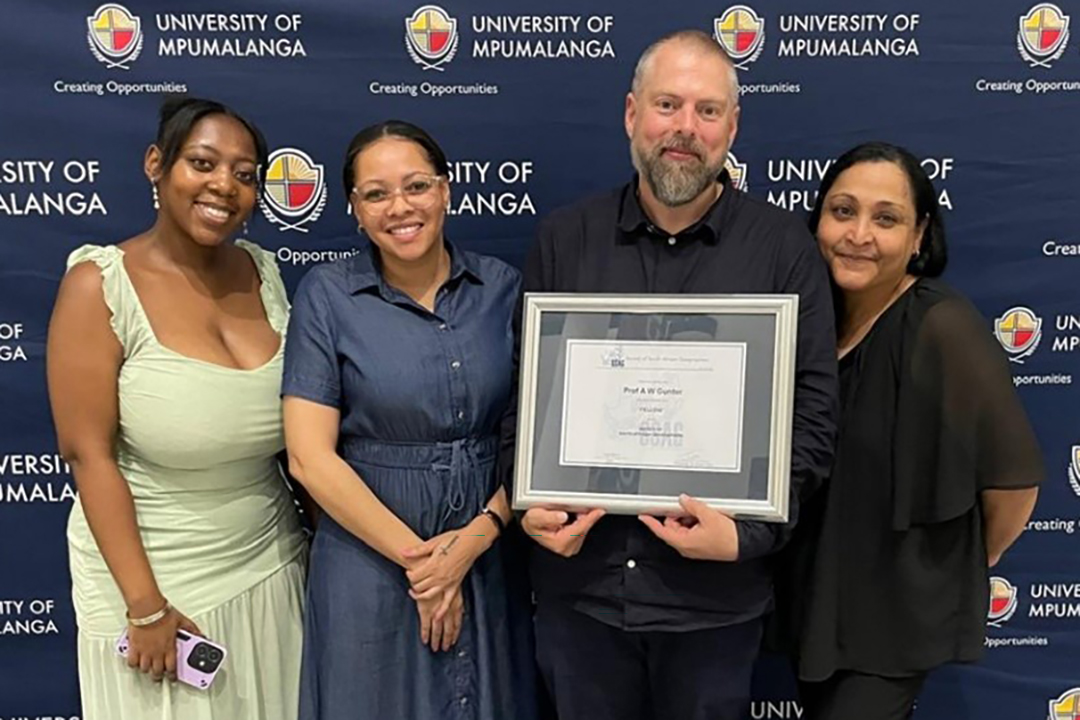 Unisa geographer elected Fellow of the Society of South African Geographers
 Unisa and Harbin Institute of Technology forge academic partnership