
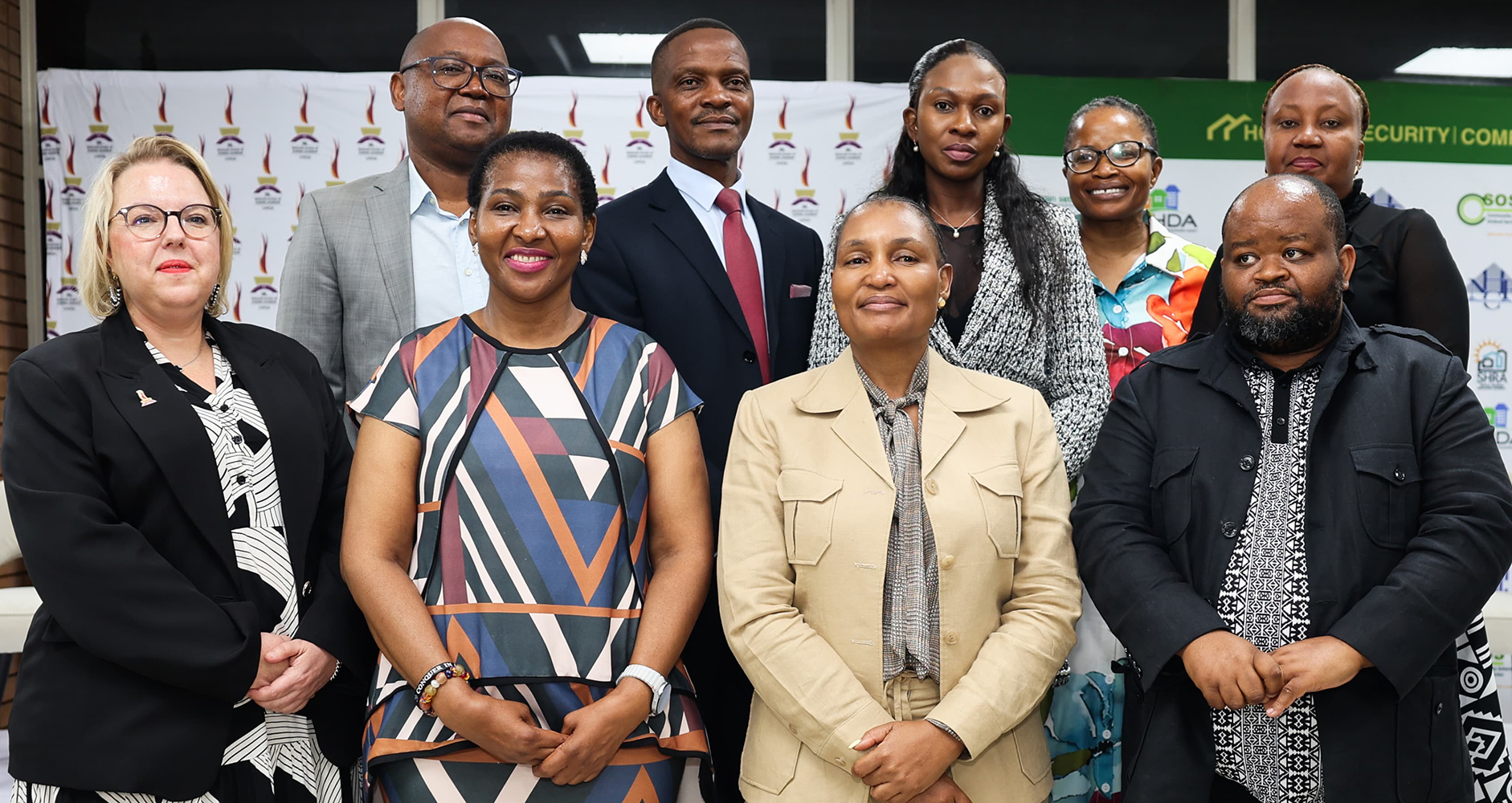
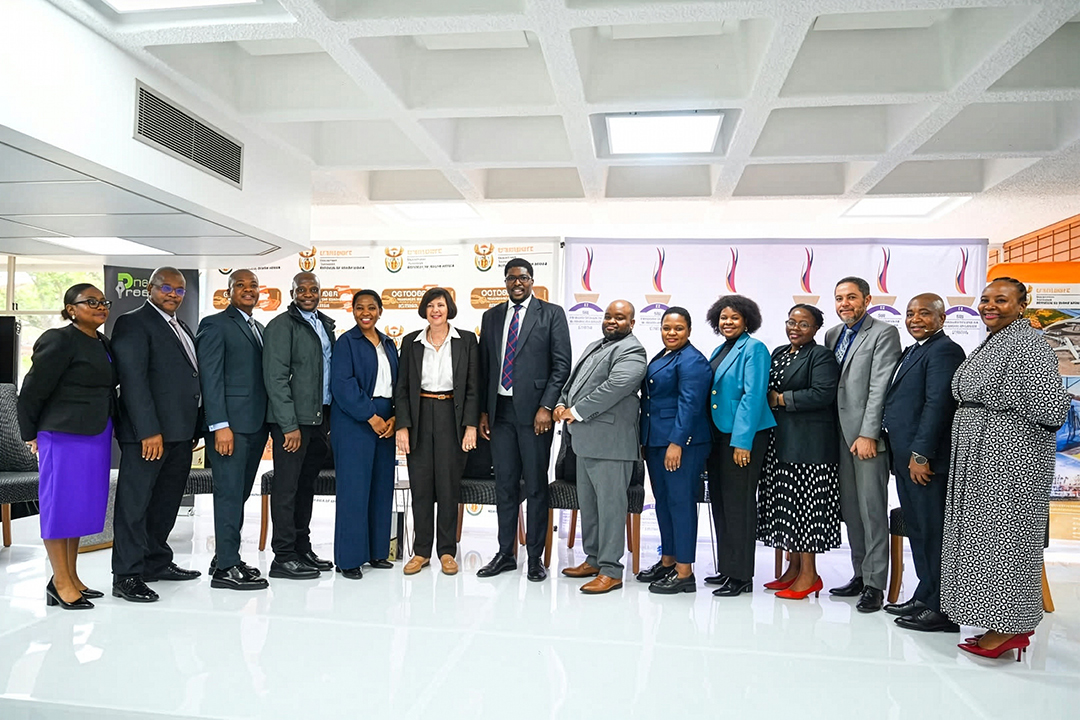
Front row: Prof Nellie Swart, Director, Executive Education: Unisa SBL, Prof Ophillia Ledimo, Academic Director: Unisa SBL, Minister Thembi Simelani, Department of Human Settlements, Prof Walter Matli, Acting Executive Director: Unisa SBL. Back: Unathi Mntonitshi, Infrastructure and Transport Specialist: SALGA, Dr Hlampane Maepa, Director: Dr HE Maepa Institution, Vinolia Mashiane, Chief Investment Officer: Housing Development Agency, Dr Nana Mhlongo, Deputy Director General: Department of Human Settlements.
More than three decades into democracy, South Africa faces a challenge that goes beyond providing houses: ensuring those homes are part of sustainable communities where people can access essential services, find employment, and build better lives.
This was the central message at the University of South Africa's Graduate School of Business Leadership (Unisa SBL) Distinction Dialogue, held in partnership with the Department of Human Settlements. The dialogue brought together government officials, academics, and industry leaders to examine how South Africa can shift from measuring housing delivery by completed units to developing integrated human settlements that address inequality, strengthen local economies and improve people’s quality of life.
"Democracy cannot live in speeches alone. Democracy must live where people live." With these words, programme director Mosidi Mokgele captured the significance of the gathering, placing human dignity, social inclusion and access to opportunity at the centre of the discussion. The conversation also highlighted the importance of capable leadership, sustainable infrastructure investment and collaboration between government, academia, industry and communities in addressing one of South Africa's most persistent development challenges.
For Prof Walter Matli, Acting Executive Dean and CEO of Unisa SBL, where South Africans live remains a powerful indicator of their access to economic and social opportunities. "Ask any South African where they live, and you will learn a great deal about their lives," he observed. An address can reveal how far someone travels to work, how much of their income goes towards transport and whether their children have access to schools and healthcare facilities.
These realities demonstrate how apartheid-era spatial planning continues to influence economic participation and social mobility. Matli drew attention to South Africa's National Development Plan (NDP) 2030, which identifies spatial transformation and integrated human settlements as essential to overcoming inequality. Despite progress in housing delivery, fragmented planning, insecure property ownership and inadequate infrastructure continue to undermine these ambitions.
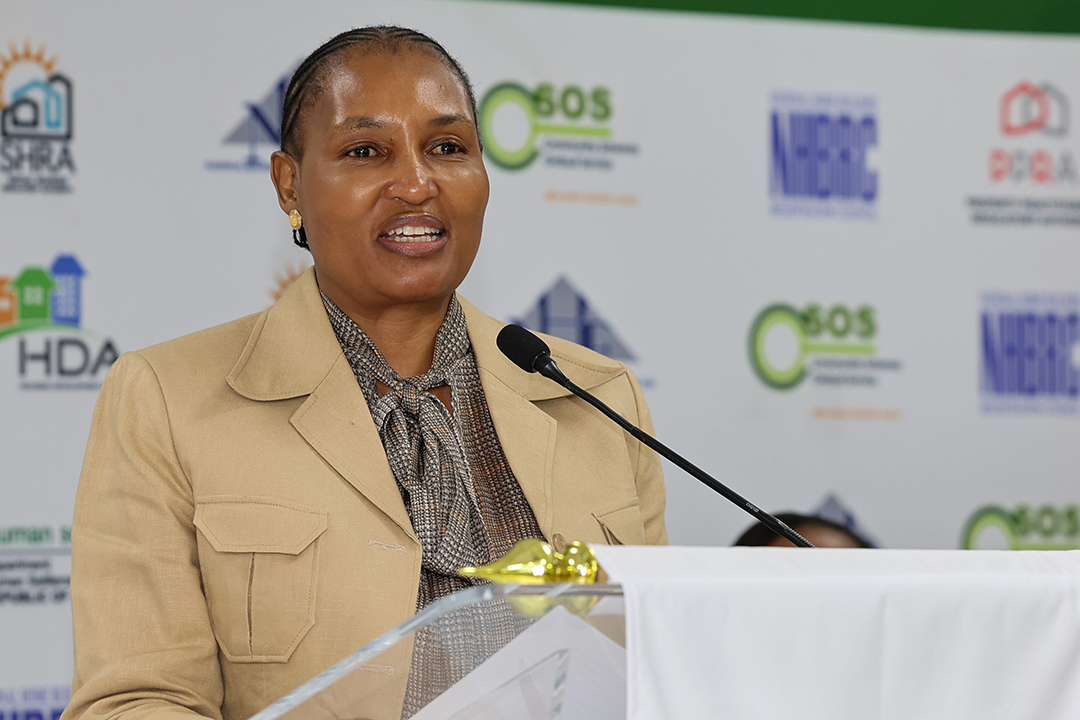
He argued that meaningful transformation requires coordinated leadership across government institutions responsible for land, infrastructure, housing finance and economic development. For Unisa SBL, this challenge underscores the importance of developing leaders capable of navigating complex institutional systems, strengthening accountability and translating public policy into measurable improvements in people’s lives. Minister of Human Settlements Thembi Simelane reinforced the need for integrated development, warning against constructing houses without securing the infrastructure required to support them.
"A housing project without adequate bulk supply infrastructure is a promise waiting to fail," she said. Her warning highlighted the consequences of developments proceeding without sufficient water, sanitation and other essential municipal services. When infrastructure is inadequate, construction projects stall, costs increase and communities are left waiting for promised improvements.
Similarly, housing developments located far from employment opportunities and public transport can deepen household poverty through higher commuting costs. Simelane argued that housing delivery must therefore be assessed not only by the number of completed homes but also by their location, accessibility and long-term sustainability. According to the Minister, South Africa has approximately 4,075 informal settlements, while the Department of Human Settlements is targeting 25,000 serviced sites during the 2026/27 financial year.
She also outlined efforts to accelerate the release of public land, expand affordable housing and explore converting strategically located government buildings into social housing. These interventions speak directly to Sustainable Development Goal (SDG) 11, which promotes inclusive, safe, resilient and sustainable cities and communities. The emphasis on reliable water and sanitation infrastructure also connects with SDG 6, while the need to overcome spatial exclusion supports SDG 10, which focuses on reducing inequalities.
Together, these priorities demonstrate that sustainable human settlements require coordinated investment in housing, infrastructure, environmental resilience and economic opportunity. The discussion moved from policy ambitions to implementation during a panel session facilitated by Prof Ophillia Ledimo, Academic Director at Unisa SBL. Ledimo challenged panellists to examine the institutional, financial and operational barriers preventing South Africa from developing integrated settlements.
Dr Nana Mhlongo, Deputy Director-General at the Department of Human Settlements, explained that the 2024 White Paper for Human Settlements signals a shift from counting housing units towards developing communities connected to schools, healthcare, transport and employment opportunities. "People experience democracy not in terms of policies and legislation," she explained, highlighting the importance of translating government commitments into tangible improvements in living conditions.
Mhlongo identified integration, innovation and inclusiveness as essential to achieving this transformation. Her contribution reinforced the NDP's vision of sustainable human settlements and the African Union's Agenda 2063, particularly Aspiration 1, which envisages a prosperous Africa built on inclusive growth and sustainable development. These frameworks recognise that housing cannot be separated from economic participation, infrastructure development and the creation of communities capable of supporting future generations.
The dialogue also demonstrated the importance of interdisciplinary thinking in addressing development challenges that cut across governance, finance, environmental sustainability and social inclusion. Unathi Mntontshi, Senior Manager and Infrastructure and Transport Specialist at the South African Local Government Association (SALGA), highlighted the institutional transformation required to achieve integrated settlements.
"We are trying to be something we’ve never been before," he said. His observation reflected the difficulties municipalities face in coordinating housing, transport, infrastructure and economic development amid financial and technical constraints. Mntontshi argued that transport should be treated as a basic service and incorporated into land-use planning from the outset.
Without accessible and affordable transport, even newly constructed housing can leave residents disconnected from employment, education and essential services. Contributions from Dr Hlamphane Emmanuel Maepa and Housing Development Agency Chief Investment Officer Vinolia Mashiane further explored how stronger municipal coordination, strategically located land, blended finance and local skills development could improve delivery. These discussions reinforced the need for capable public institutions and innovative financing mechanisms to support infrastructure investment.
They also highlighted the relationship between sustainable settlements and economic development, including the potential for construction, infrastructure maintenance and community development to support local employment and skills development. Beyond infrastructure and financing, the dialogue examined the importance of transparency, accountability and community participation. Mhlongo outlined efforts to digitise housing application systems, strengthen verification processes and improve transparency.
Simelane also emphasised the importance of addressing title deed backlogs to provide qualifying homeowners with greater security of tenure. One of the most compelling examples came from the Minister's account of residents monitoring construction in an informal settlement upgrading project. Community members identified building defects and insisted that contractors correct them before construction was completed.
The experience demonstrated that residents can play an active role in strengthening accountability and improving the quality of housing delivery. It also highlighted the importance of moving away from approaches that treat communities as passive beneficiaries rather than partners in shaping their own development. Meaningful participation can help ensure that housing projects respond to local needs, strengthen public trust and produce more sustainable outcomes.
For Unisa SBL, the dialogue demonstrated how universities can contribute to national development by connecting academic expertise, leadership development and policy engagement with practical challenges facing society. South Africa's human settlements crisis requires leaders who understand the relationship between infrastructure investment, institutional governance, economic inclusion and environmental sustainability. Through platforms such as the Distinction Dialogue, Unisa SBL creates opportunities for policymakers, researchers and industry practitioners to examine these challenges collectively and consider approaches to improving implementation.
The discussion also reflects the broader interdisciplinary and socially responsive orientation of Unisa's research and engaged scholarship. Its focus on inclusive development, institutional transformation and sustainable communities provides a basis for collaboration across relevant university research priorities, including work concerned with inequality, governance and sustainable development. Such engagement is particularly important in Africa, where rapid urbanisation, infrastructure pressures and unequal access to services make integrated settlement planning an increasingly urgent development priority.
By facilitating dialogue between government and industry, Unisa SBL contributes to the exchange of knowledge needed to strengthen public-sector capability and inform more inclusive development decisions. In her closing reflections, Prof Nellie Swart, Education Director at Unisa SBL, emphasised the responsibility to translate discussion into action.
"The true distinction lies not in the conversations we have today, but in the difference we make tomorrow," she said. Her message captured the central challenge confronting South Africa's human settlements sector. While the provision of housing remains essential, sustainable development requires a broader measure of success that includes reliable infrastructure, secure property ownership, accessible transport, economic opportunity and meaningful community participation.
The dialogue reinforced the need to move beyond fragmented interventions towards coordinated development that responds to the social, economic and environmental needs of communities. For South Africa, achieving this transformation would advance the objectives of the NDP 2030, contribute to the SDGs and support Africa’s wider aspirations for inclusive and sustainable growth under Agenda 2063. For Unisa SBL, it also reaffirmed the value of developing responsible leaders and fostering partnerships capable of turning research, policy and institutional expertise into practical solutions.
Ultimately, the true measure of South Africa's housing progress will not simply be how many houses it builds, but whether those houses become part of thriving, connected and sustainable communities where people have a fair opportunity to improve their lives.
* By Thina Gwiliza, Communication and Marketing Specialist, Unisa Graduate School of Business Leadership
Publish date: 2026-10-16 00:00:00.0

 Unisa SBL calls for shift from building houses to creating sustainable communities
 From law graduate to student leader: Tshegofatso Mmope's commitment to justice and empowerment
 Unisa Western Cape honours retirees and celebrates their enduring legacy
 South Africa's transport recovery faces its toughest test: Delivering reliability for all
 Unisa brings higher education opportunities closer to Central Karoo learners