

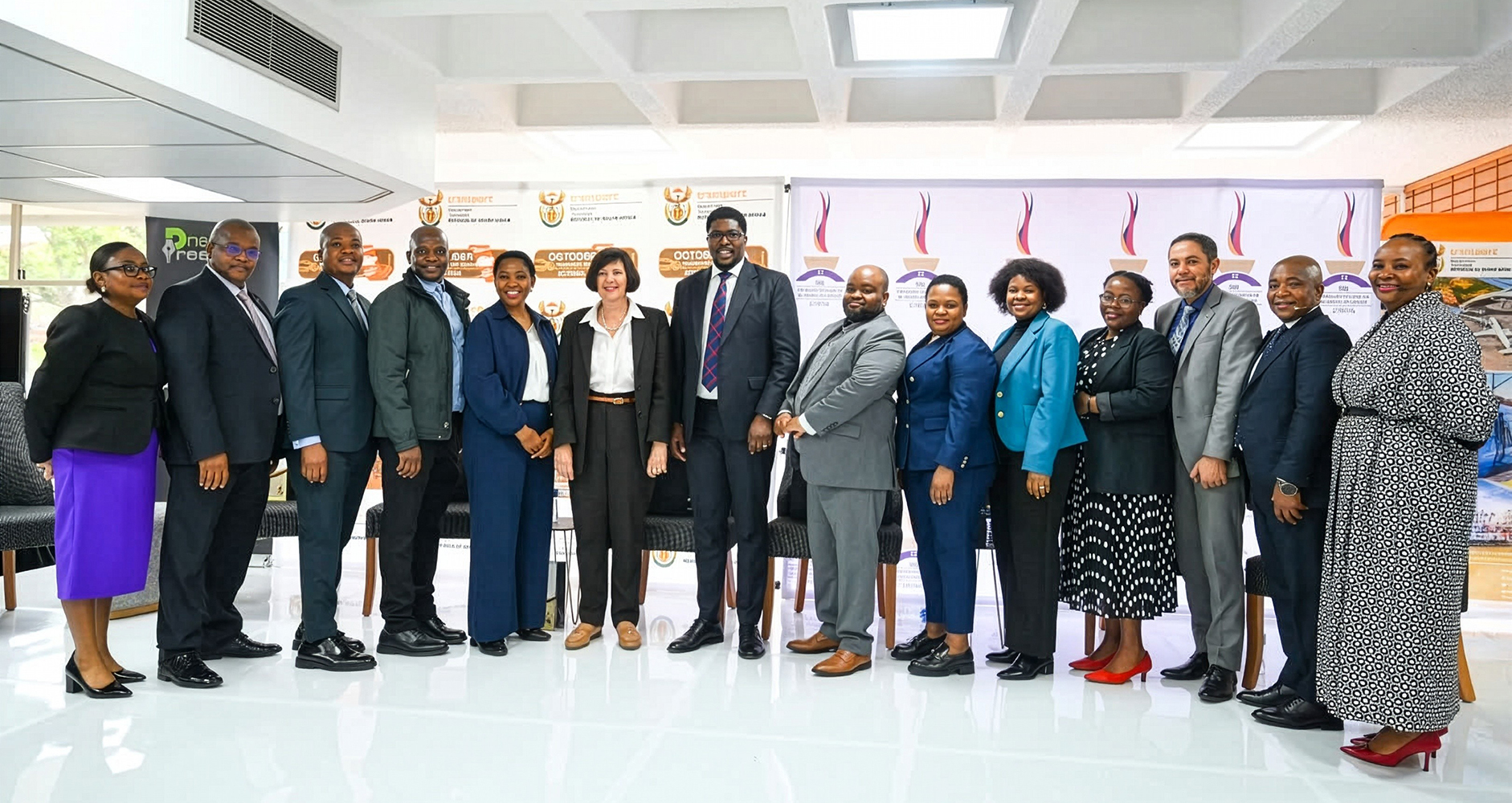
Minister of Transport Barbara Creecy and Deputy Minister Mkhuleko Hlengwa with Unisa SBL Acting CEO & Executive Dean Prof Walter Matli, Academic Director Prof Ophelia Ledimo and transport sector executives following the Distinction Dialogue and official launch of October Transport Month 2026 at the Unisa Graduate School of Business Leadership in Midrand.
A train that arrives on time. A commuter who feels safe waiting on a platform before sunrise. A journey that takes 30 minutes instead of three hours. A truck that crosses a border without unnecessary delays. A road that withstands the next flood.
These may seem like ordinary expectations, but they are the everyday measures by which South Africa's transport system must ultimately be judged. That was the central message emerging from the official launch of October Transport Month 2026, hosted at the University of South Africa's Graduate School of Business Leadership (Unisa SBL) in Midrand.
The gathering brought together leaders from some of the country's most important transport institutions to assess progress in rebuilding a system that has endured years of infrastructure deterioration, operational failures, vandalism and governance challenges.
While the discussions highlighted encouraging signs of recovery across passenger rail, freight logistics, road infrastructure and traffic enforcement, they also raised a more demanding question: Are improvements in institutional performance translating into safer, more reliable and affordable transport for the people and businesses that depend on it?
South Africa enters October Transport Month with evidence of progress in several areas of its transport system. Minister of Transport Barbara Creecy reported that 35 of the country's 40 priority passenger rail lines have been restored, marking a significant step towards rebuilding a service severely affected by infrastructure damage, theft and vandalism.
Passenger journeys recorded by the Passenger Rail Agency of South Africa (PRASA) have increased from approximately 10 million in the 2020/21 financial year to an audited 101 million in 2025/26. Freight rail has also shown signs of improvement, with Transnet transporting 167.9 million tonnes of goods by rail during the past financial year.
Meanwhile, major road infrastructure projects are progressing, and road fatalities declined by 6.2% in 2025. Preliminary figures for the first eight months of 2026 indicate a further reduction. These developments suggest that efforts to restore transport infrastructure, improve operational performance and strengthen institutional capacity are beginning to yield results.
However, as the discussions at Unisa SBL demonstrated, recovery figures tell only part of the story. The more important challenge is ensuring that these improvements translate into dependable services, reduced transport costs, safer journeys and greater economic opportunities.
Unisa SBL Academic Director Prof Ophilia Ledimo challenged transport leaders to look beyond performance statistics and consider the realities facing ordinary commuters. For PRASA, she raised a question that captured the practical meaning of reliability: can a commuter trust that a train will arrive as scheduled and that the journey will be safe, even at four in the morning?
The question highlighted the difficulties faced by workers who depend on public transport to reach their places of employment, often travelling before sunrise or returning home late at night. PRASA acknowledged that years of operational instability had severely compromised the availability, reliability and predictability of passenger rail services.
However, the agency reported that its national on-time performance had improved to 93%, with a target of reaching 98%. More than 80% of the 35 restored corridors are now operating new trains manufactured in South Africa, while PRASA has recorded its first unqualified audit in nine years.
Its leadership attributed the progress to improved organisational stability, stronger governance and the commitment of employees responsible for restoring and maintaining services. Nevertheless, the scale of the challenge remains considerable.
Government aims to increase passenger rail journeys to 600 million annually by 2030, a target that will require sustained investment in infrastructure, signalling systems, security and service reliability. For commuters, the success of this programme will ultimately be measured by whether trains are available when needed, arrive on time and provide a safe and affordable alternative to road transport.
The importance of reliability extends beyond passenger transport to the movement of goods that sustain businesses, industries and the broader economy.
Transnet Acting Group Chief Executive Adv Michelle Phillips outlined the significance of opening the national rail network to private train operating companies as part of efforts to rebuild South Africa's freight capacity. Transnet is targeting approximately 180 million tonnes of rail freight against a broader national ambition of 250 million tonnes.
Closing this gap will require greater operational capacity, infrastructure investment and collaboration between public and private operators. However, Phillips emphasised that the condition of the rail network remains a major challenge.
Years of inadequate maintenance have left substantial sections of infrastructure requiring rehabilitation, while theft and vandalism continue to undermine operational efficiency.
"We need to make sure that the network is safe and reliable," she said. Her remarks reinforced a central theme of the discussions: expanding access to rail infrastructure will have limited impact unless operators can depend on a network that functions consistently.
For businesses, unreliable freight services translate into delayed deliveries, increased logistics costs and reduced competitiveness. Restoring freight rail is therefore not simply an operational priority for Transnet. It is essential to strengthening South Africa's economy, supporting industrial activity and improving the country’s position in regional and international trade.
While rail recovery remains a national priority, roads continue to play a central role in connecting communities, businesses and economic centres. The South African National Roads Agency Limited (SANRAL) highlighted the N2 Wild Coast project as an example of how infrastructure development can transform accessibility and economic opportunities.
Once the relevant road and bridge infrastructure is completed, a journey that currently takes approximately three hours is expected to be reduced to less than 30 minutes. Such improvements can have far-reaching implications for communities, making it easier to access employment, healthcare, education and markets.
Beyond reducing travel times, major infrastructure projects can also create opportunities for local businesses and contractors. SANRAL reported that more than 2,000 small and medium enterprises have benefited from its broader project programme. The discussions also highlighted the growing role of technology in improving road safety.
Weigh-in-motion systems will enable authorities to measure truck loads while vehicles are moving, helping identify overloaded vehicles without requiring every truck to stop for inspection. Average-speed-over-distance enforcement is also being introduced to address speeding behaviour, particularly among motorists who slow down only when approaching conventional speed cameras.
These measures demonstrate how infrastructure investment and technological innovation can work together to improve road safety, protect public assets and support more efficient transport operations. South Africa's transport challenges do not end at its national borders.
As a major regional trading partner, the country depends on efficient cross-border transport systems to facilitate the movement of goods between South Africa and neighbouring countries. Delays at border posts can disrupt supply chains, increase transport costs and affect the competitiveness of businesses operating across the region.
Cross-Border Road Transport Agency (C-BRTA) Chief Executive Officer Lwazi Mboyi emphasised the importance of stronger coordination between transport regulators, the Border Management Authority and the South African Revenue Service (SARS).
He highlighted digital permitting, improved information sharing and smarter law enforcement as essential tools for reducing unnecessary delays. At the Beitbridge border post alone, approximately 1,700 trucks can pass through daily, illustrating the scale of cross-border freight movement.
Digital technologies increasingly enable authorities to identify compliant vehicles before they reach enforcement points, reducing the need for indiscriminate inspections. Improving these processes could strengthen trade efficiency while allowing enforcement agencies to concentrate their resources on higher-risk vehicles and operators.
For businesses and consumers, the benefits would be reflected in more predictable deliveries, lower logistics costs and improved access to goods. Digital transformation is also reshaping traffic law enforcement.
Road Traffic Infringement Agency (RTIA) Chief Executive Officer Matsamela Moloi argued that the Administrative Adjudication of Road Traffic Offences (AARTO) system should not be viewed simply as a mechanism for issuing fines.
Instead, its broader purpose is to encourage responsible driving and reduce repeat traffic offences. Centralised infringement records, digital payment channels, demerit points and rehabilitation measures are intended to create a more coordinated approach to traffic enforcement.
The emphasis on behavioural change is particularly important in a country where road crashes continue to claim lives, cause serious injuries and place considerable pressure on families and public institutions. Preventing crashes requires more than enforcement alone. It also depends on responsible road use, effective infrastructure management, education and sustained cooperation between transport authorities.
When prevention fails, the consequences extend beyond damaged vehicles and disrupted traffic. Road crashes can leave individuals with life-changing injuries, deprive families of income and create long-term financial and emotional hardship.
The Road Accident Fund (RAF) plays a critical role in responding to these consequences, with its leadership describing the organisation as the "consoling arm" of South Africa's transport system. The fund outlined reforms aimed at making its services more accessible and improving the claims process.
These include taking services directly into communities and hospitals, expanding direct claims, digitising claims tracking and exploring alternative dispute resolution mechanisms to reduce prolonged litigation. The reforms are intended to make compensation processes more responsive to the needs of road accident victims.
However, the discussions also underscored an important reality: the most sustainable transport system is one that prevents crashes rather than relying primarily on compensation after harm has occurred. Reducing road fatalities and serious injuries therefore remains central to improving the performance of the transport sector as a whole.
While individual agencies outlined their achievements and challenges, Unisa SBL Executive Dean Prof Walter Matli challenged delegates to consider the importance of working together. Using the analogy of a tree standing alone against a storm, Matli illustrated the vulnerability of institutions that operate in isolation.
He contrasted this with a forest, where interconnected roots, shared resources and collective strength enable trees to withstand difficult conditions.
"The future does not belong to the isolated tree. The future belongs to the forest," Matli said. The analogy captured the interconnected nature of South Africa’s transport challenges.
Passenger rail cannot succeed without reliable infrastructure and effective security. Freight operations depend on functioning rail networks, efficient ports and border systems. Road safety requires coordination between infrastructure authorities, enforcement agencies and institutions responsible for supporting crash victims.
Each component forms part of a wider system whose effectiveness depends on cooperation, accountability and shared objectives. Creecy reinforced Matli's message, describing the government’s ambition to build a "mighty transport forest" that is integrated, sustainable, resilient and capable of serving South Africans with dignity and efficiency.
For Unisa SBL, the discussions demonstrated the importance of bringing institutional leaders together to examine complex public policy and governance challenges. They also highlighted the value of leadership, innovation and collaboration in strengthening public institutions and improving service delivery.
These priorities resonate with South Africa's National Development Plan 2030, which recognises efficient infrastructure and transport systems as essential to economic development and social inclusion. They also connect with Sustainable Development Goal 9, which promotes resilient infrastructure, and SDG 11, which calls for safe, accessible and sustainable transport systems.
South Africa's transport sector is showing signs of recovery. Passenger trains are returning to previously disrupted corridors, freight rail reforms are creating opportunities for new operators, road infrastructure projects are improving connectivity, and technology is increasingly being used to strengthen enforcement and border management.
Yet the most difficult phase of the recovery may still lie ahead. Restoring services is an important achievement, but sustaining them requires continued investment, effective governance, infrastructure protection and cooperation between institutions.
More importantly, progress must become visible in the everyday experiences of South Africans. A worker should be able to depend on an early-morning train without fearing for their safety. A farmer should be able to transport goods to market without avoidable delays. A business should be able to move freight across borders efficiently. Communities should benefit from roads that improve access to services and economic opportunities.
And every person using the country's transport network should have a reasonable expectation of arriving safely. The October Transport Month launch at Unisa SBL demonstrated that the question is no longer simply whether South Africa’s transport system is recovering.
The real test is whether that recovery can be sustained, integrated and translated into reliable services that improve people's lives. That is when recovery becomes meaningful progress.
* By Thina Gwiliza, Communication and Marketing Specialist, Unisa SBL
Publish date: 2026-10-15 00:00:00.0

 From law graduate to student leader: Tshegofatso Mmope's commitment to justice and empowerment
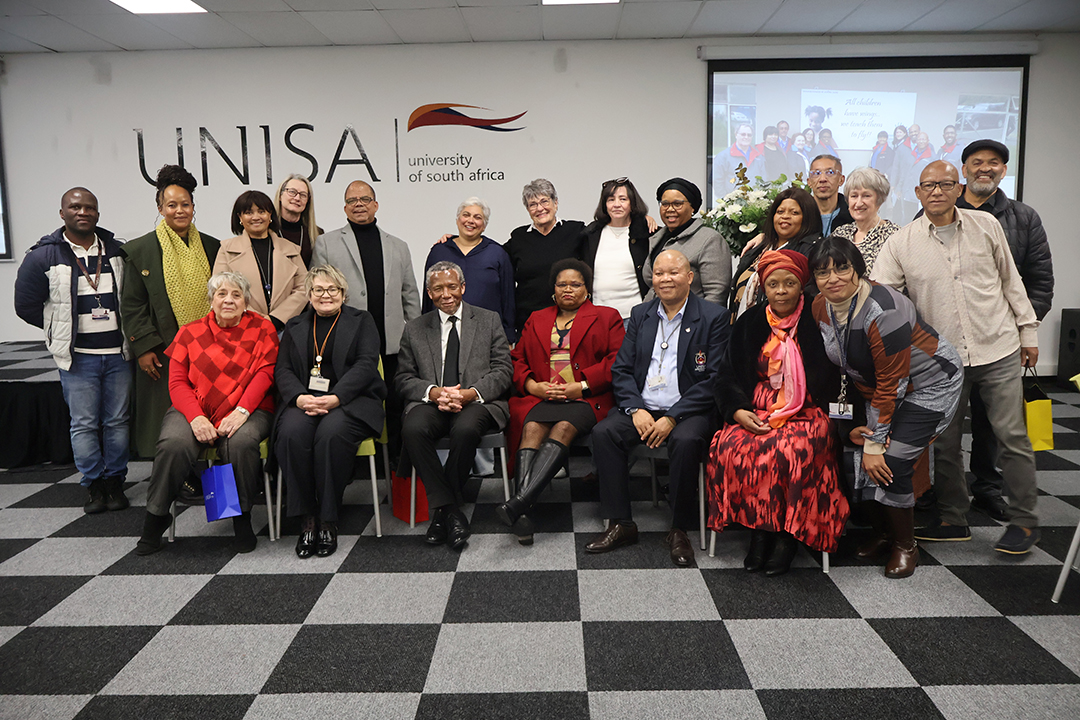 Unisa Western Cape honours retirees and celebrates their enduring legacy
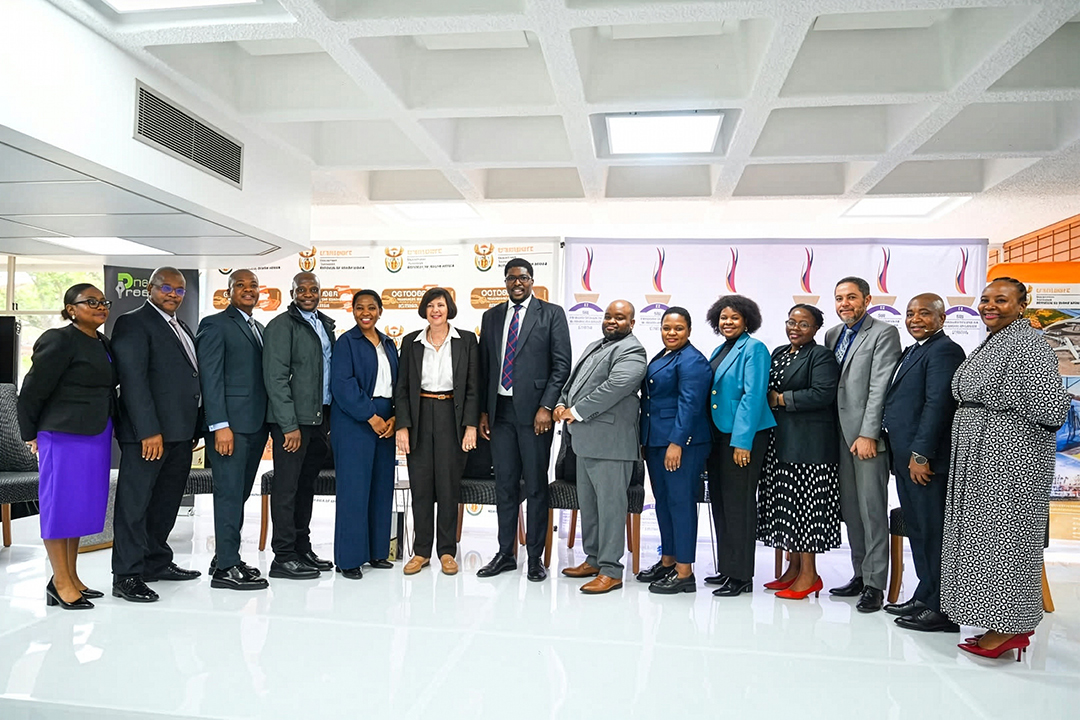 South Africa's transport recovery faces its toughest test: Delivering reliability for all
 Unisa brings higher education opportunities closer to Central Karoo learners
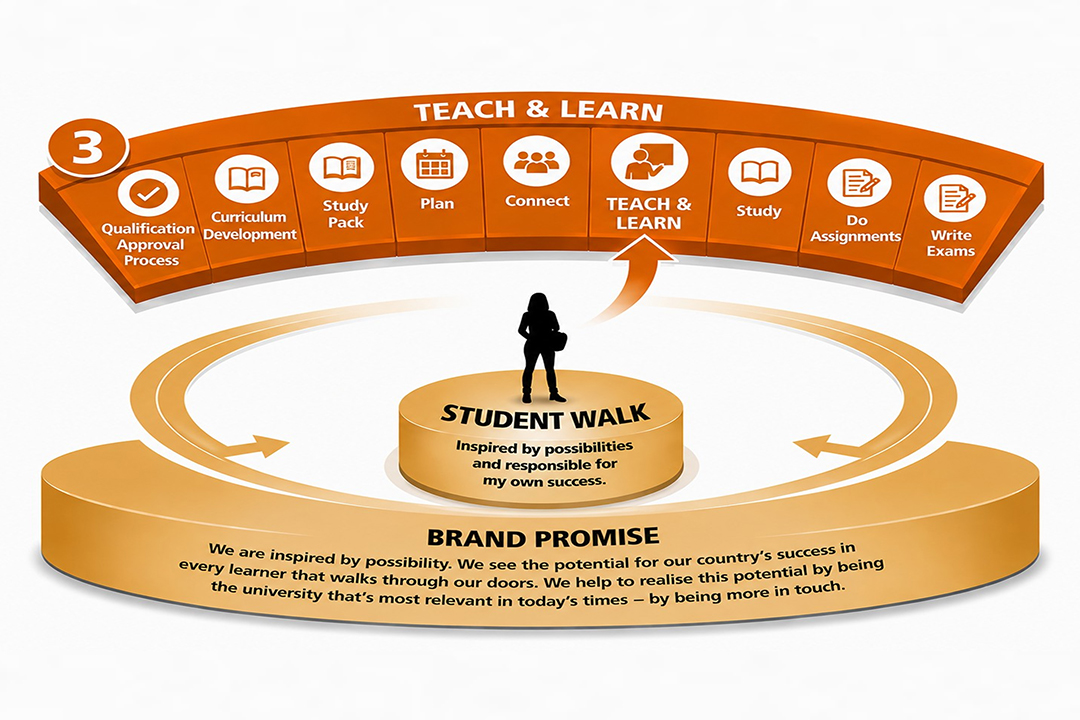 From learning to success: Supporting students throughout their studies