
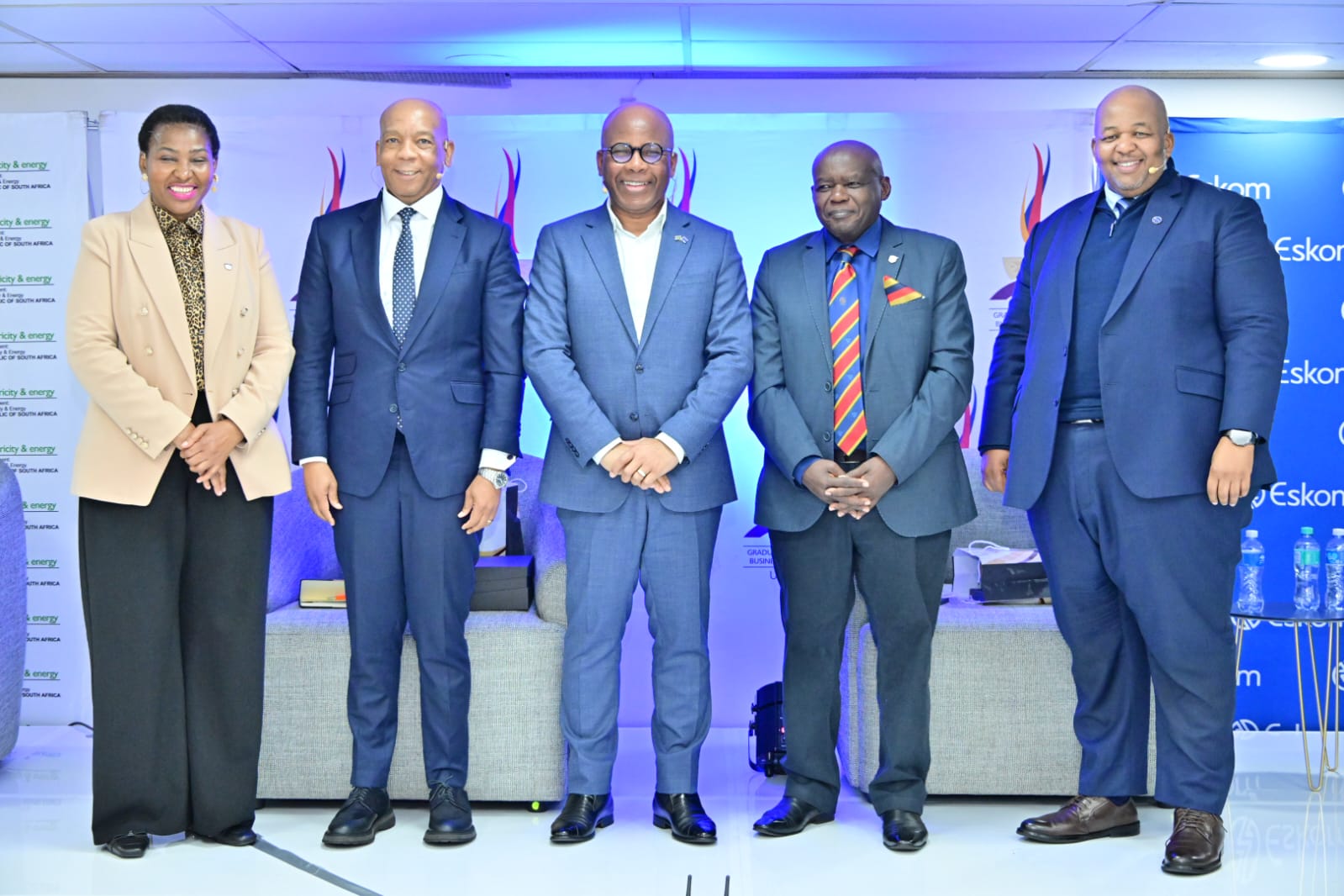
From left, Prof Ophillia Ledimo: Academic Director, Unisa Graduate School of Business Leadership, Dr Kgosientsho Ramokgopa: Minister of Electricity and Energy, Dr Mteto Nyati: Eskom Board Chairperson, Dr Azwinndini Tshivhase: Acting Vice-Principal, Teaching, Learning, Community Engagement and Student Support, and Dan Marokane: Eskom Group Chief Executive
South Africa's dramatic shift from years of rolling blackouts to more than 450 consecutive days without load shedding took centre stage at the University of South Africa's Graduate School of Business Leadership (SBL), where some of the country's key energy decision-makers reflected on what it took to turn Eskom around and what must happen next.
The SBL, in partnership with the Department of Electricity and Energy and Eskom, hosted a Distinction Dialogue featuring Minister of Electricity and Energy Dr Kgosientsho Ramokgopa, Eskom Board Chairperson Dr Mteto Nyati and Eskom Group Chief Executive Dan Marokane.
Held under the theme "Turnaround Strategy: Lessons in Keeping the Lights On: Generation Recovery and the Energy Action Plan", the dialogue explored the reforms, operational interventions and leadership decisions behind the improvement in electricity supply, while also examining how South Africa can sustain those gains.
For Unisa students and staff, the discussion offered more than an update on the country's electricity system. It provided a real-world look at how leadership, governance, strategy and institutional alignment can influence the performance of a major public institution.
South Africa's electricity sector has undergone a significant shift in recent years.
According to the Department of Electricity and Energy, Eskom's Energy Availability Factor (EAF) has increased from about 55% three years ago to consistently above 67%. At the same time, unplanned outages have fallen from more than 16GW to about 10GW.
Diesel expenditure has also dropped by 78%, with reported savings of R23 billion.
For Ramokgopa, understanding how Eskom reached its current position requires looking beyond the immediate electricity crisis and considering why the utility was established in the first place.
"In order for us to understand the complexity of the question before us, 'keeping the lights on', it’s instructive that you have an appreciation of why Eskom was established. We do this in a manner of critique and reflection," he said.
The minister also placed South Africa’s electricity challenge within the wider African development agenda, warning that rising demand would increasingly be driven by industrialisation and economic growth.
"Our continent's electricity demand is projected to more than double by 2040," he said.
He pointed to industrialisation, mineral beneficiation, hydrogen production, digital infrastructure and urbanisation as some of the factors expected to drive future electricity demand.
The challenge, therefore, extends beyond ending load shedding. South Africa needs a reliable electricity supply capable of supporting investment, industrial development, job creation and broader economic growth.
Marokane told the dialogue that Eskom's turnaround was not achieved overnight.
The utility had to make difficult operational decisions, including increasing maintenance and taking generating units offline, despite the short-term pressure this placed on electricity supply.
Marokane described the approach as "short-term pain for long-term gain", arguing that Eskom needed to restore the health and reliability of its ageing generation fleet rather than continue relying on emergency measures.
Taking generating units offline for planned maintenance carried an immediate cost. However, the strategy was aimed at reducing the much greater long-term cost of repeated breakdowns and load shedding.
The sustained period without load shedding has provided an important measure of the impact of that approach, with improved generation performance becoming one of the most visible signs of Eskom's recovery.
For Nyati, however, Eskom's turnaround also exposed a fundamental lesson about organisational leadership: strategy cannot succeed without alignment throughout an institution.
Reflecting on the state of Eskom when the current board took over, Nyati said there was a disconnect between management and employees across the organisation.
He said the board therefore had to engage directly with employees and listen to those closest to the operational challenges.
"Management of Eskom was completely disconnected from the rest of the business," Nyati said.
According to Nyati, employees already had a strong understanding of many of the problems affecting the utility and what needed to change, but their insights had not been sufficiently incorporated into decision-making.
The experience highlighted a broader leadership lesson relevant well beyond the energy sector: organisational turnarounds require more than decisions from the top. They depend on communication, employee involvement, accountability and a shared understanding of the strategy.
The Distinction Dialogue demonstrated that South Africa's energy turnaround cannot be viewed simply as an engineering or technical achievement.
It is also a story about leadership, governance, institutional culture, operational discipline and the ability to make difficult decisions in pursuit of long-term results.
For SBL students and the wider Unisa community, the discussion provided a practical case study in leadership under pressure, showing how decisions made at boardroom and operational levels can have consequences that reach households, businesses and the wider economy.
South Africa may have moved beyond the immediate crisis of load shedding, but the next challenge is arguably even more important: ensuring that the progress achieved is sustained and that a more reliable electricity system becomes a foundation for economic development.
* By Noxolo Miya, Journalist, Department of Institutional Advancement
Publish date: 2026-08-14 00:00:00.0

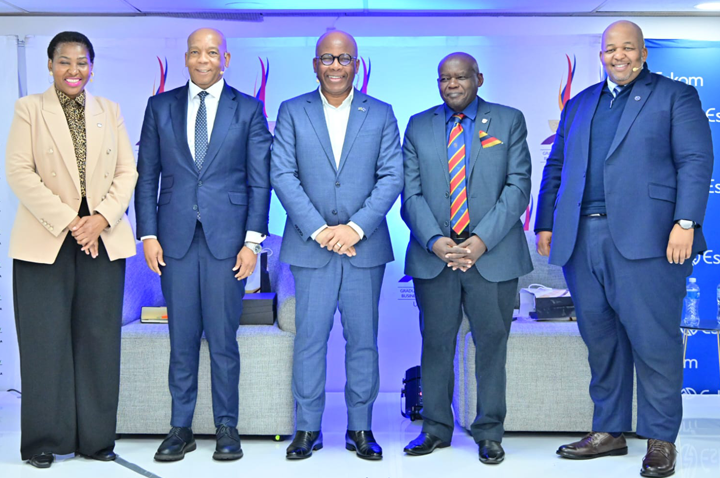 Unisa SBL brings energy leaders together to ask: Can South Africa keep the lights on?
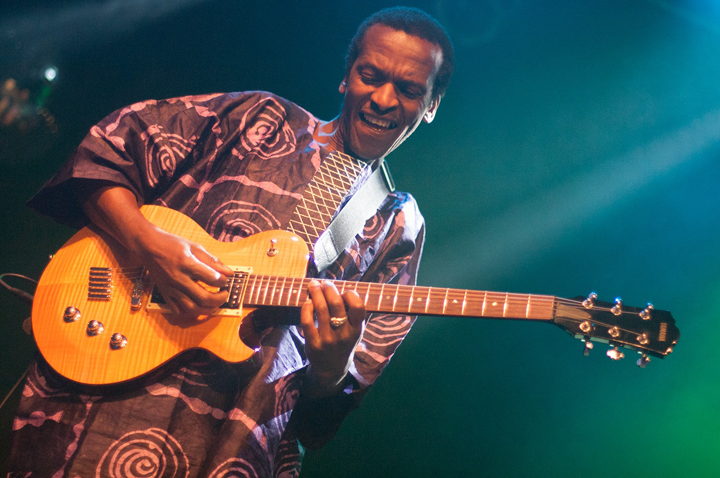 Renowned and multi-award-winning acts to headline the 2nd Unisa African Music Festival
 From the women of 1956 to the women of tomorrow: Unisa dialogue calls for action
 Emerging researchers turn Unisa's Catalytic Niche Areas into engines of collaboration and impact
 Africa's future is in your hands: Unisa and AUDA-NEPAD challenge youth to drive Agenda 2063