

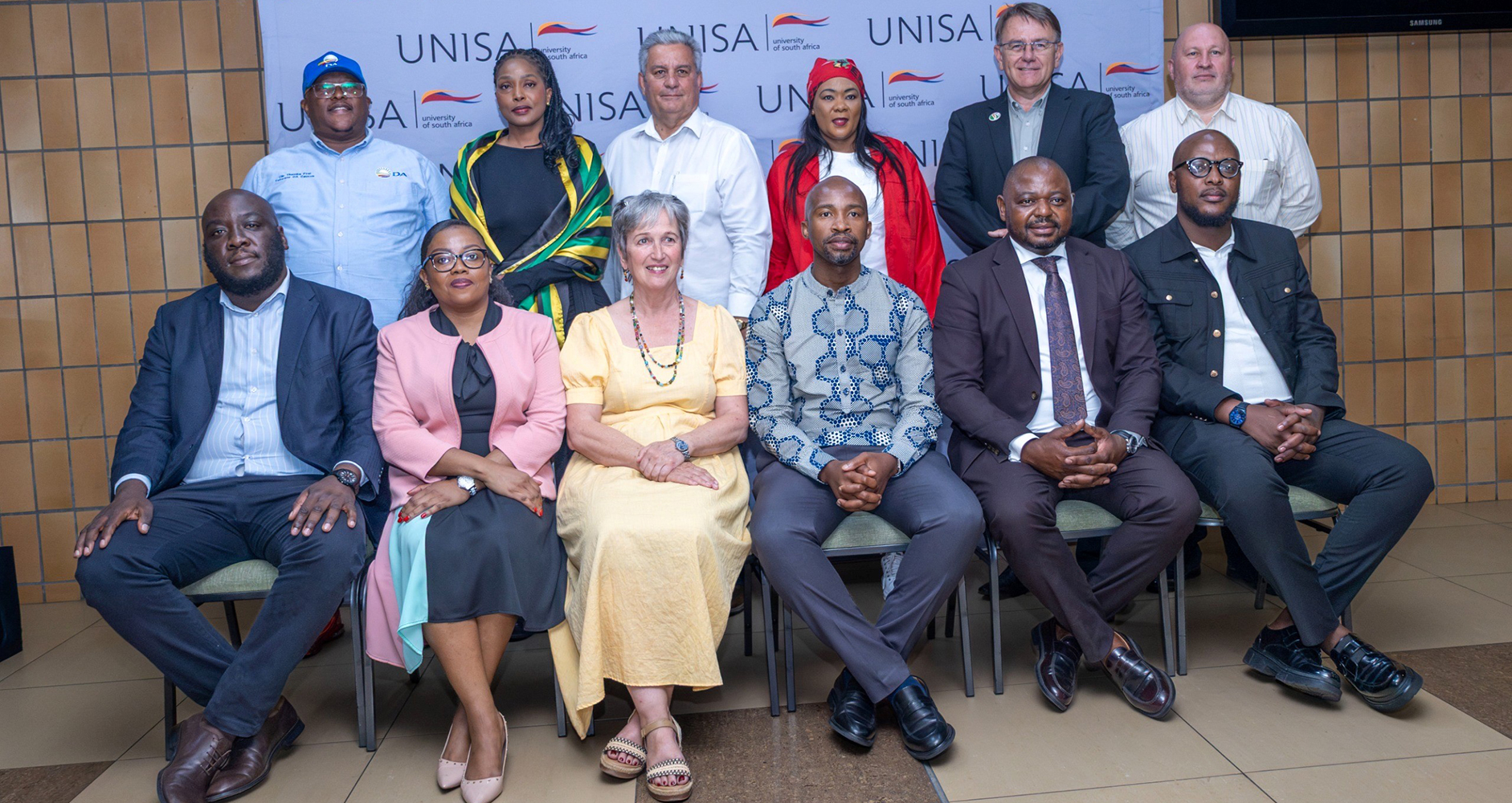
With South Africa's 2026 local government elections approaching, Unisa and the National Press Club brought together Tshwane's mayoral contenders to debate service delivery, municipal finances, economic development and political accountability.
Water shortages, deteriorating infrastructure, mounting municipal debt and political instability dominated a mayoral debate hosted by the University of South Africa (Unisa), as political parties outlined competing plans to address the challenges facing the City of Tshwane.
Held at Unisa ahead of the 4 November 2026 local government elections, the debate formed part of the university's partnership with the National Press Club, under the auspices of the College of Human Sciences. The engagement brought together representatives of major political parties to discuss the future of South Africa's administrative capital, a metropolitan municipality home to approximately four million residents, three universities and several national government institutions. With voters preparing to elect new municipal representatives, the discussion focused on the ability of political parties to translate election promises into improved services, financial stability and economic opportunities.
The debate also provided an opportunity to examine the consequences of repeated changes in municipal leadership, ongoing infrastructure problems and the challenges associated with coalition governance.
Representing ActionSA and its mayoral candidate, Nasiphi Moya, Hannes Coetzee outlined what the party described as progress in stabilising Tshwane's finances and improving municipal administration. "Faced with an inherited debt of R13 billion, four consecutively unfunded budgets, and failing infrastructure, we took drastic steps to stabilise the city," Coetzee said. He claimed that the municipality had subsequently adopted funded budgets and reduced its Eskom arrears by more than R2.5 billion. Coetzee also pointed to improvements in the city's audit findings, arguing that these demonstrated progress in strengthening financial management and accountability.
Looking ahead, he said ActionSA would prioritise reliable water and electricity supplies, road maintenance, economic growth and opportunities for young people and local businesses. He urged residents to assess the party's record in government alongside its commitments for the next five years. African National Congress (ANC) mayoral candidate Tlangi Mogale focused on the party's plans to strengthen municipal governance, improve service delivery and stimulate economic development. "Our political program is deeply rooted in the lived experiences of the citizens, not mere hypotheticals," she said.
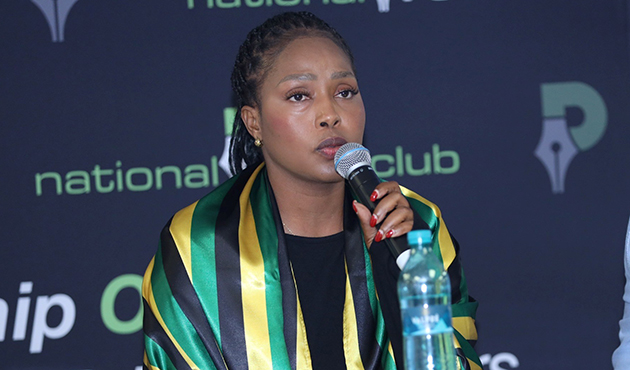
African National Congress (ANC) mayoral candidate Tlangi Mogale
Mogale argued that municipal policies should respond directly to the difficulties experienced by residents, particularly those affected by unreliable services and limited employment opportunities. She highlighted what she described as progress towards financial stability, including the adoption of a fully funded municipal budget. Mogale also outlined an economic development ambition centred on achieving growth of 3.9% and creating approximately 80,000 jobs. She presented these figures as objectives linked to the party’s plans for economic recovery and employment creation.
Her proposed priorities included strengthening internal municipal systems, improving accountability and increasing capital expenditure to address infrastructure and service delivery backlogs. Democratic Alliance (DA) representative Themba Fosi presented the party's approach to municipal governance, focusing on financial accountability, infrastructure investment and cooperation with communities and businesses. Fosi argued that the DA's experience in governing municipalities provided a foundation for its proposals for Tshwane.
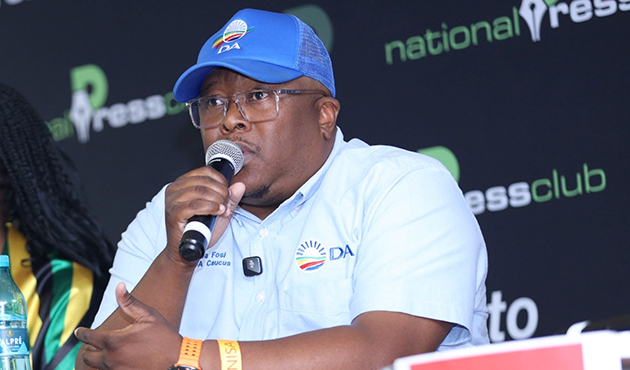
Democratic Alliance (DA) representative Themba Fosi
He referred to municipalities under DA leadership that the party considers examples of effective administration and encouraged residents to examine their performance. "Our manifesto features five core commitments focused on dismantling corruption and engaging in partnerships to enhance local security, infrastructure, and economic vitality," he said. Fosi emphasised the importance of tackling corruption, improving municipal services and strengthening cooperation between local government and other stakeholders.
He also encouraged young voters to examine the governance records and policy commitments of political parties before making their electoral decisions. Economic Freedom Fighters (EFF) mayoral candidate Omphile Maotwe drew attention to crime, unemployment and poverty as major challenges affecting Tshwane residents. She argued that improving public safety was essential to creating an environment that could attract investment and support economic development. Maotwe also called for innovative approaches to tackling unemployment and strengthening local industries.
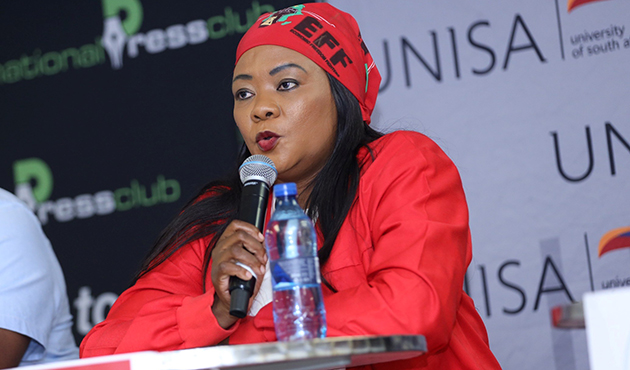
Economic Freedom Fighters (EFF) mayoral candidate Omphile Maotwe
Among her proposals was closer cooperation between municipalities and academic institutions to support industrial development, research and economic opportunities. Her contribution highlighted the relationship between community safety, economic participation and the ability of municipalities to create conditions for sustainable development. Freedom Front Plus representative Willie Spies focused on the relationship between municipal authorities and the communities they serve. He argued that improving governance required a different approach to public participation and stronger cooperation between local government, residents and businesses.
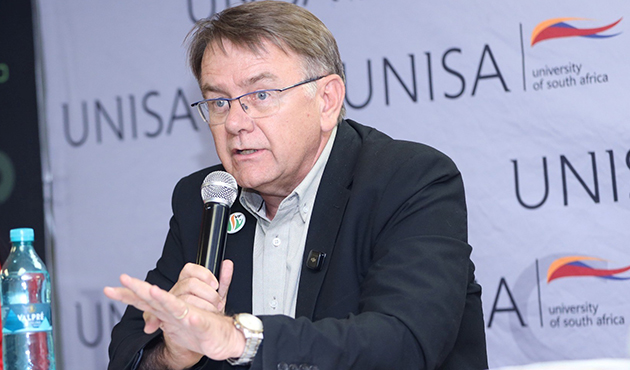
Freedom Front Plus representative Willie Spies
Spies called for partnerships that could help address service delivery challenges while encouraging community involvement in local development. He maintained that rebuilding trust between municipalities and residents would require more meaningful engagement and greater responsiveness to community concerns. His proposals placed particular emphasis on involving local businesses and community structures in efforts to improve municipal performance. Despite differences in their policy approaches, the representatives faced similar questions about Tshwane’s persistent service delivery challenges.
Water supply problems in Bronkhorstspruit and the longstanding difficulties experienced by residents of Hammanskraal featured prominently in the debate. These issues highlighted the consequences of ageing infrastructure, inadequate maintenance and weaknesses in municipal planning and administration. Political parties also exchanged competing accounts of responsibility for the city's financial and infrastructure challenges. The discussion reflected the difficulties associated with coalition governance, particularly where changes in political leadership affect administrative continuity and the implementation of long-term development programmes.
While parties offered different explanations for Tshwane's problems, the debate underscored the importance of stable governance, effective financial management and sustained infrastructure investment. By hosting the mayoral debate, Unisa provided a platform for political representatives to engage with issues directly affecting residents ahead of the local government elections. The initiative reflects the university’s commitment to public engagement, informed democratic participation and creating opportunities for dialogue between political leaders, academic institutions and communities. It also demonstrates how universities can contribute to discussions about governance, public accountability and socioeconomic development beyond the classroom.
The engagement aligns with the principles of Sustainable Development Goal (SDG) 16, which promotes effective, accountable and inclusive institutions, and SDG 11, which focuses on sustainable cities and communities. These priorities also resonate with South Africa's National Development Plan 2030, which identifies capable institutions, improved infrastructure and responsive public administration as essential to development. As Tshwane residents prepare to vote on 4 November 2026, the debate highlighted the scale of the challenges awaiting the next municipal administration. Restoring reliable water and electricity supplies, maintaining roads, improving financial sustainability and creating economic opportunities will require more than campaign commitments.
The competing proposals presented by ActionSA, the ANC, DA, EFF and Freedom Front Plus reflected different approaches to addressing these challenges. However, the questions raised throughout the debate pointed to a common expectation among residents: municipal leaders must demonstrate accountability and deliver measurable improvements in everyday services. For Unisa, the engagement reinforced the importance of providing spaces where public policy, democratic accountability and the future of local communities can be examined openly.
* By Sipho Jack, Journalist, Department of Institutional Advancement
Publish date: 2026-10-30 00:00:00.0

 Unisa Founders Lecture examines Africa's leadership, agency and transformative potential
 Unisa honours Neville Alexander's legacy through reflection on South Africa's unfinished nation-building project
 Unisa mourns former Deputy President Phumzile Mlambo-Ngcuka
 Unisa–JAR Partner energy symposium puts internationalisation into practice
 Unisa Internationalisation Festival challenges universities to reclaim Africa's place in global knowledge production