
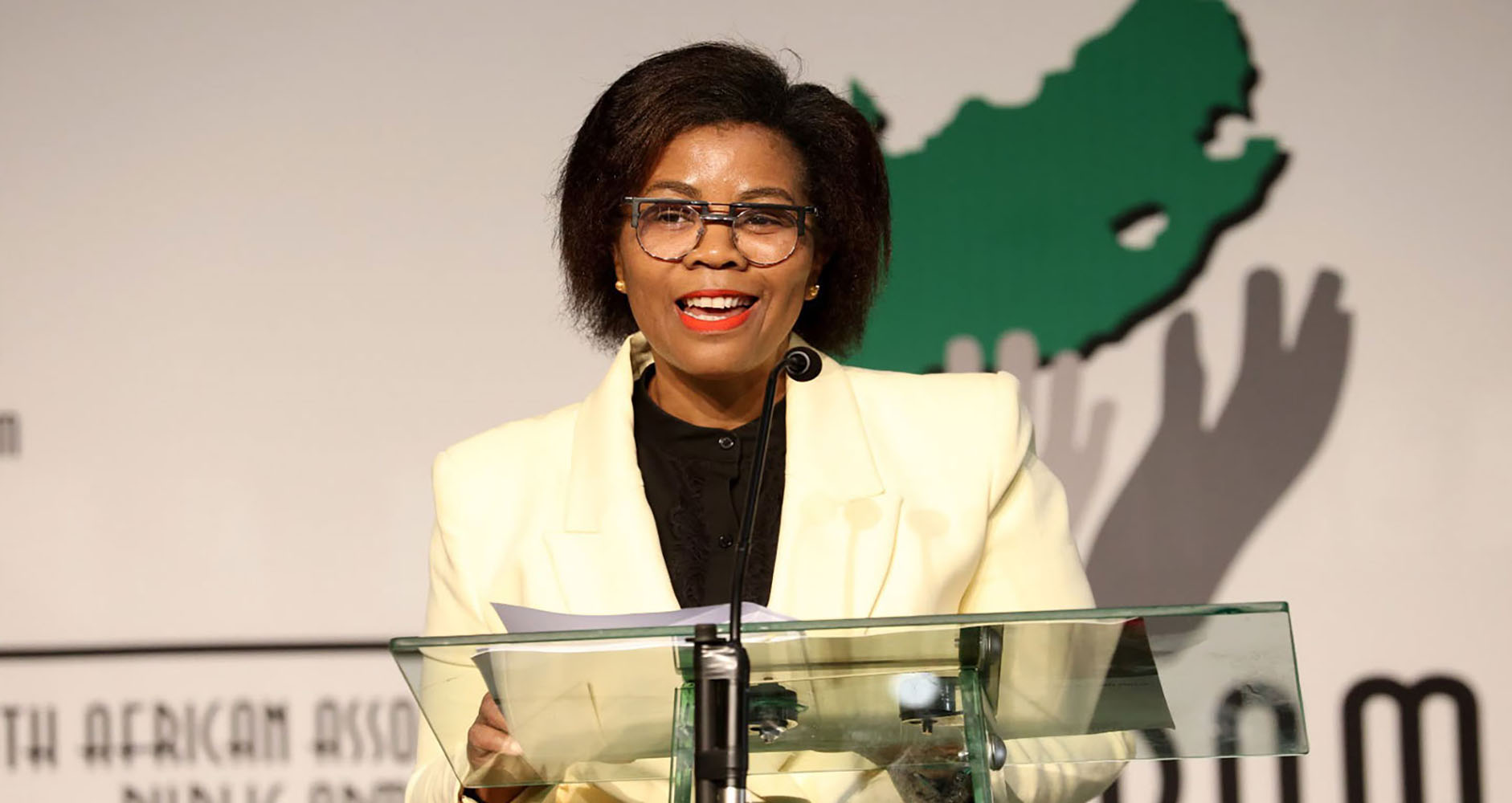
University of South Africa (Unisa) Principal and Vice-Chancellor Prof Puleng LenkaBula
Moving beyond diagnosing the challenges facing the public sector to actively addressing them is critical to strengthening South Africa’s public service, University of South Africa (Unisa) Principal and Vice-Chancellor Prof Puleng LenkaBula has said.
Delivering the welcome address at the opening of the 25th Annual South African Association of Public Administration and Management (SAAPAM) Conference in Durban, Prof LenkaBula challenged academics, policymakers and public administration practitioners to interrogate how state power is exercised and whether it ultimately serves the interests of society.
The conference, taking place from 27 September to 3 October 2026 at the Inkosi Albert Luthuli International Convention Centre Complex in Durban, KwaZulu-Natal, is being held under the theme, "Growth and sustainability through improved governance: Reimagining institutions, leadership and development in a changing world."
Prof LenkaBula said the gathering provided an opportunity to move beyond simply describing the problems confronting public institutions and instead focus on practical ways of addressing systemic weaknesses.
She commended SAAPAM for bringing together academics and practitioners to engage on public administration, governance and institutional development, saying such collaboration was necessary to develop solutions that meet communities' needs.
Drawing on the principles of a developmental state contained in the National Development Plan (NDP) 2030, Prof LenkaBula called for a professional public service, a capable state and ethical governance.
She argued that debates about the role of the state should not be reduced to a choice between state intervention and market forces.
Instead, the focus should be on building a state capable of responding to social needs, addressing inequality, and remaining accountable to the communities it serves.
Reflecting on the evolution of state institutions and the influence of neoliberal thinking and market forces, Prof LenkaBula said these dynamics had, in some instances, constrained the ability of states to pursue transformative policies aimed at addressing persistent inequalities.
She also raised concerns about weakened state capacity and sovereignty in parts of Africa, arguing that institutions that lack sufficient authority and capability struggle to respond effectively to inequality, including gender inequality.
Against this backdrop, she encouraged academics and other stakeholders to examine the geopolitical pressures and tensions shaping the relationship between the state and private sector.
She said this was particularly important in developing policies that are protective, transformative and responsive to the interests of society.
Prof LenkaBula further argued that efforts to strengthen the state must be accompanied by mechanisms that prevent the abuse or capture of public institutions by private interests.
A transformed state, she said, should work with communities and knowledge institutions while remaining subject to scrutiny and accountability.
Professionalisation of the public service was another key focus of Prof LenkaBula's address.
While acknowledging progress made through public-sector reforms, including those associated with the Public Service Amendment Act, she cautioned that professionalisation should not become a purely technical exercise.
Instead, it should contribute directly to developmental outcomes and reflect the history, culture and aspirations of the society the public service exists to serve.
She identified three areas requiring particular attention.
First, professionalisation should be merit-based while broadening access to talent and ensuring that the public service draws on the capabilities of society as a whole.
Second, learning institutions at different levels should be strengthened to produce both knowledge and values relevant to the needs of society.
Third, accountability must be strengthened across public institutions.
Prof LenkaBula also highlighted the importance of maintaining clear lines between political leadership and public administration.
Such separation, she argued, should ultimately protect citizens and strengthen institutional integrity rather than become a mechanism for shielding political power from accountability.
Professionalisation and institutional reform should therefore be measured by their contribution to developmental objectives, rather than by technical compliance alone.
The 25th SAAPAM Annual Conference brings together academics, researchers, policymakers, public administration practitioners and other stakeholders to examine issues including institutional governance, leadership, accountability, service delivery, economic development and sustainability.
The conference provides a platform for examining the challenges confronting public institutions while considering governance approaches that can support sustainable development.
Unisa is among the collaborating partners for the milestone conference, alongside the University of Zululand (UNIZULU), Durban University of Technology (DUT) and the National School of Government (NSG).
"Unisa is proud to stand alongside SAAPAM, our fellow partners in government and higher education in this important gathering," Prof LenkaBula said.
The partnership also reflects the role of higher education institutions in contributing research, scholarship and critical debate to questions of governance and public administration.
The opening sessions brought together a range of political, government and academic stakeholders.
Among those attending were KwaZulu-Natal Premier Hon. Thamsanqa Ntuli, eThekwini Executive Mayor Cllr Cyril Xaba, Azwihangwisi Faith Muthambi, MP, Chairperson of the Portfolio Committee on Health in the National Assembly, Dr Mmusi Maimane, MP, Chairperson of the Standing Committee on Appropriations in Parliament, Dr Malusi Gigaba, MP, and Mmapaseka Steve Letsike, MP, Deputy Minister in the Presidency for Women, Youth and Persons with Disabilities.
Premier Ntuli also delivered a keynote address on the second day of the conference, engaging delegates on governance, leadership and the role of the public service in advancing sustainable development.
As the conference continues, discussions are expected to focus on how institutions, leadership and public administration can be strengthened to produce better governance and more meaningful outcomes for communities.
For SAAPAM and its partners, the conference provides an opportunity to connect scholarship and practice around one of the central questions facing the public sector: how to build institutions that are capable, ethical, accountable and responsive to the people they serve.
The South African Association of Public Administration and Management (SAAPAM) is a professional association bringing together academics, researchers, public administration and management practitioners, policymakers and other stakeholders committed to advancing the study and practice of public administration and management. Through research, professional engagement, conferences and knowledge-sharing platforms, SAAPAM contributes to discussions on public institutions, governance and public service delivery.
* By Tebogo Mahlaela and Prof Prudence Khumalo, College of Economic and Management Sciences
Publish date: 2026-09-29 00:00:00.0

 From academic setbacks to master's distinction: Unisa graduate's journey of resilience
 Ethiopian doctoral graduates highlight Unisa's growing impact across Africa
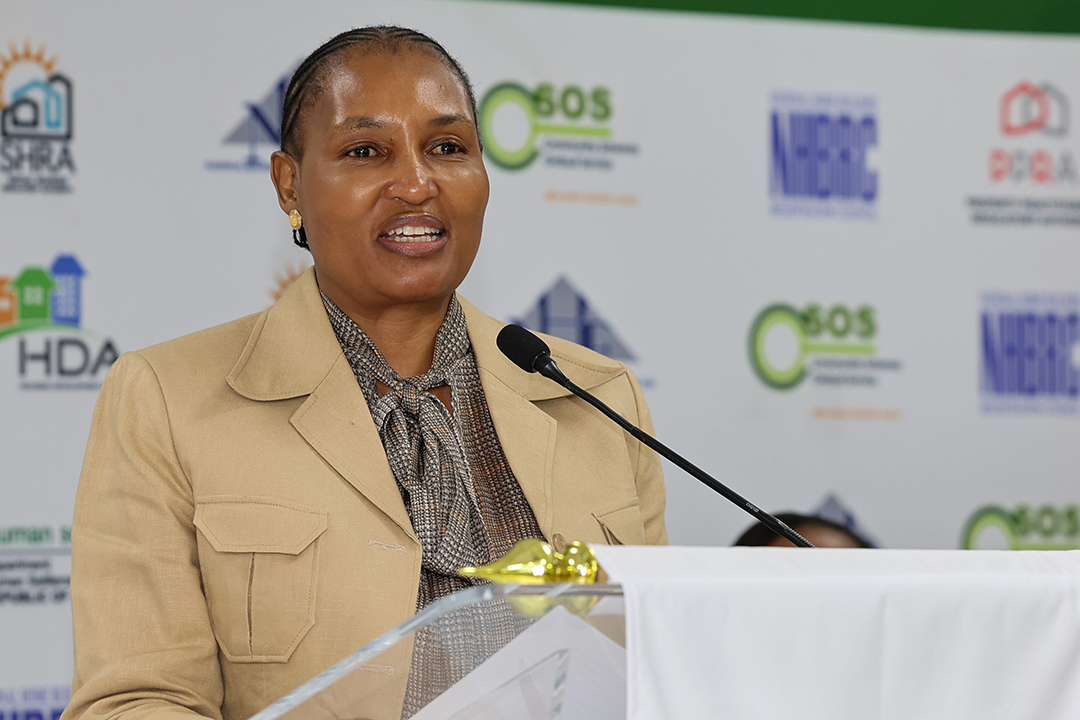 Unisa SBL calls for shift from building houses to creating sustainable communities
 From law graduate to student leader: Tshegofatso Mmope's commitment to justice and empowerment
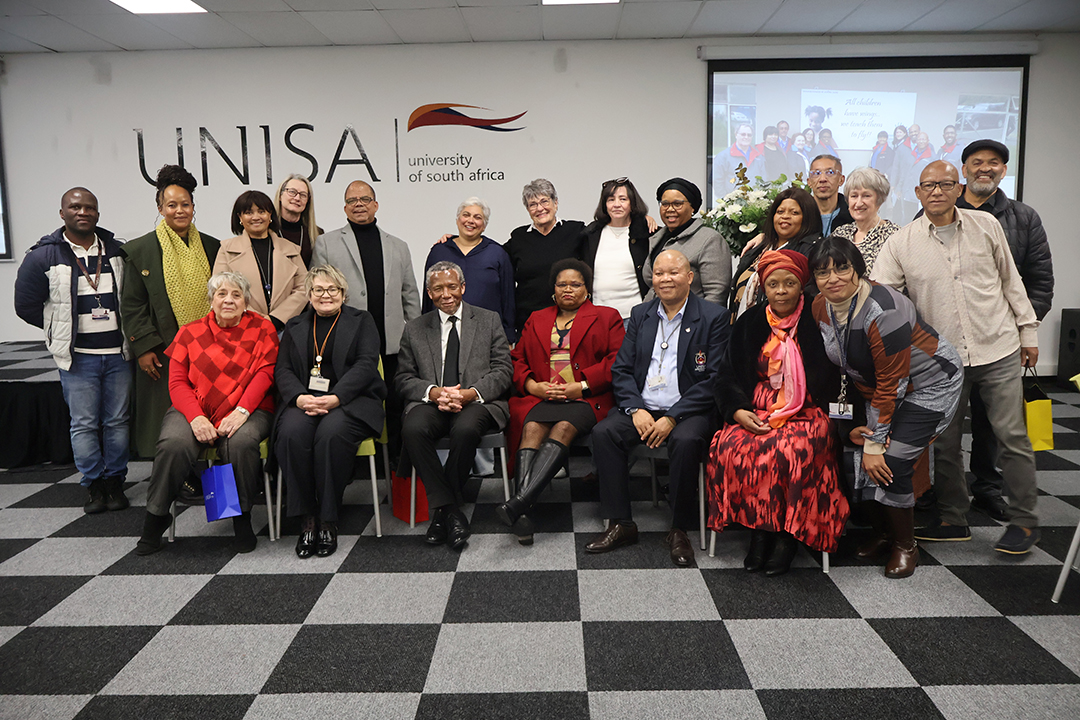 Unisa Western Cape honours retirees and celebrates their enduring legacy