
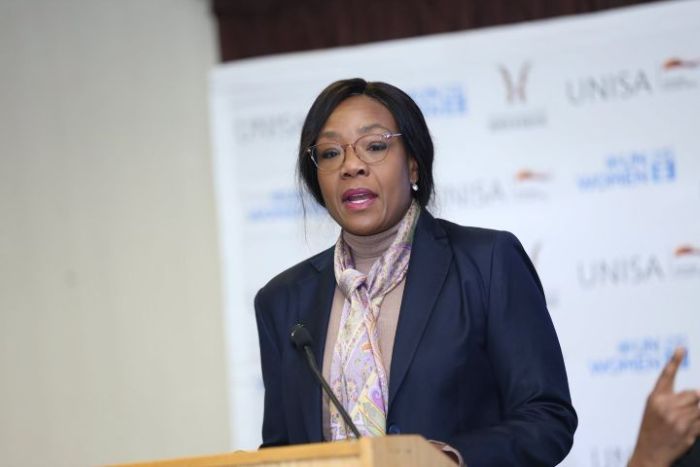
Auditor General Tsakane Maluleke, addressing Unisa's Women's dialogue
The University of South Africa (Unisa) has hosted a National Women's Dialogue bringing together leaders, delegates and international representatives to reflect on the legacy of the 1956 Women's March and consider what it means for women and girls facing inequality today.
Held in collaboration with South African Women in Dialogue (SAWID) and UN Women, the dialogue marked the 70th anniversary of the historic march in which about 20,000 women stood together against apartheid legislation.
The gathering was not only a commemoration of the past. It also became a platform for confronting some of the challenges that continue to shape the lives of women, including gender-based violence, poverty, economic inequality and limited access to essential services.
Prof Meahabo Magano, Unisa Executive Director: Tuition Support and Facilitation of Learning, said the sacrifices of previous generations should remain connected to the challenges facing society today.
She pointed to important advances in South Africa, including the appointment of Prof Puleng LenkaBula as Unisa's first African woman Principal and Vice-Chancellor, while noting that significant challenges remain.
Among the emerging concerns discussed were the effects of climate change and digital transformation, both of which are reshaping societies and creating new opportunities as well as new forms of vulnerability.
The dialogue called for action that extends beyond commemorative events. Participants were encouraged to promote ethical leadership, strengthen intergenerational networks, challenge harmful stereotypes and encourage active citizenship.
Vatiswa Moea, Executive Director of SAWID, challenged participants to consider what they have inherited from the women who came before them and what they will leave for future generations.
She emphasised the importance of bringing together the experience and wisdom of older generations with the energy, innovation and perspectives of younger people.
Moea also called for open conversations about cultural practices, arguing that these should evolve with changing social realities rather than become sources of conflict.
For Unisa students, the message carries particular significance. As a university serving hundreds of thousands of students across South Africa and beyond, the institution provides a space where different generations, communities and experiences intersect.
The dialogue therefore placed intergenerational engagement at the centre of the conversation about women’s leadership and social transformation.
Keynote speaker Tsakani Maluleke focused on the role of women in building ethical and accountable institutions.
Drawing lessons from women's participation in the SAI20 conference, Maluleke said leadership should be viewed as an opportunity to create meaningful change.
She reflected on the contribution of women leaders in South Africa and internationally, including Mama Winnie Mandela, while urging those currently in positions of influence to create opportunities for younger generations.
The discussion also highlighted the need for greater economic inclusion and institutional change to address systemic barriers that continue to affect women.
Economic inequality emerged as another important theme.
Itumeleng Nkadimeng of KPMG examined the gendered impact of South Africa's tax system, arguing that tax policy needs to be considered from a gender perspective.
She highlighted how lower-income women can be particularly vulnerable to economic pressures while carrying significant caregiving responsibilities.
The discussion offered a reminder that gender equality is not only about representation in leadership. It is also about how economic policies and institutions affect people’s everyday lives.
Mechanical engineer Rudzani Monnahela turned attention to the workplace, highlighting structural barriers that continue to affect young women in corporate environments.
She described how qualified women can still find themselves marginalised from decision-making processes, reinforcing the need to challenge institutional practices that limit women’s participation.
The dialogue ended with a call from Geraldine Fraser-Moleketi, Chairperson of the Beijing +30 African Women's Movement, for people across generations to work together in confronting the economic and social challenges facing women and girls.
The central message was clear: remembering the women of 1956 is important, but their legacy must also be measured by what today’s generation does with it.
For the Unisa community, the conversation extends beyond Women's Month or a single commemorative event. It raises questions about the kind of leaders students are preparing to become, the institutions they will shape and the role they can play in building a society in which dignity, equality and freedom are experienced in everyday life.
The National Women's Dialogue ultimately placed intergenerational leadership, economic empowerment and gender justice at the centre of the conversation, challenging participants to move from remembrance to action.
By Sipho Jack, Journalist, Department of Institutional Advancement.
Publish date: 2026-08-14 00:00:00.0

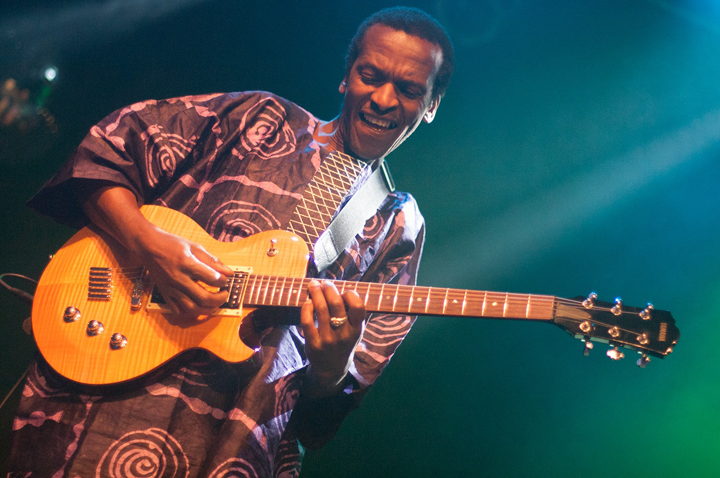 Renowned and multi-award-winning acts to headline the 2nd Unisa African Music Festival
 From the women of 1956 to the women of tomorrow: Unisa dialogue calls for action
 Emerging researchers turn Unisa's Catalytic Niche Areas into engines of collaboration and impact
 Africa's future is in your hands: Unisa and AUDA-NEPAD challenge youth to drive Agenda 2063
 Unisa opens applications for fully funded veterinary medicine programme