
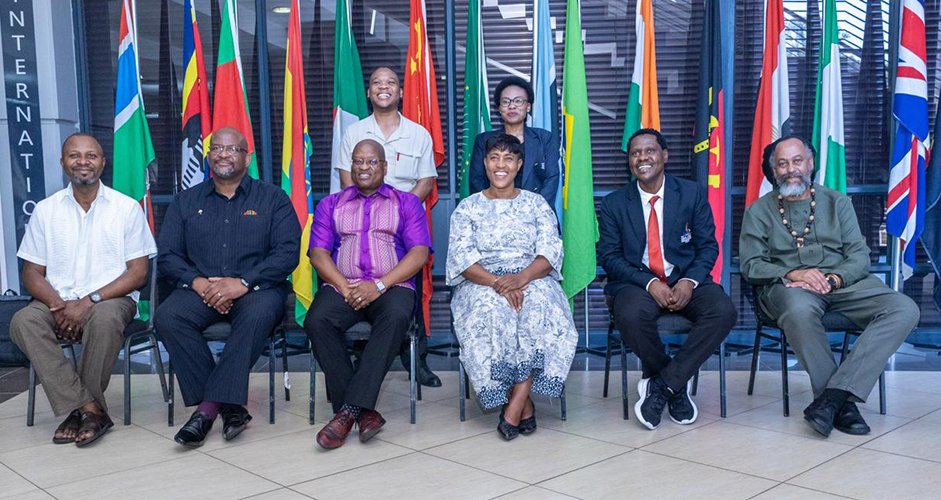
Speakers and contributors at Unisa's seminar on Dynamics of Migration, Development and Social Transformation in South Africa, held at the Muckleneuk Campus on 26 October 2026, where discussions examined migration governance, human rights, African identity and regional cooperation.
Migration is more than the movement of people across borders. It is a complex issue shaped by history, economic opportunities, political instability, human rights and questions of identity and belonging.
These interconnected challenges came under scrutiny at a seminar hosted by the University of South Africa's (Unisa) Thabo Mbeki African School of Public and International Affairs (TM-School). Held at the Kgorong Building on Unisa's Muckleneuk Campus, the seminar, titled Dynamics of migration, development and social transformation in South Africa, brought together academics, researchers and migration specialists to examine one of the country's most contested public policy issues. Discussions explored the historical roots of migration, immigration management, border security, national interests and the responsibilities of African countries towards people seeking opportunities, safety and better living conditions.
While participants presented different perspectives, the engagement highlighted the importance of informed debate, evidence-based policymaking and understanding migration within Africa's broader historical and developmental context. Opening the seminar, Prof Edith Phaswana, Acting Executive Dean of TM-School, challenged participants to deepen their understanding of South Africa's migration history. She encouraged attendees to read The Road to Democracy in South Africa, particularly volumes examining historical population movements and migrant labour.
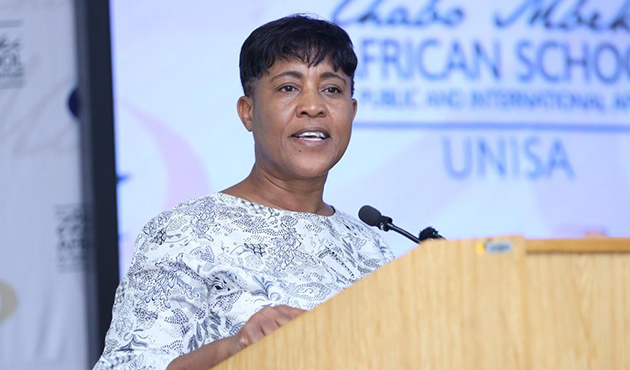
Prof Edith Phaswana, Acting Executive Dean of Unisa's Thabo Mbeki African School of Public and International Affairs, delivers the welcoming remarks, encouraging participants to examine migration through the lens of South Africa's history and Africa's colonial legacy.
Referring to the work associated with Unisa's Prof Sifiso Ndlovu, Phaswana emphasised that contemporary migration debates cannot be separated from the movement of people that shaped southern Africa long before the establishment of modern national borders. Her remarks highlighted the importance of historical scholarship in understanding how migration influenced labour systems, communities and economic development across the region. TM-School researcher Boikhutso Mfusi expanded on these themes, examining migration's social, economic and political implications.
She emphasised Unisa's commitment to research and community partnerships that respond to societal challenges, including those affecting communities experiencing internal and international migration. The discussion positioned universities as important contributors to public understanding and the development of informed responses to migration. Delivering the keynote address, Dr Michael Masiapato, the Commissioner and CEO of South Africa's Border Management Authority (BMA) examined the practical challenges associated with managing migration into and out of South Africa.
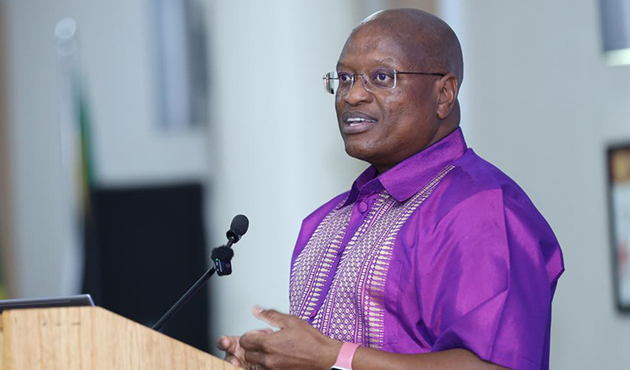
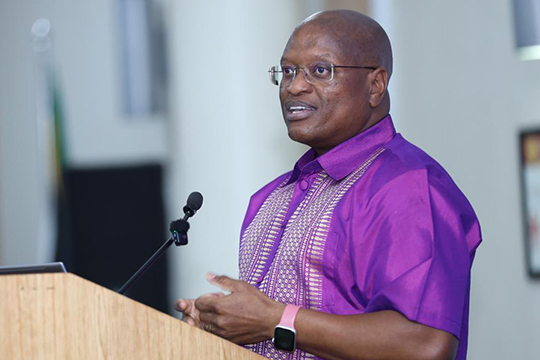
Dr Michael Masiapato delivers the keynote address at Unisa's migration seminar, highlighting the importance of effective border management, immigration compliance and respect for the rights of refugees and other vulnerable people.
He identified economic opportunities and family reunification as important reasons people move between countries. However, he argued that migration itself should not be regarded as the primary problem. Instead, attention should be directed towards the abuse of immigration systems, undocumented border crossings and criminal networks involved in human smuggling. Masiapato outlined the difficulties authorities face in managing asylum applications, monitoring cross-border movement and addressing organised activities that undermine immigration controls. He stressed the importance of enforcing immigration laws while respecting constitutional protections and South Africa's international obligations towards refugees and other vulnerable people.
His address drew attention to the need to distinguish between unlawful immigration practices and the humanitarian circumstances that compel people to leave their countries. Masiapato also highlighted the potential of technology to improve border management. Digital systems and vehicle recognition technologies, he explained, could strengthen monitoring, improve the processing of travellers and assist authorities in identifying possible violations. Beyond economic and political factors, he identified climate change and environmental pressures as emerging drivers of migration.
Droughts, environmental degradation and other climate-related challenges can threaten livelihoods and force people to seek opportunities elsewhere. His presentation reinforced the need for migration policies that respond to security concerns without overlooking the human circumstances behind population movements. A panel discussion titled Migration governance, integration and humanitarian dimensions brought competing perspectives on immigration policy and the responsibilities of the South African state into sharper focus. Facilitated by Adv Sipho Mantula, a researcher at TM-School, the discussion featured political analyst and former Unisa academic Prof Lesiba Teffo and Dr Gordon Rolls of Radassi Sekgatja Attorneys.
Teffo encouraged South Africans to familiarise themselves with the Refugees Act and Immigration Act to better understand the country's legal framework for migration. He questioned whether all foreign nationals were complying with immigration requirements and argued that concerns about immigration enforcement should not automatically be characterised as xenophobia. He also raised concerns about people allegedly bypassing immigration procedures, calling for closer attention to the implementation of existing legislation. These were positions advanced during the discussion rather than findings established by the seminar.
Rolls argued that South Africa should prioritise the needs of its citizens when determining how to allocate resources and respond to challenges affecting other countries. His contribution raised broader questions about the relationship between national responsibilities, regional cooperation and humanitarian obligations. Together, the presentations demonstrated the tensions that can arise between immigration enforcement, domestic socioeconomic pressures and the protection of people seeking refuge. They also highlighted the importance of distinguishing legitimate policy debates from prejudice or discrimination against foreign nationals.
The seminar took a reflective turn during the closing remarks by David Letsoalo, the Director of Academic Support, Student Affairs, Internationalisation and Community Engagement at TM-School. Letsoalo challenged participants to reconsider how colonial history continues to shape African identity, citizenship and attitudes towards migration. Describing the discussion as emotionally exhausting, he expressed concern that Africans continued to debate their belonging within political boundaries largely influenced by colonial rule.
He explained that he identified first as an African rather than solely through his South African nationality. Referring to the Berlin Conference of 1884–1885, during which European powers negotiated arrangements that shaped the colonial partition of Africa, Letsoalo questioned the continued influence of those historical divisions on contemporary relationships between African countries. He also referenced the formation of the Union of South Africa in 1910 as part of the country's political history. His remarks encouraged participants to examine how national borders, citizenship and identity developed and how these concepts influence present-day attitudes towards people moving across the continent.
Letsoalo further challenged participants to reflect critically on xenophobia and the responsibility individuals have to confront discriminatory attitudes. He argued that people should not dismiss the term merely because it makes them uncomfortable, but should examine whether their conduct reflects its meaning. His contribution brought attention to the human dimensions of migration and the importance of treating fellow Africans with dignity while engaging honestly with questions of national identity and belonging. Beyond the differing viewpoints, the seminar demonstrated the relevance of migration research to South Africa's development and Africa's aspirations for greater cooperation and integration.
The African Union's Agenda 2063 envisions a more integrated, prosperous and peaceful continent, with stronger cooperation and opportunities for African citizens. Understanding migration and its relationship with economic development, human rights and regional integration is essential to advancing these ambitions. The discussions also reflected several United Nations Sustainable Development Goals, particularly SDG 10, which includes facilitating orderly, safe, regular and responsible migration, and SDG 16, which promotes justice, human rights and accountable institutions.
By bringing together perspectives from academia, law, public administration and migration management, TM-School contributed to the exchange of ideas that can inform research, public debate and policymaking. The seminar also reinforced Unisa's commitment to engaged scholarship that addresses contemporary challenges affecting South Africa and the African continent. The seminar concluded without suggesting that South Africa's migration challenges could be resolved through a single policy approach. Instead, the discussions illustrated the complexity of balancing immigration enforcement, national development priorities, constitutional protections and humanitarian responsibilities.
They also highlighted the need to examine migration through a historical lens, recognising that the movement of people has long shaped African societies and economies. For Unisa, the engagement provided an opportunity to encourage critical thinking, informed dialogue and a deeper understanding of an issue that continues to influence public policy and social relations.
* By Lesego Chiloane, Journalist, Department of Institutional Advancement
Publish date: 2026-11-02 00:00:00.0

 Two Unisa professionals honoured for excellence in research and innovation management
 Unisa Astronomy researcher wins prestigious fellowship for her work on star formation
 Unisa equips Student Parliament leaders to champion ethical and accountable governance
 Two Unisa researchers inducted into South African Young Academy of Science
 Beyond borders: Unisa explores migration, African identity and the challenges of belonging