
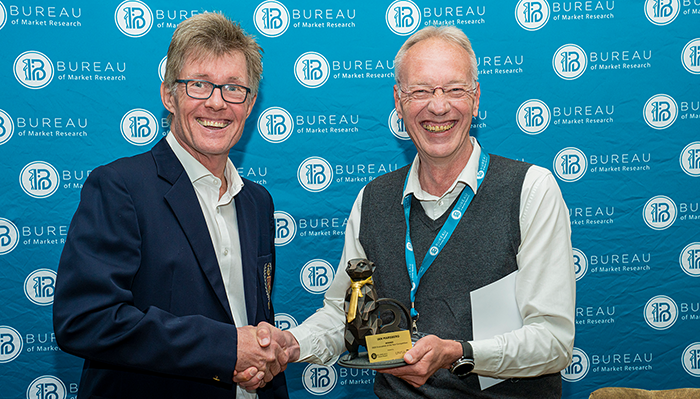
Sasol Group Economist Ian Marsberg, the 2025 BMR/Unisa Economist of the Year (right), receiving the award from Prof Carel van Aardt, Research Director of the Market Intelligence Research Division at the BMR
The Bureau of Market Research (BMR), in partnership with Unisa, hosted the 2025 Economist of the Year Awards Breakfast on 4 June 2026, where Sasol Group Economist Ian Marsberg was announced as the overall winner in a competition recognising excellence in economic forecasting.
The finalists and winner were announced by Dr Nonhlanhla Mabuza, acting Director: Revenue and Treasury Management at Unisa.
The annual event, held in Lynnwood, Pretoria, brought together leading economists, academics, policymakers, business leaders, media representatives and students to celebrate forecasting accuracy and reflect on the role of economic analysis in an increasingly uncertain global environment.
Now in its fourth year under the co-branded BMR-Unisa partnership, the Economist of the Year Competition continues to serve as a national platform for recognising precision in macroeconomic forecasting and promoting evidence-based economic decision-making.
Marsberg was named the 2025 Economist of the Year, with two runners-up also recognised for their strong forecasting of key macroeconomic indicators. Marsberg entered the competition for the first time, beating his fellow finalists, economists Frank Blackmore of KPMG and Jeffrey Schultz of BNP Paribas.
This year’s programme focused on the growing importance of economic forecasting in a volatile and rapidly changing world, where unexpected disruptions and periods of heightened uncertainty have become increasingly common.
The competition highlights the value of analytical rigour, adaptability and informed judgement in understanding economic trends and anticipating future developments.
In an interview, BMR’s CEO, Prof Deon Tustin, said that this event not only celebrates the art and craft of economic forecasting but also acknowledges the indispensable role of economists in shaping South Africa’s economic future. "This ceremony honours those who dare to do what only a few can take up – predicting the economic tide of the nation with confidence and competence," he said.
The competition evaluates economists on the accuracy of forecasts submitted between February and December each year, with particular emphasis on early-year predictions when uncertainty is typically at its highest.
According to organisers, this methodology ensures that participants are assessed not only on technical accuracy but also on judgment under volatile, rapidly changing economic conditions.
Prof Carel van Aardt, Research Director of the Market Intelligence Research Division at the BMR, said 39 of South Africa’s leading economists participated in the 2025 edition of the competition.
He noted that the initiative continues to attract strong engagement from both academia and industry, reinforcing its credibility as a benchmark for forecasting excellence.
Hosted by Media24 for several decades, the competition was transferred to the BMR in 2021 and has been co-branded with Unisa since 2022, strengthening its institutional reach and academic grounding.
The partnership between the BMR and Unisa seeks to achieve several important outcomes:
The partnership also closely aligns with both institutions’ commitment to advancing research, public discourse, analytical thinking and economic development in South Africa and across the African continent. The event marks an important milestone in the continued growth of the competition as the BMR and Unisa work together to strengthen its long-term sustainability, visibility and impact as a national platform for economic forecasting excellence.
Speakers throughout the programme highlighted the complexity of the current global economic environment, shaped by geopolitical tensions, inflationary pressures, technological disruption, climate risks and structural transformation across markets.
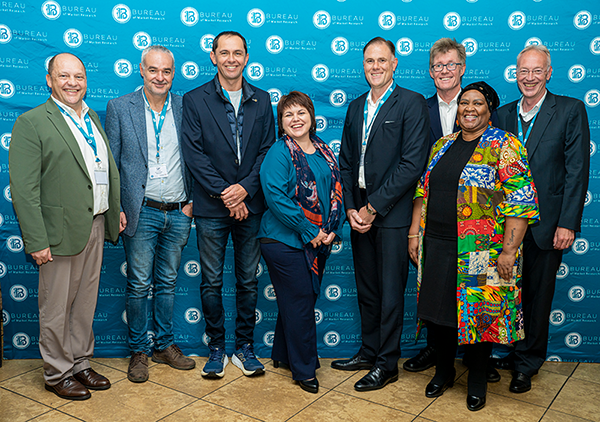
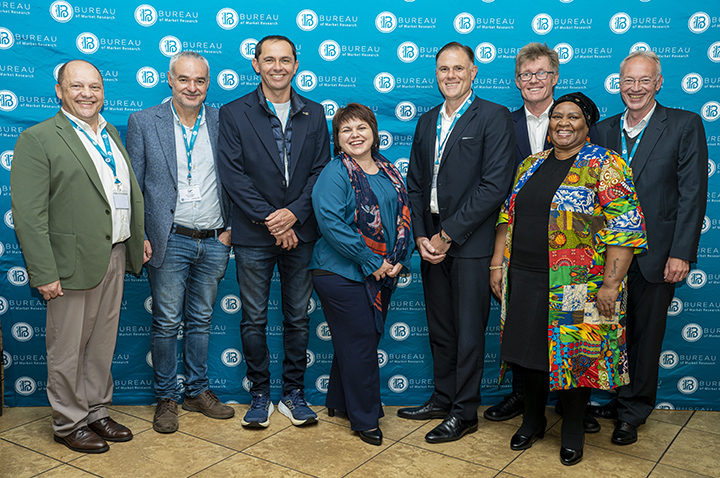
From left: Prof Deon Tustin, CEO and Head of the BMR; Ryk van Niekerk, Moneyweb Editor; Alan Knott-Craig, entrepreneur, author and Fibertime founder; Jacolize Meiring, BMR Senior Researcher; Frank Blackmore, Lead Economist, Financial Risk Management at KPMG; Prof Carel van Aardt, Research Director of the Market Intelligence Research Division at the BMR; Dr Nonhlanhla Mabuza, acting Director: Revenue and Treasury Management at Unisa; and Ian Marsberg, Sasol Group Economist, and 2025 BMR/Unisa Economist of the Year
While acknowledging these challenges, organisers and participants noted that uncertainty also creates opportunities for innovation, adaptation and improved decision-making.
The ability to interpret economic signals and make sense of incomplete or shifting data was emphasised as a critical skill for economists, policymakers and business leaders navigating modern economies.
Following the awards presentation, a panel discussion moderated by Moneyweb Editor, Ryk van Niekerk, explored the challenges of economic forecasting in an increasingly uncertain global landscape.
The discussion examined the limitations and strengths of forecasting models, as well as the importance of adaptability, analytical rigour and continuous reassessment in responding to changing economic conditions.
In his keynote address, Alan Knott-Craig, entrepreneur, author and founder of Fibertime, focused on the informal economy and the role of digital connectivity in enabling inclusive growth. His speech highlighted the informal economy and the importance of inclusion.
Knott-Craig titled his keynote address "The Hidden Trillion: Unlocking the Informal Economy", in which he explored the significant but often underappreciated contribution of South Africa’s informal economy and its potential role in driving entrepreneurship, inclusion and economic growth.
He highlighted the potential of township economies as a major yet underutilised driver of South Africa’s economic activity, arguing that improved infrastructure and affordable internet access could significantly expand participation in the digital economy.
Knott-Craig outlined Fibertime’s approach to providing affordable, pay-as-you-go fibre connectivity in township communities, designed to improve access to education, employment opportunities and entrepreneurship.
He also reflected on broader structural challenges facing township development, noting that while digital infrastructure is essential, it must be accompanied by solutions to systemic constraints affecting economic participation.
A central theme of Knott-Craig’s address was the untapped potential of township economies, which Knott-Craig described as a significant yet under-recognised driver of national economic activity.
He argued that improved infrastructure, particularly digital infrastructure, could unlock substantial growth opportunities in these areas by enabling greater participation in the formal economy.
However, he also highlighted persistent challenges affecting township development, including infrastructure limitations, energy disruptions and broader socio-economic constraints.
Knott-Craig noted that while technological solutions such as fibre connectivity are important, broader systemic issues must also be addressed to fully realise economic potential.
The 2025 BMR/Unisa Economist of the Year Awards Breakfast reaffirmed the importance of rigorous economic forecasting in a rapidly changing global environment.
As Ian Marsberg was recognised for outstanding forecasting performance, the event underscored the growing value of economic insight, institutional collaboration and inclusive thinking in shaping South Africa’s economic future.
This event highlights Unisa's pivotal role in shaping informed policy decisions and advancing inclusive economic growth in South Africa and beyond.
* By Lesego Chiloane, Journalist, Department of Institutional Advancement
Publish date: 2026-06-08 00:00:00.0
 2025 Economist of the Year crowned by BMR/Unisa
 Unisa alumnus transforms academic excellence into entrepreneurial success
 Leveraging advances in 4IR to foster economic growth
 Unisa alumna is shaping the future of business and market development
 Unisa's Disability-Inclusive Student Support Workshops go from strength to strength