

Towards the leading College of Law and Justice in Africa
As criminals increasingly turn to deepfakes, cloned voices and synthetic identities to commit financial fraud, a University of South Africa (Unisa) academic is part of an international team developing an artificial intelligence system designed to help regulators stay ahead of the next generation of cryptocurrency scams.
Dr Eveshnie Reddy, a Senior Lecturer in the School of Criminal Justice in Unisa's College of Law, was part of Drift Sentinel, one of 36 finalist teams selected from 338 submissions representing 65 countries in the C:\>DIR Global Agentic Regulator Hackathon 2026.
The team developed a working agentic AI prototype and presented it on 15 September 2026.
Organised by Financial Innovation for Impact (Fii) under the Cambridge Digital Innovation and Regulation Initiative, the hackathon brought together policymakers, regulators, academics and technology specialists to find practical responses to challenges emerging at the intersection of digital innovation and regulation.
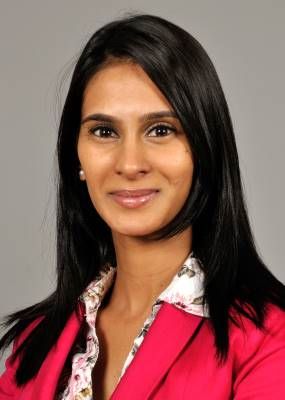
Dr Eveshnie Reddy
For Reddy, whose interdisciplinary research examines how law enforcement agencies and regulators can investigate, disrupt and prevent cryptocurrency crime, the challenge brought together two increasingly interconnected worlds: criminal justice and artificial intelligence.
It is an intersection that also sits naturally within Unisa's Fourth Industrial Revolution and Digitalisation Catalytic Niche Area (CNA 6), as researchers explore not only what emerging technologies can do, but how they can be used responsibly to address complex societal problems.
At the centre of Drift Sentinel's project is a growing challenge for financial regulators: the techniques used by criminals are evolving rapidly, while some of the indicators designed to detect them were developed before generative AI became widely available.
Reddy said the team identified weaknesses in the Financial Action Task Force's (FATF) 2020 red-flag indicators when measured against newer threats.
"Our team identified critical issues within the Financial Action Task Force 2020 red-flag indicators, which have become antiquated in the face of generative AI threats such as deepfakes, cloned voices and synthetic identities that undermine effective onboarding and transaction monitoring," she said.
The concern carries particular weight for South Africa following its removal from the FATF grey list in October 2025.
The country's exit followed efforts to address deficiencies in its systems for combating money laundering and terrorist financing. But emerging technologies are changing the nature of the threat, requiring regulators to continue adapting their detection and enforcement capabilities.
For Reddy and her team, the question was therefore not simply how to detect cryptocurrency scams that regulators already understand, but how to anticipate the methods criminals may use next.
Their answer was a horizon-scanning agentic AI system designed to continuously stress-test cryptocurrency anti-money laundering regulations against existing and emerging AI-driven fraud.
The prototype was developed with the work of South Africa's Financial Intelligence Centre (FIC) and Financial Sector Conduct Authority (FSCA) in mind.
By exploring how technology can strengthen regulatory oversight and protect the integrity of financial systems, the project also gives practical expression to Sustainable Development Goal (SDG) 16, which places effective, accountable institutions at the heart of sustainable societies.
Drift Sentinel's prototype does not rely on a single AI model to reach and approve its own conclusions.
Instead, it divides the process among four components: an orchestrator, retrieval agent, simulation component and critic.
The orchestrator coordinates and plans each operational run, while the retrieval agent works from relevant FATF and FIC regulatory material.
The simulation component reconciles existing information and generates new findings. The critic then conducts impartial reviews, ensuring that no single agent can autonomously validate its claims. Finally, the named FIC/FSCA analyst (human-in-the-loop) at the approval gate either accepts, amends, or rejects the findings.
That human oversight is an important part of the design.
In a regulatory environment where an incorrect conclusion could have serious consequences, the prototype is intended to combine the speed and analytical capacity of AI with human judgement and accountability.
The system could ultimately allow regulators to identify weaknesses in existing safeguards far more quickly than conventional processes, while maintaining a record of how findings were reached and reviewed.
The reconciliation component is already operational, according to Reddy, while the team plans to develop the generative side of the system further.
The longer-term ambition is more challenging: enabling the system to anticipate how future cryptocurrency scams might evolve.
Such a capability would move regulators closer to a preventative model, using innovation not merely to respond to fraud after losses have occurred but to identify vulnerabilities before criminals exploit them. In that sense, the project also advances the thinking behind SDG 9 on Industry, Innovation and Infrastructure, where technological innovation is used to strengthen the resilience of critical systems.
Developing the prototype required expertise extending well beyond criminal justice.
Under the leadership of Maqhobosheane Mohlerepe, Reddy worked alongside Nolwazi Hlophe, Gires Kana and Benjamin Franck Root, bringing together experience in anti-money laundering supervision, software development and engineering, cryptocurrency regulation and criminal justice.
"Going from an initial concept note to developing and demonstrating a working prototype was a challenging yet rewarding experience," Reddy said.
That interdisciplinary approach is significant because cryptocurrency crime rarely fits neatly within one field.
Investigators need to understand criminal behaviour. Regulators need to understand financial systems and compliance requirements. Software engineers need to understand how technologies operate, while legal and policy specialists must consider how those technologies can be deployed within existing regulatory frameworks.
For Unisa, the project shows how its focus on the Fourth Industrial Revolution can extend beyond studying technological change to applying emerging technologies to real-world problems.
In this case, the same advances in AI that are giving criminals more sophisticated tools are being examined as a potential means of strengthening the institutions tasked with stopping them.
The team's work will continue beyond the hackathon.
Its members intend to expand the prototype’s capabilities with the development of the generation arm capable of generating novel, untested fraud typologies to probe the rulebook. They also plan to publish their findings in an accredited academic journal, opening the work to wider academic and regulatory scrutiny.
The stakes are growing as generative AI lowers the barriers to producing convincing fake identities, voices, images and other material capable of deceiving victims or circumventing financial controls.
That creates a difficult contest for regulators. The systems designed to detect financial crime cannot remain static while the methods used to commit it continue to evolve.
Reddy's work brings that challenge into the research space, connecting Unisa's CNA 6 focus on the Fourth Industrial Revolution and Digitalisation with the stronger institutions envisaged under SDG 16 and the innovation encouraged by SDG 9.
But the practical question behind the research is simpler: can regulators identify tomorrow's cryptocurrency scam before it becomes tomorrow's financial crime crisis?
Drift Sentinel is attempting to give them a head start.
* By Sipho Jack, Journalist, Department of Institutional Advancement
Publish date: 2026-10-06 00:00:00.0

 Unisa Spring Graduation opens with stories of perseverance and achievement
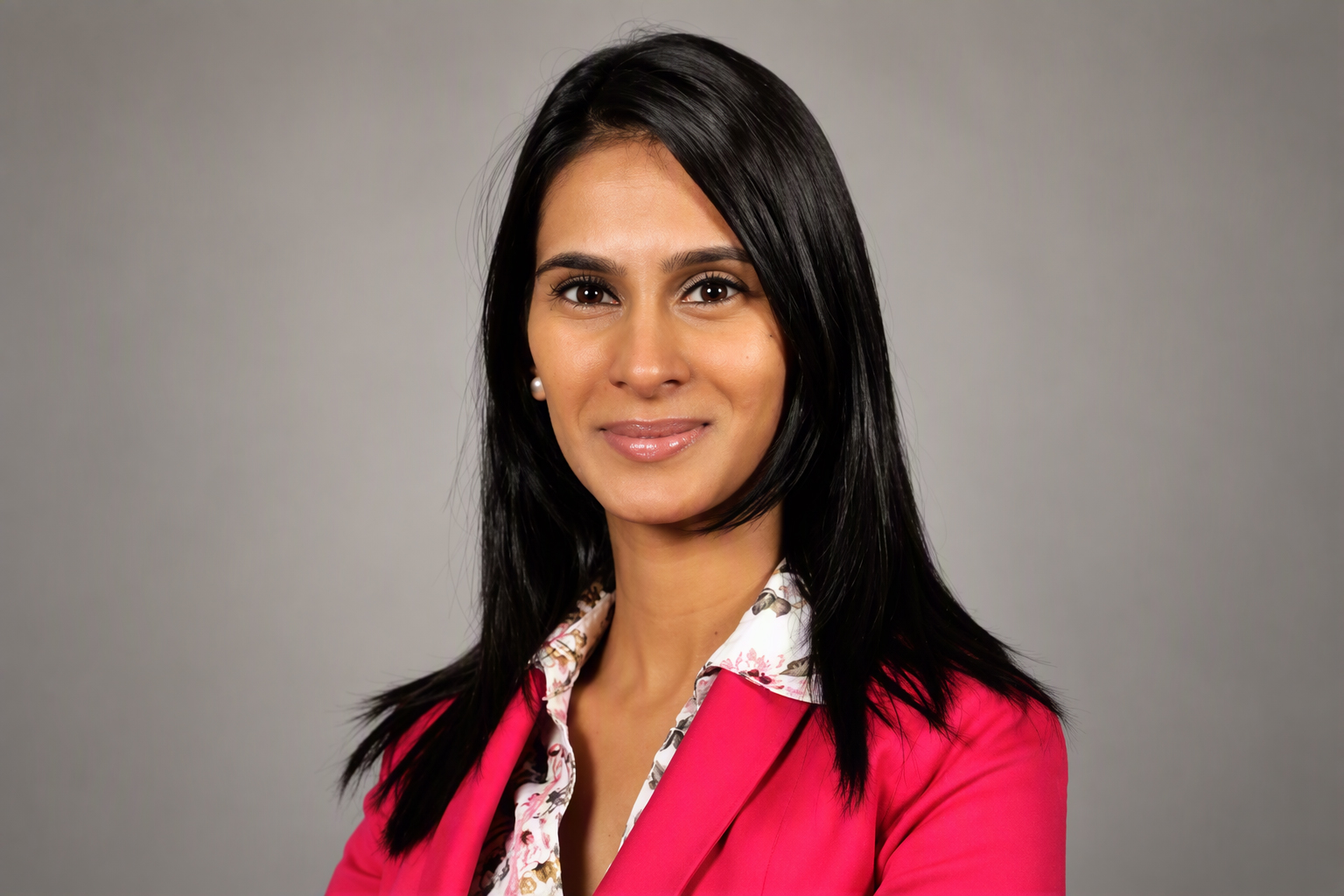 Unisa academic helps develop AI system to stay ahead of cryptocurrency scams
 Unisa Press authors tackle municipal corruption and rethink African research
 Unisa calls on students to reclaim their voice in the age of AI
 Unisa students turn Accounting Sciences knowledge into SAICA award-winning social impact