

The African college of excellence in the social and human sciences
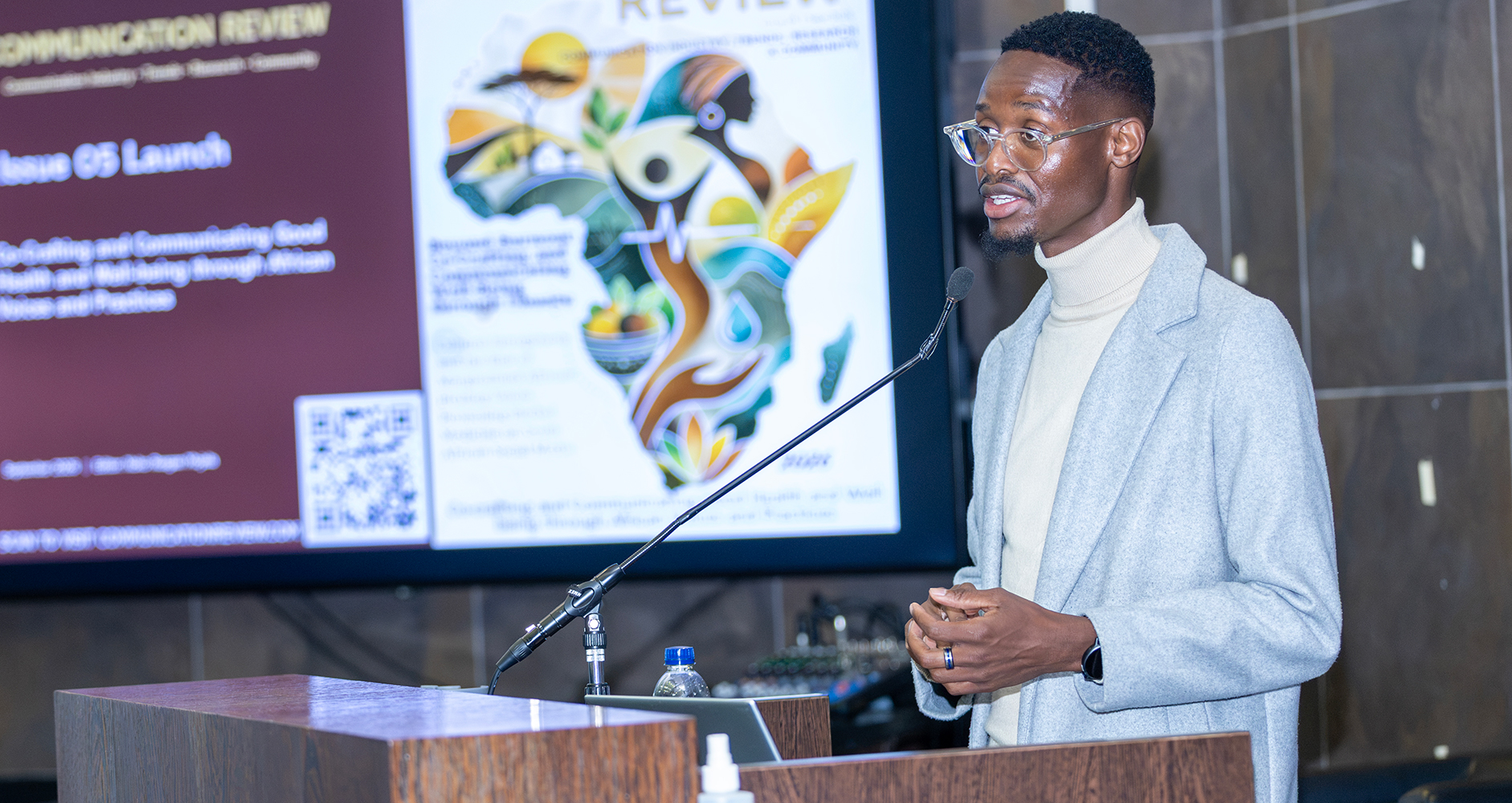
Noko Reagan Mojela, lecturer in the Department of Communication and Editor-in-Chief of Communication Review
As artificial intelligence (AI) becomes increasingly embedded in academic and professional life, the University of South Africa's Department of Communication Science is challenging students to resist outsourcing their thinking and rediscover writing as an expression of identity, knowledge and human experience.
That message took centre stage on 30 September 2026 when the department brought together academics, communication students, industry practitioners and members of the Communication Students' Association (COMSA) for the launch of Issue 5 of Communication Review.
Established in 2022, Communication Review provides a platform for communication scholarship to reach beyond academia and engage communities and wider society. Over five editions, it has created space for diverse voices and perspectives while encouraging debate about contemporary communication issues.
Welcoming attendees, Dr Edgar Malatjie, Chair of the Department of Communication Science, said the gathering was intended to be more than a "talk shop". Instead, it offered students a multifaceted approach to writing within academic and professional spaces.
Central to his message was a warning about growing dependence on generative AI and large language models.
"I don't think we want to nullify our purpose in these spaces," Malatjie said, cautioning that platforms such as Grok, ChatGPT, DeepSeek and Copilot should not be allowed to "obliterate the art of writing".
He described writing as an artistic and intellectual expression through which people document their ideas, history, philosophy and identity.
"Writing without infusing AI or asking AI is literally sharing a part of you with humanity, a lifetime process. In this era of uncertainty, our task is to dust our canvases and make our feelings and beliefs known through AI-less writing," he said.
His challenge to students also speaks to a wider question confronting higher education: how universities prepare graduates for an increasingly digital world without allowing technology to displace independent thought. At Unisa, that conversation forms part of its Fourth Industrial Revolution and Digitalisation Catalytic Niche Area (CNA 6), while the emphasis on critical thinking, digital literacy and responsible technology use supports Sustainable Development Goal
The launch also placed the spotlight on the fifth edition of Communication Review, themed "Co-crafting and communicating good health and well-being through African voices and practices."
Noko Reagan Mojela, a lecturer in the Department of Communication Science and Editor-in-Chief of Communication Review, said the theme challenges conventional approaches to health communication by asking who creates knowledge and whose experiences shape the messages communities receive.
"Health communication is often presented as a process where experts produce information and communities receive it," Mojela said.
The latest edition asks a different question: "What happens when communities are not simply recipients of health information, but active participants in creating, interpreting and communicating knowledge about health and well-being?"
That question places the publication within a much broader conversation about improving health and well-being through knowledge that reflects the communities it is intended to serve. It also connects the work naturally with Unisa's Health Studies/Medicine Catalytic Niche Area (CNA 8) and SDG 3: Good Health and Well-being.
Mojela said the theme grew from the recognition that African societies have long had their own ways of understanding health, illness, healing and well-being. Yet health communication experienced by many communities continues to be shaped by frameworks that may be disconnected from their everyday realities.
Language, culture, spirituality, indigenous knowledge, social relationships and community practices all influence how people understand health, he explained. Effective health communication therefore requires more than translating information from one language into another. It requires understanding the social and cultural environment in which messages are received and interpreted.
This thinking underpins the edition’s emphasis on "co-crafting".
For Mojela, co-crafting means creating knowledge with communities rather than simply for them.
A strong thread running through the issue is therefore the importance of African voices, indigenous knowledge and community-based approaches to health and well-being. The publication moves beyond conventional clinical interpretations of health to explore traditional healing, Ubuntu, community care and culturally grounded communication.
In doing so, the publication brings health and education together. Improving health outcomes is not only about access to healthcare, but also about whether people can access, understand and engage with information that makes sense within their own languages, cultures and lived realities. That intersection reinforces the contribution of the initiative to both SDG 3 and SDG 4.
The programme also exposed students to the practical demands of working in the communication industry.
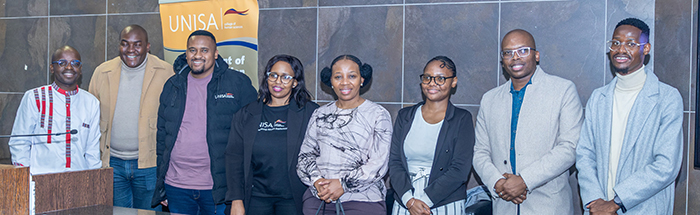
Dr Elmon Motloutsi, Dr Edgar Malatji, Mr Joseas Mphaga, Ms Phumla Mhlanga, Ms Tshepiso Molete, Ms Katleho Motloung, Mr Siyabonga Mfuphi and Mr Noko Reagan Mojela
Katleho Motloung, a Junior Public Relations Practitioner and Executive Virtual Assistant, encouraged students to recognise the value of their individual voices and understand that effective communication involves far more than putting words on a page.
It requires understanding the audience, knowing the purpose of the message and communicating in a way that allows people to connect with it.
Drawing on her experience in media relations, content development, stakeholder communication and campaign coordination, Motloung encouraged students to view writing as a practical professional skill that can create opportunities across the communication industry.
Tshepiso Molete, a higher education marketing and communications professional, turned the discussion towards brand visibility and the importance of maintaining a clear organisational identity across traditional media, digital platforms and community spaces.
Molete took students through the fundamentals of crafting communication campaigns and stressed that successful communication depends not only on individual campaigns, but also on building and maintaining relationships with stakeholders over time.
For students, the value of these engagements lies in being able to move between theory and practice before entering the workplace. Workshops of this nature form part of the wider student development environment reflected in Unisa's Student Support and Co-Curricular Activities Catalytic Niche Area (CNA 10). They also contribute to SDG 4 and SDG 8: Decent Work and Economic Growth by strengthening the professional skills graduates need to navigate the changing world of work.
The conversation returned to AI when Dr Sean Thurtell, a lecturer in the Department of Communication Science, addressed the ethical and responsible use of emerging technologies.
Rather than rejecting AI outright, Thurtell encouraged students to understand its place as a tool that can support human thinking without replacing it.
He cautioned that excessive dependence on AI could weaken an individual's voice, creativity and critical engagement. Maintaining human judgement and authenticity, he argued, will become increasingly important as AI assumes a larger role in communication, education and the workplace.
His comments brought the discussion back to the questions at the heart of CNA 6: Fourth Industrial Revolution and Digitalisation: how technology is changing the way people learn, work and communicate, and how institutions such as Unisa respond to that transformation.
For students, however, the message was simpler. Technology may change how they work, but they must still think, question, interpret and take ownership of what they produce.
Reflecting on the launch, COMSA secretary Tania Mathebula encouraged students to participate actively in workshops, seminars and other university activities.
She said these platforms provide opportunities to acquire knowledge, encounter different perspectives and apply theoretical concepts in practical settings. Participation, she added, can broaden students’ understanding while contributing to their academic and professional development.
The event concluded with the announcement of winners of a writing competition that had been running in the lead-up to the launch.
The competition allowed students to put the principles discussed during the workshop into practice by testing their writing, creativity and communication skills. Winners were recognised with complimentary gifts, bringing a celebratory close to a programme centred on authorship, learning and professional development.
From responsible AI use and student development to culturally grounded approaches to health communication, the launch brought together several strands of Unisa's academic and social impact agenda. But at the centre of them all was a straightforward challenge to students: in an era when technology can generate words within seconds, meaningful communication still depends on people having something of their own to say.
* By William Thubakgale, Department of Institutional Advancement, and Sharon Lizzy Maponya, Department of Communication Science
* Photography by Mduduzi Khathamzi, Multimedia Centre
Publish date: 2026-10-05 00:00:00.0

 Reclaiming African heritage through geographical names
 From research to real-world impact: Unisa-linked project explores new ways to advance LGBTQIA+ rights
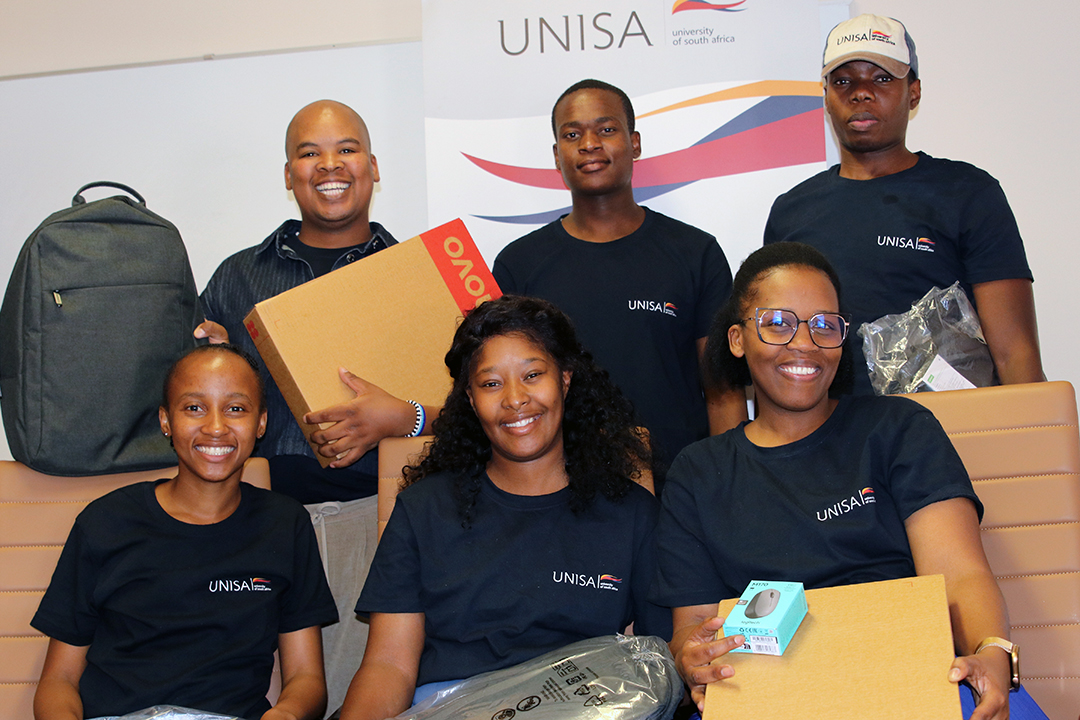 Unisa hackathon winners develop AI solution to support students at risk of falling behind
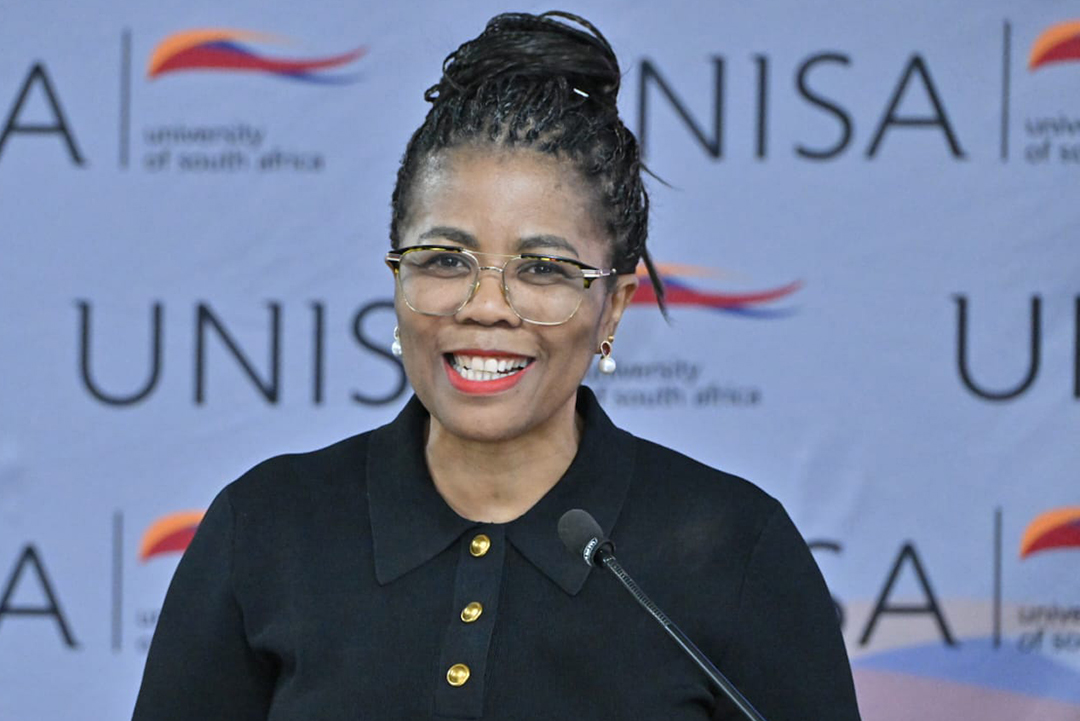 Beyond Black Wednesday: Unisa lecture calls for urgent action to protect media freedom and public broadcasting
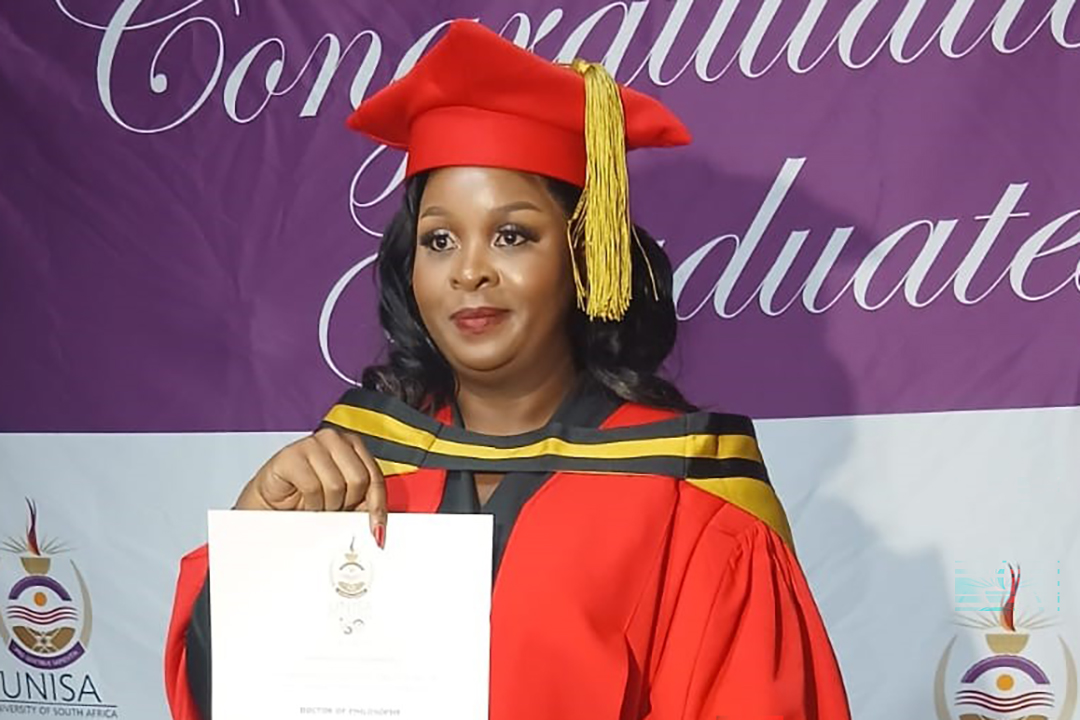 Unisa celebrates 25 new PhD graduates advancing research and innovation