

The African college of excellence in the social and human sciences
Students from Unisa's Durban and Pietermaritzburg centres joined staff, student leaders and union representatives on Wednesday 9 September 2026 for a significant step towards more coordinated student representation in the KwaZulu-Natal (KZN) Region.
The joint launch and induction of the College of Human Sciences (CHS) student structures, namely the Human Sciences Student Association (HSSA), the South African BRICS Youth Association (SABYA) and the Communication Students' Association (COMSA), brought the three organisations together on one platform for the first time.
While each structure has its own mandate and area of focus, their joint launch signals a commitment to collaboration, tolerance and a stronger collective voice for CHS students across the region.
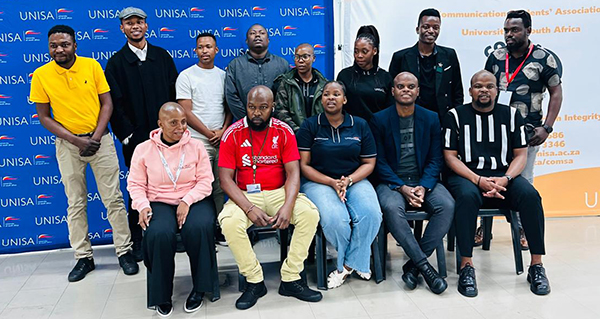
Front row, L-R: Ms Sharon Maponya (CHS Student Coordinator); Mr Moleseng Malepe (APSA); Ms Nokwanda Cele (RSRC); Mr Siphelele Ngcobo (NEHAWU); Mr Thabang Mashegoane, Acting Coordinator (SABYA). Back row, L-R: Mr Philemon Modiba, Secretary (SABYA); Mr Sanele Ndwandwe, National Spokesperson (HSSA); Mr Kekeletso Makhalemele, Coordinator (HSSA); Mr Ronnie Morena, Lecturer, Department of Communication Science (Unisa); Ms Khiselolo Masina, Chairperson (COMSA); Ms Mologadi Mmako, Projects and Events Coordinator (COMSA); Mr Thabang Masedi, Lecturer, Department of Communication Science (Unisa); Mr Tumelo Modiba, Lecturer, Department of Communication Science (Unisa).
Programme director and CHS lecturer Mr Thabang Masedi opened the event on a reflective note, acknowledging Heritage Month and leading attendees in traditional KwaZulu-Natal graduation songs before the singing of the National Anthem.
In his opening remarks, KZN Region Communication and Marketing Manager Mr Siyabonga Seme highlighted the importance of unity among student structures. He stressed that working together does not mean losing individual identities, but rather using the strengths of each structure to improve student support and service delivery.
The event also featured messages of support from Ms Nokwanda Cele, Education and Transformation Officer; Mr Moleseng Malepe, Student Representative Council (SRC) APSA shop steward; and Mr Siphelele Ngcobo, NEHAWU shop steward.
Their messages centred on a common vision of student leadership based on integrity, humility, service and academic transformation.
Cele described the gathering as the beginning of a new journey focused on developing leaders, connecting students and creating opportunities.
"This gathering is not only about launching and inducting student structures. It is about strengthening student leadership, encouraging participation and creating a stronger relationship between students and the institution. Lead with integrity. Lead with humility. Listen to students, understand their challenges and work towards creating meaningful opportunities for them," she said.
Malepe encouraged the newly inducted leaders to remain focused on the core purpose of student structures: serving students and addressing the gaps they identify.
He also cautioned against the use of student structures for political ambitions or personal agendas, urging leaders to keep their focus on student interests and institutional transformation.
Ngcobo emphasised the important role of the College of Human Sciences in shaping public discourse, preserving cultural heritage and promoting critical thinking around social justice and post-apartheid transformation.
He said student leaders had a responsibility to advocate for social justice and transformation while contributing to conversations around the future of higher education.
"By fostering critical thinking, programmes at institutions teach students to question assumptions, analyse complex power structures and communicate effectively across diverse communities. It is important for these structures to support the college's work to ensure that the decolonisation of the curriculum is implemented by fostering mind-sharing ideas that benefit the Unisa community through students’ indabas and other student forum debates," he said.
The joint initiative brings together student structures, the SRC, regional union leadership and academic staff within a more coordinated framework for student support and responsive leadership across the region.
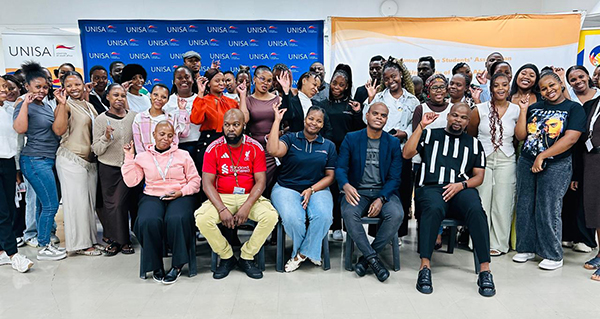
Group of Unisa students, union members, SRC member and student structures leadership.
It also marks a new chapter for COMSA, which is rebuilding and expanding its KZN regional presence after several years of inactivity. HSSA and SABYA have also strengthened their presence in the region, creating additional platforms through which CHS students can participate, develop their skills and engage beyond the classroom.
The Human Sciences Student Association was established to help bridge the gap between students and college management. It brings together students from the School of Arts, School of Humanities and School of Social Sciences under one umbrella.
Guided by the motto "Educate, Empower, Unite", HSSA aims to promote holistic student development and engagement.
Represented at the induction by Coordinator Mr Kekeletso Makhalemele and National Spokesperson Mr Sanele Ndwandwe, the association positions itself as an academic and non-political platform focused on career development, multidisciplinary research and an Africanised approach to higher education.
SABYA brings an international dimension to student leadership by connecting South African university students with opportunities for engagement and professional development across BRICS+ countries.
Represented by Acting Coordinator Mr Thabang Mashegoane and Secretary Mr Philemon Modiba, the SABYA University Chapter provides Unisa students with opportunities to participate in Model BRICS Summits, international cultural exchanges, collaborative research and leadership programmes.
The initiative is intended to equip students with the knowledge, networks and experience needed to participate meaningfully in an increasingly interconnected global environment.
COMSA's participation marked the revival of its KZN regional structure. Represented by Chairperson Ms Khiselolo Masina and Projects and Events Coordinator Ms Mologadi Mmako, the association aims to strengthen the connection between communication studies and the professional world.
Operating within the Department of Communication Sciences, COMSA provides students with opportunities to complement classroom learning through workshops, industry engagement and practical exposure in communication, public relations and marketing.
The association also aims to ensure that students across KwaZulu-Natal are informed about its activities and have opportunities to participate in its programmes.
COMSA has a track record of supporting graduate affiliate members as they prepare to enter the communications profession, both within the institution and in the private sector.
The joint launch and induction of HSSA, SABYA and COMSA represents more than the establishment of student structures. It provides a platform for collaboration, leadership development and greater student participation within the College of Human Sciences.
For the KZN Region, the initiative lays the foundation for student structures to work alongside one another while retaining their distinct identities and mandates, ultimately creating more opportunities for students to engage, develop and contribute to the Unisa community.
* By Mduduzi Ndunakazi, Regional Communications and Marketing Officer, Unisa KwaZulu-Natal Region, with contributions from Sharon Maponya, College of Human Sciences Student Structures Coordinator
Publish date: 2026-09-14 00:00:00.0

 From Maramanzhi to master's: Unisa graduate champions Tshivenda through scholarship
 Unisa students help shape digital complaints system to improve accountability and service delivery
 Age is no barrier to success: Former NAFCOC president earns Unisa master's degree at 71
 From academic setbacks to master's distinction: Unisa graduate's journey of resilience
 Ethiopian doctoral graduates highlight Unisa's growing impact across Africa