

The African college of excellence in the social and human sciences

Prof Mookgo Kgatle
The University of South Africa (Unisa) has strengthened its position as a leader in research with the appointment of Prof Mookgo Kgatle as a National Research Foundation (NRF) Decadal South African Research Chairs Initiative (SARChI) Tier 1 Chair. Announced by the Minister of Science, Technology and Innovation, Prof Blade Nzimande, the appointment brings Unisa’s total number of SARChI Chairs to 11.
Over the next 15 years, Kgatle will lead research on welfare and social development in informal settlements, aiming to produce knowledge that improves lives, informs public policy, and supports sustainable community development.
Reflecting on the appointment, Kgatle describes the recognition as both humbling and motivating.
"I felt very honoured and blessed to have been selected as one of the Decadal Plan-aligned SARChI Chairs," he says.
"I felt encouraged that the research I have put in over the years is receiving full recognition from the Department of Science and Innovation (DSI) and the National Research Foundation."
An NRF C1-rated scholar in Unisa's College of Human Sciences, Kgatle is internationally recognised for his work in theology and religion, particularly African Pentecostalism, theological education and the relationship between religion and society. His research explores issues such as inequality, social cohesion and community resilience, aligning closely with Unisa’s research priorities of social justice, transformation and governance.
Although described as a decadal initiative, the Tier 1 SARChI Chair is funded over three consecutive five-year cycles, creating a 15-year platform for sustained research, postgraduate training and academic development.
Kgatle's vision is to establish the Chair as a centre of excellence in welfare and social development research in informal settlements. His work will explore how faith-based approaches, particularly holistic Pentecostal theology that considers people’s spiritual, social, and physical well-being, can contribute to healthier, more resilient communities in support of Sustainable Development Goal 3: Good Health and Well-being.
"Our goal is to expand scientific research on welfare and social development in informal settlements using holistic Pentecostal soteriology," he explains.
Beyond producing high-impact research, the Chair will attract leading researchers, support master's and doctoral students, and create opportunities for early and mid-career academics through postdoctoral mentorship.
The research will focus on understanding the challenges and strengths of informal settlements and on identifying practical ways to improve people’s quality of life.
Fieldwork will begin in Alexandra during the first five-year phase, followed by Tembisa in the second cycle and Diepsloot in the final phase.
Kgatle says the research is driven by a desire to make a meaningful difference in people’s lives.
"I was motivated by the need to conduct research that will ultimately improve people’s lives by addressing their basic needs as part of the framework of social welfare. At the same time, I was motivated by the need to go beyond welfare to include ways of improving individual skills to enhance livelihoods within the framework of social development."
Rather than viewing informal settlements only as places of poverty, Kgatle believes they reveal the resilience and ingenuity of the communities that live there.
"Informal settlements are not simply places of deprivation, but also social environments where communities develop survival strategies, informal economies and community-based support networks. This alone makes them relevant research sites for welfare and social development."
The research will examine challenges such as poverty, unemployment, food insecurity, inadequate housing, limited access to healthcare and poor sanitation. It will also explore issues affecting women through Bosadi theorisation, an African-centred feminist framework that examines women’s lived experiences and promotes gender justice.
Kgatle hopes the findings will extend beyond academic journals to influence public policy and strengthen collaboration between government, communities and faith-based organisations.
His work aligns with South Africa's National Development Plan 2030, informal settlement upgrading programmes, municipal integrated development plans and national gender empowerment policies.
"By integrating theological perspectives with welfare and social development discourse, the Chair offers innovative approaches to understanding and resolving societal issues."
He believes meaningful and lasting development comes from addressing immediate needs while creating opportunities for people to build sustainable livelihoods.
"Research on social development in informal settlements will help residents gain skills and knowledge that will result in poverty alleviation through job creation or social entrepreneurship. When the basic needs of people living in informal settlements are met through welfare and their skills are developed through social development, there will be no poverty."
For Kgatle, success will be measured not only by research publications but also by the lasting impact the work has on people’s lives.
"This research chair will leave a long-lasting legacy of impactful scientific research on welfare and social development in informal settlements," he says.
"It will also leave a legacy of producing excellent researchers and scientists through postgraduate supervision and mentorship, while ensuring that scholarship is grounded in the lived experiences of communities in Alexandra, Tembisa and Diepsloot."
By combining internationally recognised scholarship with research grounded in the realities of South Africa’s informal settlements, Prof Mookgo Kgatle’s appointment represents an opportunity to generate knowledge that shapes policy, develops future researchers and contributes to stronger, more resilient communities.
* By Noxolo Miya, Journalist, Department of Institutional Advancement
Publish date: 2026-07-22 00:00:00.0

 From law graduate to student leader: Tshegofatso Mmope's commitment to justice and empowerment
 Unisa Western Cape honours retirees and celebrates their enduring legacy
 South Africa's transport recovery faces its toughest test: Delivering reliability for all
 Unisa brings higher education opportunities closer to Central Karoo learners
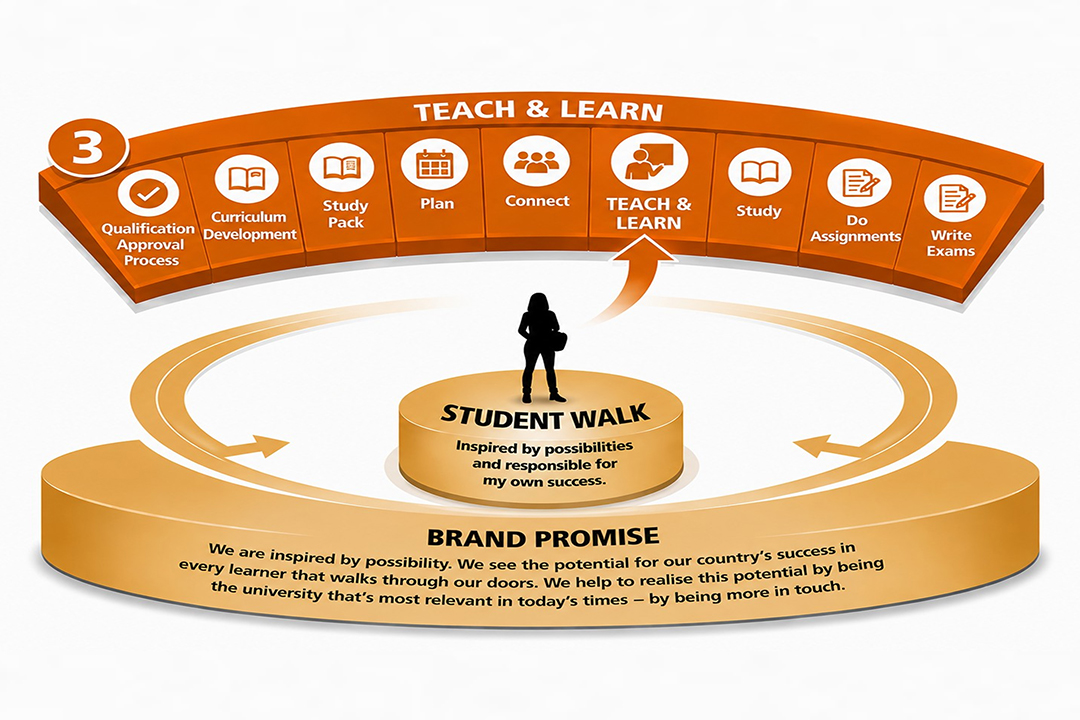 From learning to success: Supporting students throughout their studies