
Producing over 40% of teachers in South Africa
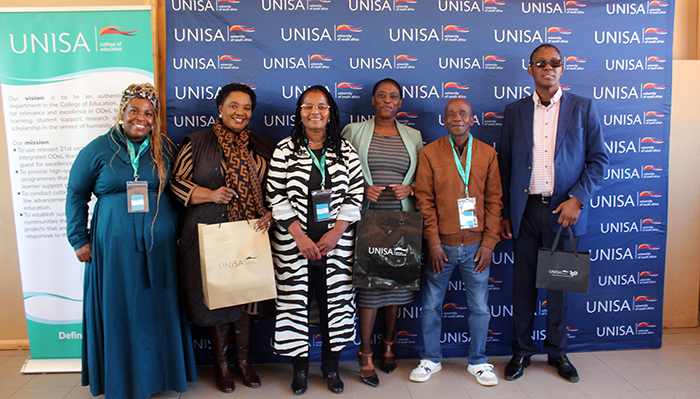
From left: Dr Makwalete Malatji (project member), Mapula Phooko (Mogodumo District Circuit Manager, Limpopo Department of Education), Prof Margaret Maja (project leader), Raesetja Kganyago (Gerson Ntjie Secondary School principal and host), Dr Samson Tshabalala (project member) and Malesela Tlhaklola (project co-ordinator)
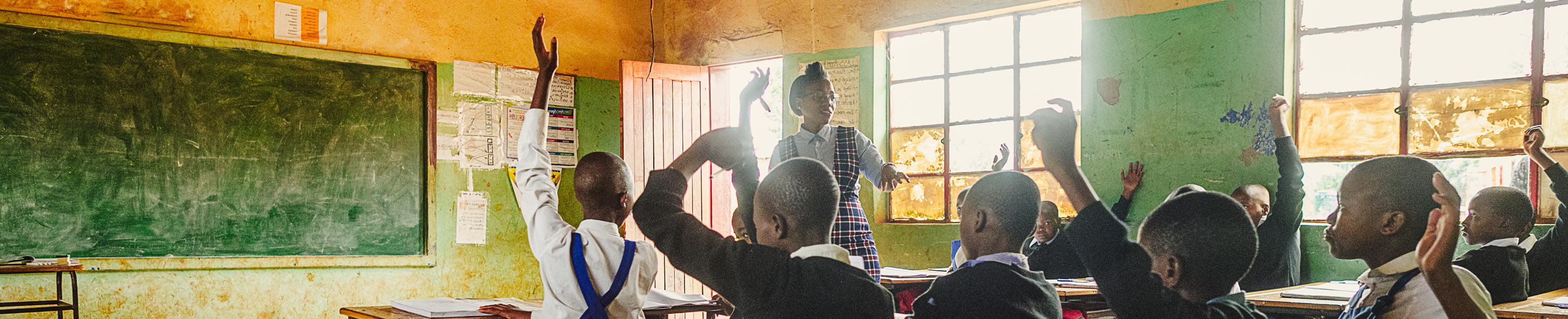
The College of Education’s Department of Curriculum and Instructional Studies (DCIS), under the esteemed leadership of Prof Margaret Maja, is continuing its deep investment in rural education through its ongoing engaged scholarship project "Classroom interaction pedagogy in teaching English first additional language learners in the intermediate phase".
Building on a foundation of research and partnership established in 2019, the project entered a critical new phase of implementation and monitoring last year. The project team conducted supportive visits to nineteen schools in the Kgakotlou district, including Itereleng Primary, Mananga Primary, Thabadora Primary and Makotopong Primary, among others. The primary goal was to monitor the application of new teaching strategies, offer ongoing support and collect vital data on the project's impact.
A cornerstone of the project's latest intervention was a comprehensive training workshop held in May 2025. Moving beyond traditional methods, the team equipped Intermediate Phase teachers with essential 21st-century skills, focusing on four key themes:
This project stands as a testament to Unisa's commitment to authentic, long-term community engagement. Unlike short-term interventions, this initiative has fostered a continuous feedback loop between academic research and classroom practice since 2019.
The scholarly output of this partnership has been substantial, contributing significantly to the academic field with nine published articles between 2019 and 2024.
This research, grounded in the real-world context of the Mogodumo and Kgakotlou school districts in Limpopo, ensures that the project's findings benefit the global educational community while directly informing its ongoing work.
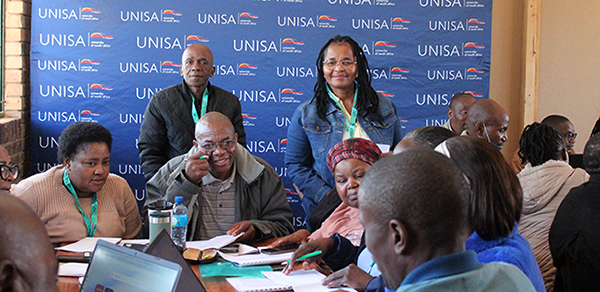
Participants interacting with project team members during a group activity
"The visits to the nineteen schools were not an evaluation, but a collaboration," explains Maja. "We were there to listen, to problem-solve alongside the teachers, and to gather insights that will directly shape our future research and support. This is the essence of engaged scholarship: a reciprocal partnership where the university and the community learn and grow together."
To further strengthen this endeavour, the project team has recently expanded to include additional expertise: Prof Bernie Plaatjies, Associate Professor in Curriculum and Instructional Studies, and Dr HR Maapola Thobejane, from the Department of Inclusive Education.
Their inclusion brings fresh perspectives on curriculum design and inclusive teaching practices, ensuring the project meets the diverse needs of all learners.
Integrating digital pedagogy is no longer optional; it is essential. The team’s focus is on providing teachers with practical, manageable tools that can immediately enhance their teaching and increase learner engagement.
The Unisa team is now analysing the data collected during the school visits to assess the impact of the training and identify further areas for support. The project continues to serve as a powerful, replicable model for how universities can play a transformative role in strengthening South Africa's educational landscape, one classroom at a time.
* By Dineo Horner, Administrator: Research, Marketing and Communication, Department of Curriculum and Instructional Studies
Publish date: 2026-02-18 00:00:00.0

 Turning Africa's potential into human possibility: Reflections from 2026 Chief Albert Luthuli Founders' Lecture
 Prof LenkaBula calls for action on public service ills as 25th SAAPAM Conference opens
 Reimagining justice through Unisa's engaged scholarship
 Unisa geographer elected Fellow of the Society of South African Geographers
 Unisa and Harbin Institute of Technology forge academic partnership