

The largest provider of business education in Africa and one of the largest in the world
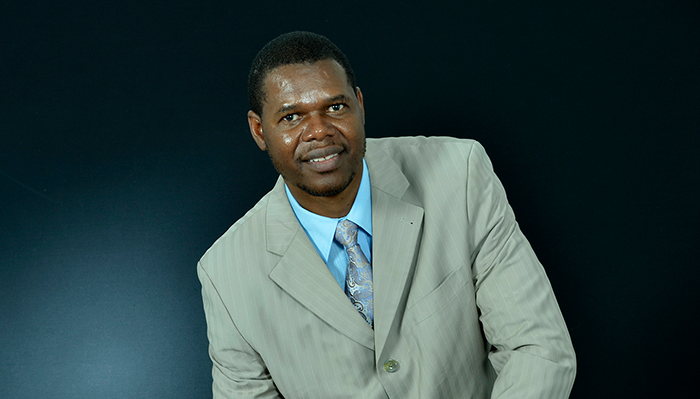
Prof Godwell Nhamo leads Unisa’s Institute for Sustainability and Corporate Citizenship
The Standard Bank of South Africa Limited has partnered with Unisa to support a climate change-induced loss and damage (CILD) research programme with seed funding of R1 million. The funding, awarded for an initial period of one year, will advance research, capacity-building and policy-relevant interventions to address the escalating impacts of climate-related disasters in Southern Africa.
Pearl Phoolo, Standard Bank Head of Corporate Social Investment (CSI), says: "Addressing loss and damage from environmental events requires more than emergency relief; it demands rigorous research, systems thinking and policy innovation rooted in Africa’s realities. Standard Bank’s support of the Unisa CILD research programme is a strategic investment in knowledge that strengthens national climate adaptation discussions, advances disaster risk reduction, and delivers inclusive and evidence-based solutions for communities most exposed to environmental shocks."
The CILD programme is rooted in long-standing engagements between Unisa’s Institute for Sustainability and Corporate Citizenship (ISCC), the National Department of Forestry, Fisheries and the Environment (DFFE), and other key stakeholders operating in the climate change policy and sustainability space.
Since 2023, Unisa’s ISCC research team, led by Prof Godwell Nhamo, has been working closely with the DFFE to co-create and co-deliver a national programme focused on climate change-induced loss and damage. The initiative seeks to localise global climate change deliberations by responding directly to the lived realities of vulnerable communities in Southern Africa.
This partnership will also advance the operationalisation of South Africa’s National Loss and Damage Programme objectives through private-public partnerships (PPPs) to supplement government efforts in building resilience. This will be done through research and data-driven systems that strengthen planning and national preparedness to understand unavoidable climate impacts better.
"Loss and damage are no longer a future risk; it is a present and lived reality for many communities in Southern Africa," says Nhamo. "This partnership allows us to generate context-specific evidence that can inform policy, support affected communities, and ensure that loss and damage are treated as a development and justice issue, not just an environmental one."
Loss and damage formally entered the global climate agenda in 2012 at the United Nations Framework Convention on Climate Change (UNFCCC) Conference of the Parties (COP) in Doha, through what later became known as the Doha Gateway. The establishment of the Warsaw International Mechanism on Loss and Damage at COP19 in 2013 followed this. Despite these milestones, global progress has remained slow, as climate action has largely prioritised mitigation and, later, adaptation and resilience-building.
As a result, climate change-induced loss and damage remains a global emergency, with limited resources allocated by governments, the private sector, academia and other stakeholders. Recent disasters in Southern Africa – including Cyclone Idai in 2019 and the devastating floods in Mozambique and South Africa in January 2026 – highlight the urgent need for coordinated evidence-based responses.
In line with the agreement concluded on 19 January 2026, the CILD programme will focus on the following key objectives:
Nhamo emphasises that partnerships with the private sector are critical in accelerating impact. "The support from Standard Bank demonstrates the important role that financial institutions can play in advancing climate justice, knowledge production and practical solutions that leave no one behind," he says.
Unisa, through the ISCC, looks forward to deepening its collaboration with Standard Bank and other stakeholders committed to advancing innovative, evidence-based responses to climate change-induced disasters and the profound losses they impose on communities across Southern Africa.
* By Tebogo Mahlaela, Communication and Marketing Specialist, College of Economic and Management Sciences
Publish date: 2026-02-10 00:00:00.0

 Unisa partners with Standard Bank to strengthen climate change research
 An electrifying fusion of digital learning and climate action
 Unisa Radio launches major charity campaign
 Unisa to host Digital Technology Conference
 Unisa empowers award-winning agro-cosmetics entrepreneur