

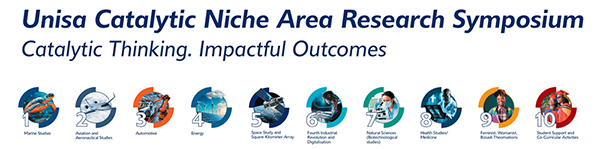
Prof Sudesh Sivarasu, internationally recognised medical device innovator and Director of the UCT MedTech Laboratory, will discuss how research and innovation are redefining the future of healthcare at the Unisa Catalytic Niche Area Research Symposium taking place from 29 to 30 July 2026.

Prof Sudesh Sivarasu
The symposium is the university's flagship research platform, showcasing how interdisciplinary scholarship is shaping Africa's future through innovation, collaboration and knowledge excellence.
Bringing together leading academics, researchers, postgraduate students, industry, government and civil society, the symposium highlights pioneering research across Unisa's ten Catalytic Niche Areas. It provides a dynamic platform for exchanging ideas, forging strategic partnerships, and unlocking collaborative research opportunities to address Africa's most pressing challenges.
More than a conference, the symposium reflects Unisa's leadership in advancing research that informs policy, drives innovation and delivers sustainable societal impact. Through distinguished keynote speakers, expert dialogue and cutting-edge research, delegates will explore solutions that strengthen South Africa's research ecosystem while contributing to the continent's development agenda.
Click here for more information and to register.
Keynote speaker
Panellist
Prof Sudesh Sivarasu leads the UCT MedTech laboratory and is widely recognised internationally for medical device innovation. He has been named a prolific inventor by UCT Research Contracts and Innovation. He holds one of the highest intellectual property portfolios among current UCT staff, with more than 64 patent applications across 20 patent families, of which 22 patents have been granted.
He has received 18 prestigious national and international awards across four continents, including eight in the past four years and the UCT Deputy Vice-Chancellor's Award for Achievement in Innovation. His national standing in medical device design is reflected in regular invitations to participate in forums organised by national agencies and bodies such as the Department of Science, Innovation and Innovation (DSTI) and the Department of Trade, Industry and Competition (DTIC), the Technology Innovation Agency (TIA), the South African Medical Research Council (SAMRC), the Global Health Innovation Accelerator (GHIA), Strategic Health Innovation Partnerships (SHIP) and the Medical Device and Diagnostic Innovation Cluster (MeDDIC).
Sivarasu is also internationally known for developing an innovative medical design programme, currently taught at universities in Europe, Asia and Africa. The course is offered annually to first-year students in the Biomedical Engineering MSc programme. It involves collaboration with medical practitioners to conceptualise and design Africa-based solutions to clinical problems.
The programme has been featured in reports by UCT Research Contracts and Innovation (2017) and the United Nations in South Africa (2019) and was showcased at UCT’s Annual Heads of Mission Breakfast in 2020. These reports highlight the potential of integrating frugal biodesign concepts into postgraduate teaching to produce both innovators and contextually relevant innovations that improve healthcare delivery in Africa.
Sivarasu also contributed a chapter on this concept to the textbook Biomedical Engineering for Africa. The course’s assessment model includes evaluation of designed products by industry experts and internal and external examiners to support alignment with industry practice and, where appropriate, translation to market.
Read also:
* By Virginia McManus, Manager: PR, Communication and Marketing, Directorate Research Support
Publish date: 2026-07-22 00:00:00.0

 Unisa SBL calls for shift from building houses to creating sustainable communities
 From law graduate to student leader: Tshegofatso Mmope's commitment to justice and empowerment
 Unisa Western Cape honours retirees and celebrates their enduring legacy
 South Africa's transport recovery faces its toughest test: Delivering reliability for all
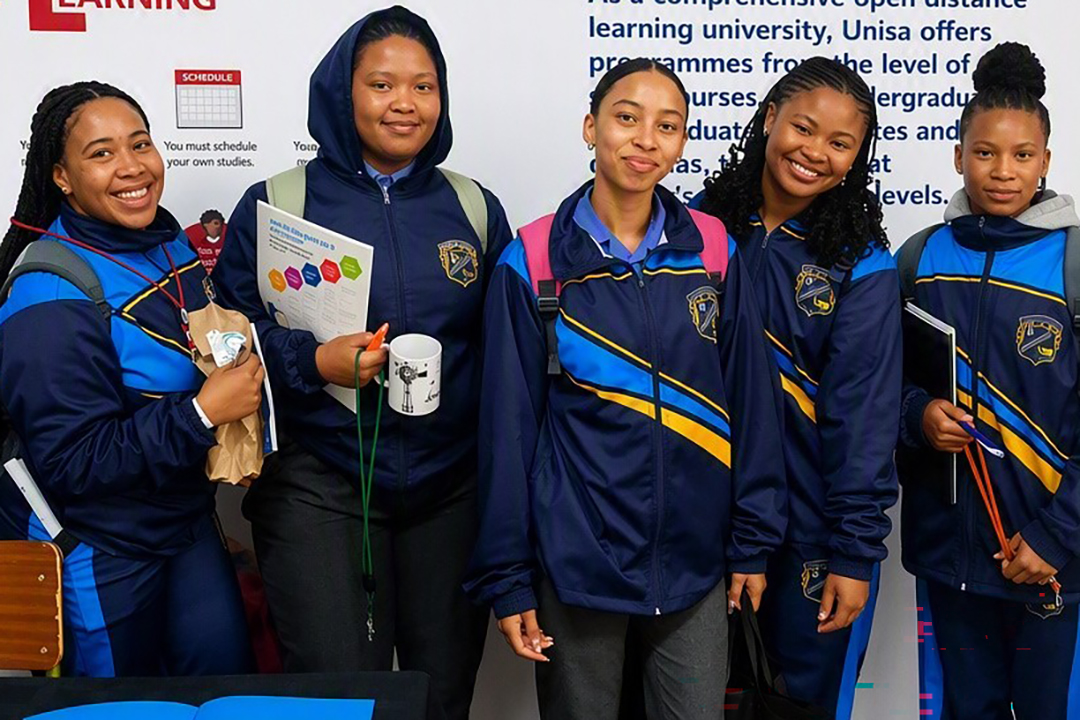 Unisa brings higher education opportunities closer to Central Karoo learners