
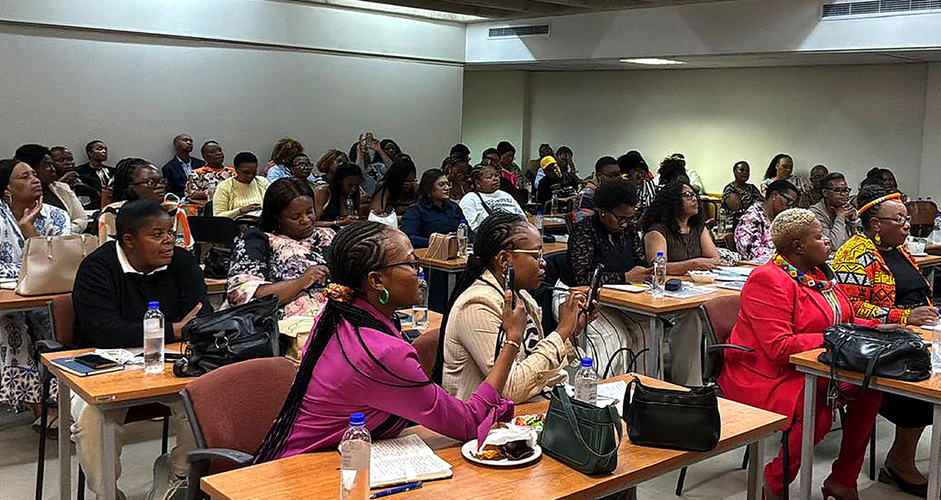
Women must not allow historical barriers, workplace discrimination or societal expectations to determine how far they can rise in leadership. This message took centre stage when the University of South Africa (Unisa) hosted its Women in Leadership and Management (WiLM) Seminar at the Durban Campus on 29 September 2026.
Held under the theme "Shattering the Glass Ceiling," the seminar brought together university management, academics, staff, students and representatives of partner organisations to examine the obstacles that continue to limit women's advancement and explore practical ways to overcome them.
Organised in partnership with the KwaZulu-Natal Department of Economic Development, Tourism and Environmental Affairs and the South African Council for Educators (SACE), the event provided a platform for women to share their leadership experiences, challenge entrenched stereotypes and develop the confidence and skills needed to occupy positions of influence.
Discussions focused on confronting gender bias, workplace discrimination and stereotype threats, while strengthening self-advocacy, assertiveness and the ability to establish professional boundaries. Participants were also encouraged to develop clear leadership visions and build professional identities that reflect their values, capabilities and aspirations.
The seminar reflected Unisa's commitment to advancing gender equality and empowering women through education, leadership development and engaged scholarship.
Opening the seminar, Unisa KwaZulu-Natal Regional Director, Dr Joyce Myeza, reflected on the challenges women continue to encounter as they pursue leadership positions.
She highlighted the additional pressure many women face to repeatedly demonstrate their competence, particularly when they become the first or only woman to occupy a leadership position within an organisation.
Despite these challenges, Myeza said women had consistently demonstrated their ability to overcome barriers through education, resilience, solidarity and policy interventions that promote equal opportunities.
Her message resonated with Unisa's Catalytic Niche Area of Feminist/Womanist/Bosadi Theorisations, which places women's experiences, empowerment and emancipation at the centre of efforts to transform society.
Myeza drew inspiration from African women whose leadership has challenged conventional expectations and opened opportunities for future generations.
Among those she recognised were Ellen Johnson Sirleaf, Africa's first democratically elected female head of state; Netumbo Nandi-Ndaitwah, Namibia's first female president; Graça Machel; Dr Nkosazana Dlamini-Zuma; and Nobel Peace Prize laureate Wangari Maathai.
She also paid tribute to South African pioneers Charlotte Maxeke, Cecilia Makiwane and Prof Mamphela Ramphele, as well as Gertrude Ntlabati, recognised as the first black woman to graduate from Unisa in 1927.
Their achievements, she noted, demonstrated how women had challenged institutional barriers and created opportunities for others to follow.
Turning to Unisa's own leadership, Myeza singled out Principal and Vice-Chancellor, Prof Puleng LenkaBula, as an example of what women can accomplish when they pursue their ambitions despite the limitations imposed by others.
She described LenkaBula's leadership as an inspiration to women seeking to make meaningful contributions in academia, business and society.
One of the seminar's highlights was an unexpected visit by LenkaBula, who was in Durban attending the South African Association of Public Administration and Management (SAAPAM) Conference.
During her visit to Unisa's KwaZulu-Natal Regional Hub, the Vice-Chancellor joined the seminar and delivered an impromptu address that reinforced the day's central message of resilience, solidarity and purposeful leadership.
She encouraged participants to remain determined in pursuing their professional aspirations, even when confronted by institutional resistance or personal setbacks.
However, LenkaBula challenged the women to look beyond individual career advancement and consider how their collective skills, knowledge and experience could create economic opportunities.
She encouraged them to explore establishing a business together, emphasising the potential of collective entrepreneurship to advance women's economic independence and influence.
The Vice-Chancellor assured participants that such initiatives would receive support from her office.
Her challenge was captured in a question that invited the women to reflect on their willingness to act on their ambitions.
"If we don't start now as women, when will we start?" she asked.
The message reinforced the importance of moving beyond conversations about empowerment towards practical initiatives that enable women to take greater control of their economic and professional futures.
It also reflected the objectives of the United Nations Sustainable Development Goals, particularly SDG 5, which promotes gender equality and women's empowerment, and SDG 8, which advocates decent work, entrepreneurship and inclusive economic growth.
The seminar also provided participants with opportunities to reflect on their experiences and learn from women who have navigated different leadership environments.
Dr Ntombikayise Nkosi, Convenor of the WiLM Engaged Scholarship Journey, outlined the initiative's origins, objectives and achievements, highlighting its role in supporting women's leadership development.
The WiLM initiative seeks to connect academic knowledge with the lived experiences of women, creating opportunities for mentorship, professional development and meaningful engagement.
Through its engaged scholarship approach, the programme extends Unisa's contribution beyond the classroom by addressing challenges that affect women in workplaces and communities.
A session titled "Voices from the Ground" allowed WiLM participants and women leaders to share their personal leadership journeys.
The discussions explored the realities of pursuing leadership roles, including the importance of confidence, perseverance and support networks in overcoming professional challenges.
By placing women's experiences at the centre of the conversation, the session highlighted the value of creating spaces where participants can learn from one another and recognise the strengths they bring to leadership.
Representatives of partner organisations also reaffirmed their commitment to advancing women's leadership and creating more inclusive professional environments.
Among the speakers were Prof MC Maphalala, WiLM Project Mentor and Deputy Vice-Chancellor at Mangosuthu University of Technology; Mrs Mthembu, representing the KwaZulu-Natal Department of Economic Development, Tourism and Environmental Affairs; and Tuzana Sophethe from SACE.
Their contributions highlighted the importance of collaboration between universities, government departments and professional bodies in addressing the structural challenges that continue to affect women's career progression.
The partnerships also demonstrated the value of combining academic expertise, professional experience and institutional resources to strengthen women's leadership opportunities.
For Unisa, such collaborations support its broader commitment to engaged scholarship and the development of solutions that respond to societal challenges.
A key feature of the programme was a presentation by Kirsten Garbini, Founder and Chief Executive Officer of DINEO Pact, who led a session titled "Leadership Rise."
Her presentation challenged participants to reconsider how they recognise and define their own leadership abilities.
Rather than viewing leadership solely through formal positions or professional titles, Garbini encouraged women to reflect on moments when they had demonstrated initiative, influenced others or made a meaningful difference.
"Take me to a time when you experienced yourself as a leader. What happened and who witnessed it?" she asked.
The question formed the basis of a reflective discussion in which participants were encouraged to identify their leadership strengths and consider how these could be developed further.
The session emphasised that recognising one's abilities is an important step towards building confidence, establishing a professional identity and pursuing greater responsibility.
It also highlighted the importance of self-awareness, personal leadership vision and the ability to communicate one's value in professional environments.
As the seminar drew to a close, participants took part in a facilitated reflection and audience engagement session, sharing insights and raising questions about the challenges and opportunities discussed throughout the day.
A recurring message was that meaningful progress in women's leadership requires more than encouragement.
Speakers emphasised the need for deliberate mentorship, sponsorship and institutional support to ensure that women have access to opportunities for advancement.
They also highlighted the importance of challenging discriminatory workplace practices, developing self-advocacy skills and creating environments in which women's contributions are recognised and valued.
These discussions reinforced the need for sustained efforts to address the inequalities that continue to shape women's professional experiences.
For Unisa, advancing women's leadership is closely linked to its educational and social transformation mandate. Through initiatives such as WiLM, the university contributes to SDG 4, which promotes inclusive and equitable quality education and lifelong learning opportunities, while supporting broader efforts to achieve gender equality.
The seminar concluded with closing reflections and a vote of appreciation delivered by Mrs Stha Nzimande and the WiLM team.
Reflecting on the day's discussions, Myeza captured the significance of challenging barriers that have historically prevented women from reaching their full potential.
The glass ceiling, she reminded participants, "was built by history, not by women's limitations."
The message underscored the central purpose of the gathering: women possess the ability to lead, innovate and transform institutions, but achieving lasting change requires both individual determination and collective action.
Through the WiLM Engaged Scholarship Journey, led by Nkosi, Unisa's KwaZulu-Natal Region continues to create opportunities for women within the university and surrounding communities to strengthen their leadership capabilities, expand their professional networks and pursue their aspirations.
More importantly, the initiative demonstrates how universities can contribute to dismantling systemic barriers while helping to develop a generation of women leaders equipped to shape the future of their institutions, communities and society.
* By Siyabonga Seme, Manager: Communication and Marketing, Unisa KwaZulu-Natal Region
Publish date: 2026-10-08 00:00:00.0

 Unisa hackathon winners develop AI solution to support students at risk of falling behind
 Beyond Black Wednesday: Unisa lecture calls for urgent action to protect media freedom and public broadcasting
 Unisa celebrates 25 new PhD graduates advancing research and innovation
 From Maramanzhi to master's: Unisa graduate champions Tshivenda through scholarship
 Unisa students help shape digital complaints system to improve accountability and service delivery