
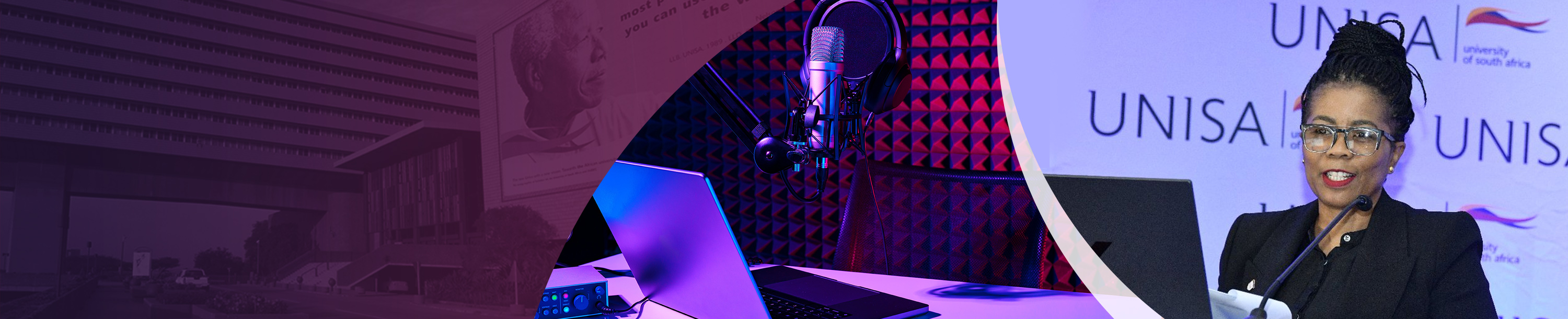
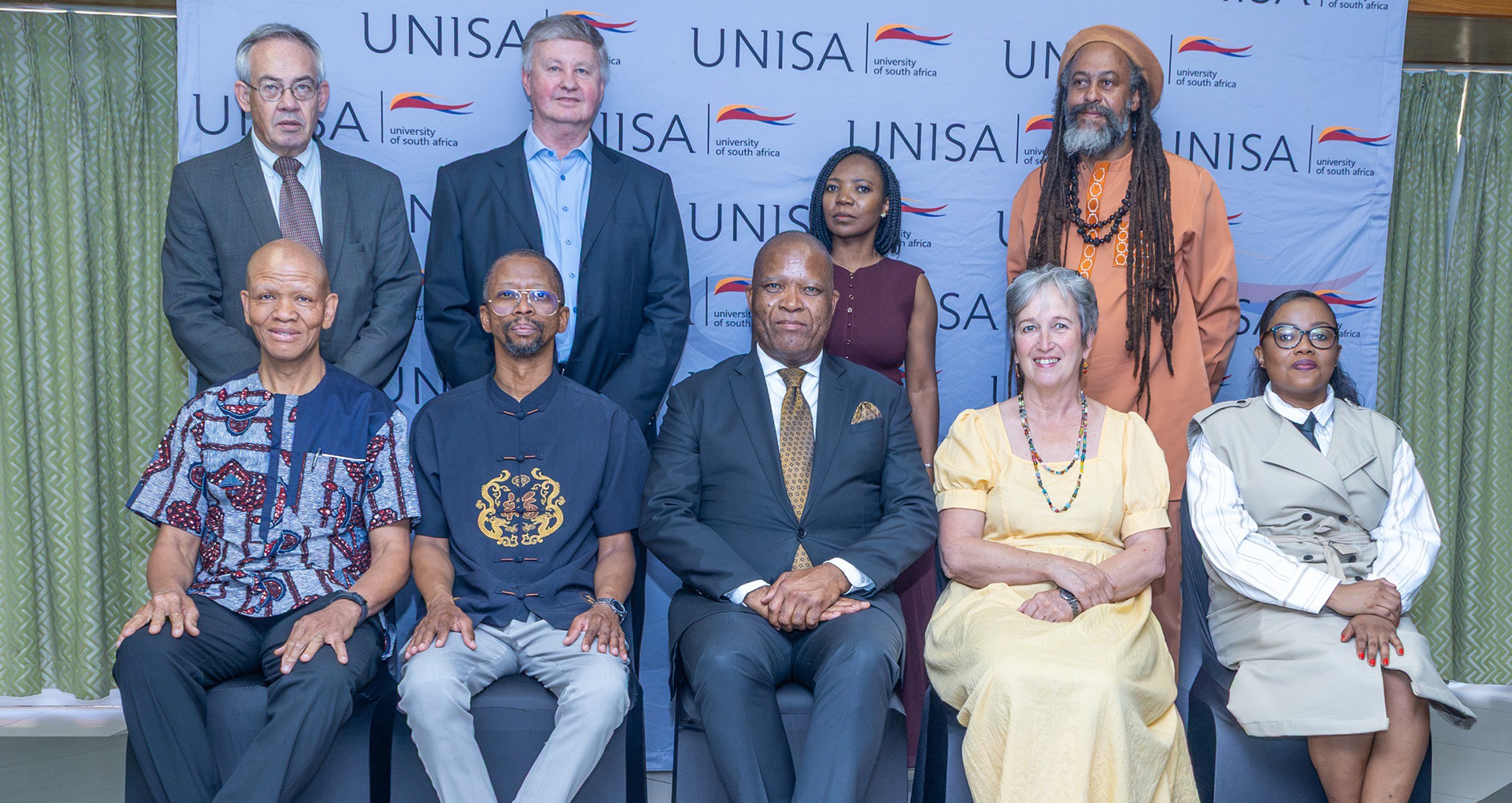
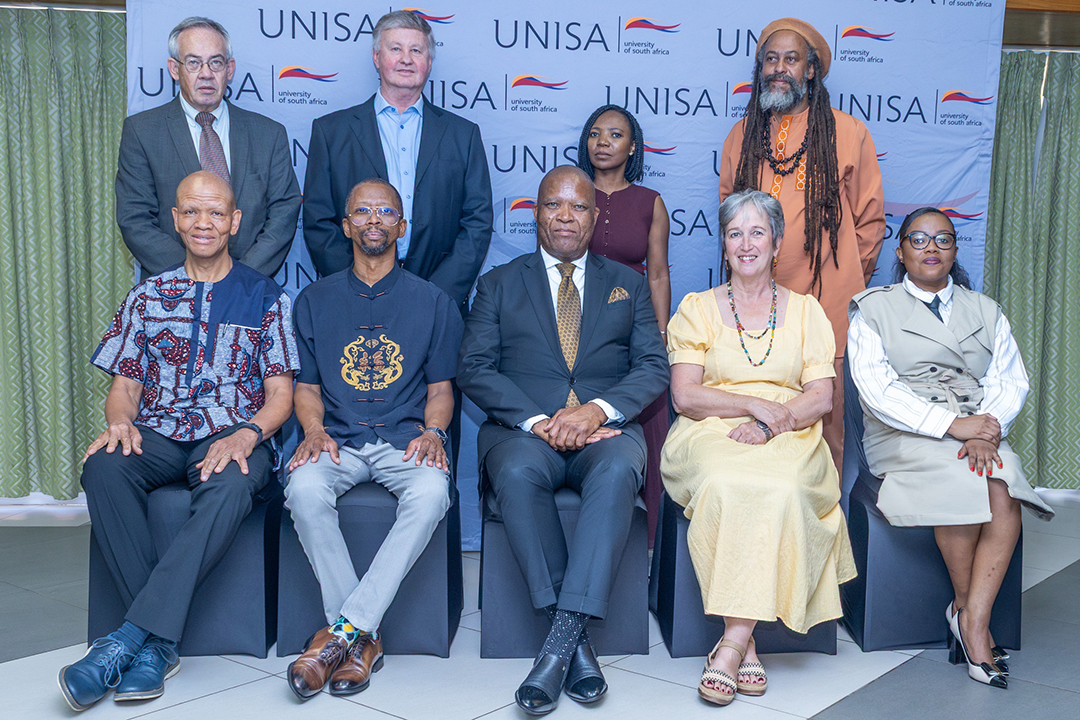
Deputy Minister of Cooperative Governance and Traditional Affairs Dr Namane Dickson Masemola, Unisa Executive Director of Institutional Advancement Prof Boitumelo Senokoane and guests during the Unisa and National Press Club policy dialogue on local government at the university's Muckleneuk Campus in Pretoria.
South Africans are not asking municipalities for more political promises. They want reliable water, functioning electricity infrastructure, clean communities, safe roads and leaders who can deliver basic services.
This message emerged strongly during a policy dialogue hosted by the University of South Africa (Unisa), in partnership with the National Press Club, at the university's Muckleneuk Campus in Pretoria on 28 October 2026. Held under the theme Every municipality must work, the dialogue brought together government representatives, political analysts, academics, journalists and students to examine the structural and governance challenges confronting local government. With the local government elections scheduled for 4 November 2026, discussions focused on what must change to ensure that municipalities become financially sustainable, accountable and responsive to the communities they serve.
Deputy Minister of Cooperative Governance and Traditional Affairs Dr Namane Dickson Masemola delivered the keynote address, highlighting the urgency of reforming a local government system increasingly strained by financial difficulties, deteriorating infrastructure and political instability. Welcoming participants, Unisa's Executive Director of Institutional Advancement, Prof Boitumelo Senokoane, conveyed apologies on behalf of Principal and Vice-Chancellor Prof Puleng LenkaBula, who was attending to other university commitments. Senokoane emphasised the importance of collaboration between universities and the media in encouraging informed public debate and strengthening democratic accountability.
"We appreciate the great work journalists do, and we should not be afraid of them," he said. Drawing on the ancient Greek concept of the agora, a public gathering place where citizens exchanged ideas and debated matters affecting society, Senokoane explained that universities had a responsibility to create spaces for meaningful engagement beyond academic classrooms. He positioned the dialogue as an opportunity for researchers, policymakers and citizens to interrogate challenges affecting communities and contribute to practical solutions.
National Press Club Chairperson Antoinette Slabbert reinforced this message, arguing that municipal challenges could not be reduced to election campaigns or political competition. While irregular expenditure and corruption frequently dominate headlines, she said the consequences of municipal dysfunction are experienced daily by households and businesses through water interruptions, electricity problems and deteriorating roads. "Municipalities are so much more," Slabbert said, drawing attention to the complex financial, legislative and administrative responsibilities underpinning local government.
In his keynote address, Masemola warned that financial instability, ageing infrastructure, poor audit outcomes and political infighting continued to undermine municipal performance and weaken public confidence. "The citizens of our country are not interested in the political statements and the talk that we sometimes put across. They are expecting reliable water, better electricity services, improved sanitation, collection of refuse, clean and safe environments, and, above them all, better leadership and management," he said. Masemola identified municipal debt as a major obstacle to sustainable service delivery, estimating that households, businesses and government institutions collectively owed municipalities approximately R400 billion.
This growing debt burden places considerable pressure on municipal finances, limiting the resources available for infrastructure maintenance, essential services and development. He also questioned whether South Africa's existing municipal funding model adequately accounts for the different economic circumstances of municipalities. While some municipalities benefit from substantial revenue bases, others serve communities with limited economic activity and high levels of poverty, making it difficult to generate sufficient income. These disparities, he argued, require a more realistic approach to municipal financing and institutional support.
Masemola outlined the government's review of the 1998 White Paper on Local Government, explaining that the existing policy framework no longer adequately reflects the challenges confronting municipalities. The review considers possible changes to municipal structures, funding arrangements and the relationship between political and administrative leadership. He said the reform process must strengthen accountability, improve institutional capacity and address the weaknesses that have contributed to service delivery failures. Political instability, particularly in municipalities governed through coalitions, was another concern.
Masemola noted that the number of political parties contesting local government elections had increased from 345 in 2016 to 508 in 2021 and 547 in 2026. This expanding political landscape has increased the complexity of coalition arrangements and the challenges associated with maintaining stable municipal administrations. He called for greater transparency in coalition agreements to ensure that residents understand the commitments made by political parties. "Citizens must know how they hold their leaders accountable," he said, advocating for coalition agreements to be made public.
He urged political parties to prioritise residents' needs rather than allowing political disagreements to disrupt municipal operations. The keynote address was followed by a panel discussion moderated by Adv Sipho Mantula of Unisa's Thabo Mbeki African School of Public and International Affairs. The panel comprised Leon Claassen, an analyst at Ratings Afrika; Prof Dirk Kotzé from Unisa's Department of Political Sciences; political scientist and researcher Prof Kealeboga Maphunye; and South African Local Government Association (SALGA) spokesperson Motalatale Modiba.
Claassen presented a concerning picture of municipal financial sustainability. Referring to Ratings Afrika's Municipal Financial Sustainability Index, he said the average municipal score had declined from 40 to 27 out of 100. The deterioration, he argued, reflected persistent weaknesses in financial management and infrastructure maintenance. "For me, financial management and the infrastructure are the most important aspects," Claassen said. He emphasised that municipalities require competent managers, sound financial controls and reliable infrastructure to fulfil their service delivery obligations.
Without these foundations, improvements in municipal performance would remain difficult to sustain. Kotzé questioned whether the existing local government model was adequately suited to South Africa's socioeconomic circumstances. He argued that debates about centralisation and decentralisation needed to be considered alongside the country’s broader economic structure. "The solution of local government is not in local government per se, but in what is going to be the macroeconomic model that will be implemented," he said.
His contribution highlighted the relationship between municipal performance, national economic policy and the distribution of resources across different spheres of government. Maphunye shifted the discussion towards public participation and the role of traditional leadership. He argued that traditional leaders were frequently treated as peripheral participants in local governance rather than being meaningfully included in decision-making. "Let's go back to the people," he urged, calling for stronger engagement between government institutions and the communities they serve.
Maphunye also raised concerns about patronage in public appointments, warning that political interference and corruption could undermine institutional effectiveness. He emphasised the importance of addressing these practices alongside broader governance reforms. Modiba highlighted the additional pressures created by climate change and persistent spatial inequality. He explained that changing weather patterns were increasingly affecting municipal infrastructure and placing greater demands on service delivery systems.
These challenges require municipalities to strengthen planning, infrastructure resilience and their ability to respond to environmental risks. Modiba also emphasised the importance of involving traditional leaders in discussions concerning land use and development. His contribution underscored the need for municipal planning to account for environmental sustainability, historical inequalities and the circumstances of different communities. Questions from the audience brought the discussion back to the consequences of weak governance and the responsibility of elected representatives.
One student questioned the value of free and fair elections when municipalities continued to struggle with corruption and poor service delivery. Another participant raised concerns about inadequate oversight and the inconsistent application of consequences against officials who failed to perform their duties. The questions highlighted growing frustration with the gap between political commitments and the realities experienced by residents.
Responding, Masemola emphasised that councillors had a responsibility to oversee municipal administrations and ensure that officials fulfilled their obligations. Where corruption was suspected, he said, councillors should report allegations to the police for investigation. He also referred to the role of law enforcement agencies in investigating wrongdoing within municipalities. Modiba explained that the revised White Paper placed greater emphasis on accountability and consequences for councillors, municipal officials and institutions that failed to meet their responsibilities.
He encouraged communities to familiarise themselves with the proposed policy changes so they could participate meaningfully in discussions and hold their representatives accountable. Delivering the vote of thanks, Prof Rohiwa Mukhudwana, Chair of Unisa's Department of Communication Science, said the university had hosted the dialogue to encourage research-informed discussion and public engagement on challenges affecting society. She emphasised that democratic accountability should not end when elections are declared free and fair.
The more important test, she argued, was whether elected leaders delivered on their commitments and improved the lives of residents. Thanking Masemola for his contribution, Mukhudwana reiterated that communities wanted effective leadership and management rather than political rhetoric. She highlighted the continuing challenges of unreliable and contaminated water as examples of the service delivery failures affecting public confidence.
The dialogue reflected Unisa's commitment to engaged scholarship and its role in creating platforms where academic expertise can inform public policy and democratic participation. It also supported the objectives of Sustainable Development Goal (SDG) 16, which promotes accountable and inclusive institutions, and SDG 11, which focuses on sustainable cities and communities. The discussions further resonated with South Africa's National Development Plan 2030 and the African Union's Agenda 2063, both of which recognise effective governance and capable institutions as essential to sustainable development.
* By Noxolo Miya, Journalist, Department of Institutional Advancement
* Photography: Mdu Khathamzi, Unisa Multimedia Centre
Publish date: 2026-10-29 00:00:00.0

 Unisa champions indigenous knowledge as a powerful force against poverty and inequality
 Unisa celebrates African heritage while advancing curriculum transformation and innovative online learning
 Unisa and National Press Club put municipal accountability under the spotlight ahead of elections
 Unisa brings student support closer to communities through municipal library partnerships
 Unisa Transport Summit calls for smarter, integrated transport systems to drive Africa's economic growth