
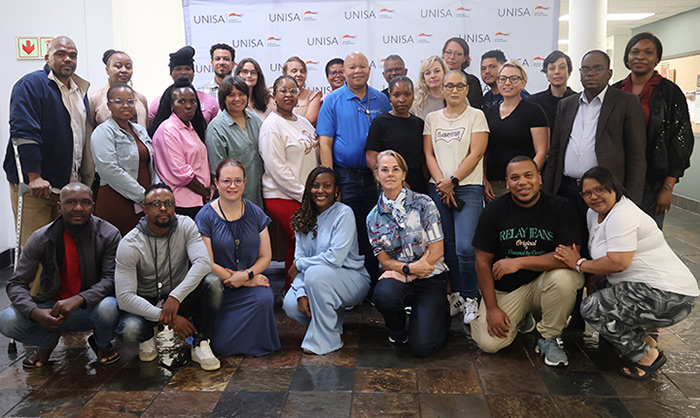
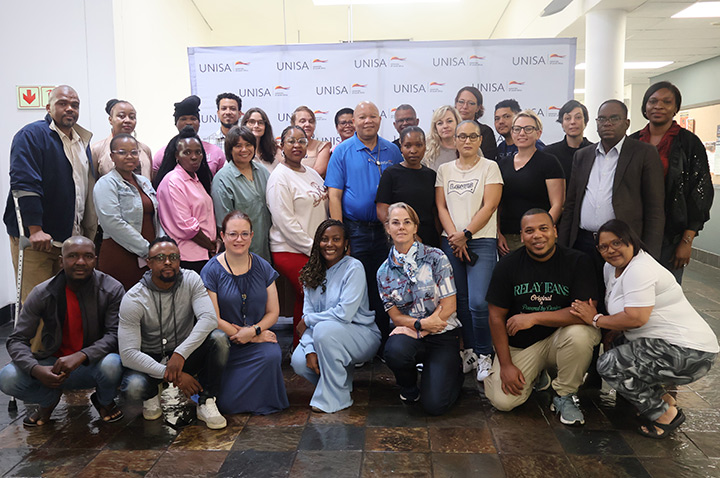
Master’s and doctoral students, together with workshop presenters
The Unisa Western Cape Region recently hosted its 2026 postgraduate student orientation. This focused research support initiative brought together postgraduate students enrolled for honours, postgraduate diploma, master’s and doctoral studies to enhance their success within the open, distance and e-learning (ODeL) environment.
The orientation reflected the region’s broader commitment to introducing and familiarising postgraduate students with academic and research support structures, while empowering them with academic and scientific skills essential for successful postgraduate study.
Structured over two consecutive days, the programme intentionally distinguished between the needs of honours/postgraduate diploma students and those of master’s and doctoral (M&D) students. While both sessions shared the common purpose of supporting students in navigating the postgraduate journey, the focus and depth of engagement were carefully tailored to their respective stages of study.
The honours and postgraduate diploma session introduced students to the transition from coursework-based study to independent research. Presentations emphasised foundational research skills, including understanding the structure of a research project, developing a research topic and engaging with academic literacies. Dr Tonny Matjila, from the School of Interdisciplinary Research and Graduate Studies (SIRGS), guided students through the expectations of a mini-thesis or research report, while Dr Karen Stander, Postgraduate Degree Coordinator in the College of Economic and Management Sciences, focused on developing a research proposal and conducting a literature review. Importantly, this session also introduced students to the ethical use of artificial intelligence in academic work, ensuring that emerging tools are used responsibly within scholarly practice.
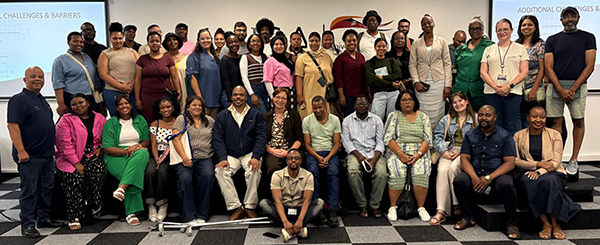
Postgraduate diploma and honours students, together with workshop presenters
The programme was directed by Jacques du Toit and Bronwyn Wright, Regional Academic Coordinators, who emphasised the importance of integrating academic, digital and psychosocial support throughout the postgraduate journey. Students were also introduced to the comprehensive support available within the Western Cape Region, including academic literacies support, digital learning assistance and access to counselling services, reflecting a holistic approach to postgraduate success in an ODeL context.
John Abrahams, Head: Facilitation of Learning, highlighted the region’s commitment to supporting postgraduate students throughout their academic journey. He encouraged students to actively utilise both regional and institutional resources, noting that these support structures are designed to assist students in navigating the demands of research while making the open distance learning experience feel less distant. He also emphasised that the Western Cape Region provides dedicated spaces for postgraduate students, reinforcing the importance of environments that support focused academic engagement and peer collaboration.
Abrahams further noted the value of hosting the orientation in person. While most academic support during the year will be delivered online, the session provided a valuable opportunity for students to meet face to face, engage meaningfully and begin forming peer networks. These connections, he noted, are essential for sustaining motivation and fostering a sense of belonging within an ODeL environment.
A key focus across both sessions was the development of strong research competencies. Library Services, represented by Wilhelmina Zaal and Yegis Naidoo, highlighted the central role of information literacy in postgraduate study. Students were introduced to academic databases, effective search strategies and reference management tools, as well as the personalised support available through library services. This engagement reinforced the importance of accessing credible scholarly sources and developing the skills required for independent research.
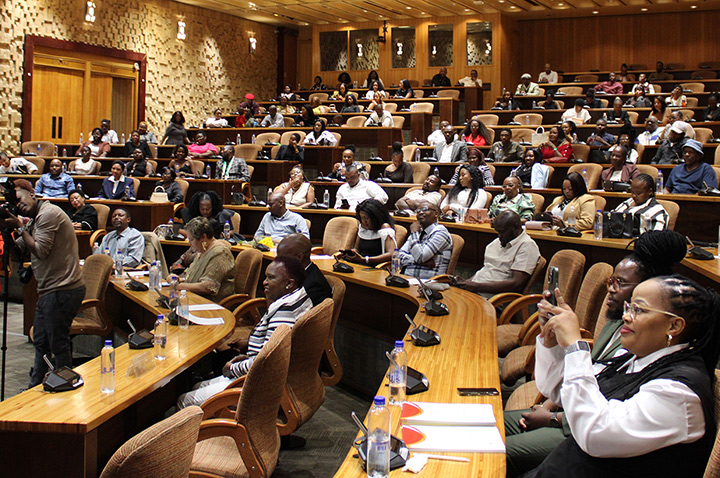
The master’s and doctoral session extended these discussions to a more advanced level, addressing the complexities of sustained independent research. In his opening address, the Regional Director of the Western Cape Region, Motale Nkgoang, welcomed students and highlighted the significance of postgraduate study as both a personal achievement and a contribution to national development. He emphasised that research at this level contributes to knowledge production and innovation, aligning with broader national priorities, such as increasing the number of master’s and doctoral graduates.
In particular, the programme addressed the institutional and academic structures that shape the research journey for master's and doctoral students. Dr Tonny Matjila provided guidance on navigating the research process, including proposal development, ethical clearance and the iterative nature of academic writing. His session emphasised that postgraduate research is a process of refinement, requiring persistence and ongoing engagement with feedback.
Discipline-specific engagement was provided by the College of Law, where Prof Tukishi Manamela and Prof Bernadine Benson addressed master’s and doctoral students. Their session created an interactive space for students to raise concerns and seek clarity on research processes, including supervision, proposal development and progression timelines, reinforcing the importance of collaboration between students and academic departments.
Dr Karen Stander further explored the challenges associated with postgraduate research, focusing on sustaining momentum, managing time effectively and understanding the expectations of supervisors and academic departments. Her session also reinforced the importance of maintaining academic integrity, particularly in the context of emerging technologies such as artificial intelligence.
An important contribution to the M&D session was made by Refiloe Tshepe from the Department of Quality Enhancement, who addressed students on the significance of their voice in shaping the quality of institutional offerings. She emphasised that student feedback is central to continuous improvement, encouraging students to engage with institutional processes actively and to communicate their experiences constructively.
The two-day programme placed strong emphasis on building connections within an ODeL environment. Interactive discussions facilitated by Dr Karen Stander and Dr Tonny Matjila provided students with opportunities to reflect on common challenges, share experiences and explore strategies for sustaining motivation. These discussions also encouraged the formation of peer support networks, which are critical in mitigating the isolation often associated with distance learning.
As the programme concluded, the overarching message was clear: postgraduate study is a demanding but transformative journey that requires not only intellectual engagement but also resilience, discipline and connection. Through initiatives such as this orientation, the Unisa Western Cape Region continues to strengthen its commitment to postgraduate student success, ensuring that all research students are equipped not only with the necessary skills but also with the support systems required to navigate their academic journey with confidence and purpose.
* Submitted by Unisa Western Cape: Facilitation of Learning
Publish date: 2026-04-23 00:00:00.0
 Unisa seminar examines cultural knowledge and language as key ingredients of ubuntu
 Unisa on the global stage: Research excellence driving Africa's textile future
 From Pretoria to Frankfurt: Unisa's rise on the global stage
 Unisa ceremony marks milestone in arts education
 Unisa Western Cape hosts 2026 postgraduate orientation