

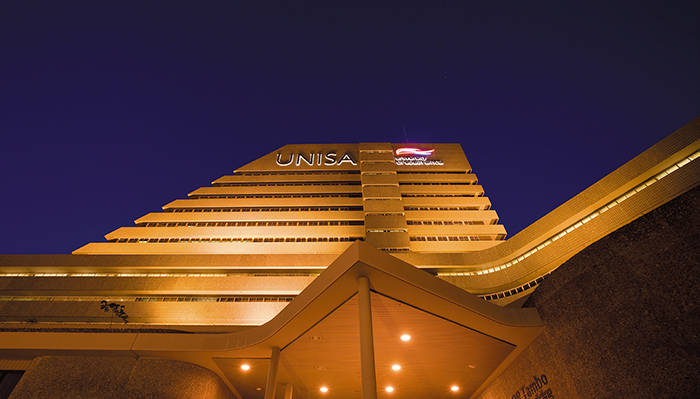
When the University of South Africa, popularly known as the University of the Land, entered the second phase of its 2015-2030 strategy, it was motivated by the adage "Do not look to the ground for your next step; greatness lies with those who look to the horizon".
This rang true at Unisa in 2021, as the adage served as a reminder for the university to keep its eyes on the big picture and not let temporary, small challenges distract it from its ultimate goals.
For Unisa to see beyond the horizon, it dared to move mountains. Today, in 2026, the university is enjoying the shade of the tree it planted in 2021.
It is no coincidence that 2021 was also the year in which Prof Puleng LenkaBula was inaugurated as the institution’s first black woman Principal and Vice-Chancellor. Unisa’s upward research trajectory is very much a result of the vision she brought to the role and has been spearheading for the past five years, as well as the ten catalytic niche areas (CNAs) the university has adopted under her guidance.
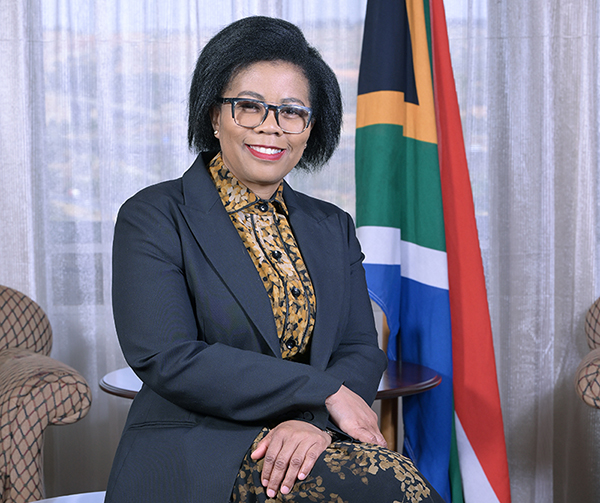
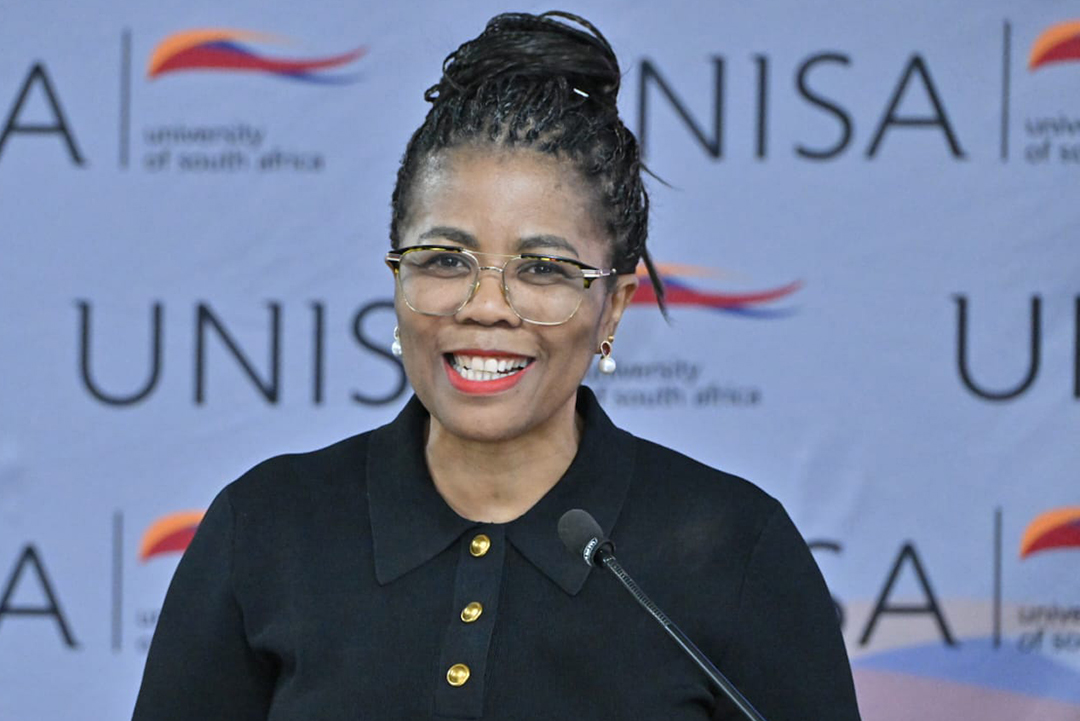
Prof Puleng LenkaBula, Unisa Principal and Vice-Chancellor
"My intention as a leader at Unisa is not just to bring new ideas, but to reaffirm the university’s excellence in research and innovation, as well as the global impact of the institution," she recently said when commenting on the CNAs. "Unisa’s researchers across all its colleges saw the importance of institutionalising research that supports the CNAs, and these areas contribute to rethinking and reclaiming Africa’s futures."
The 2024 Universities’ Research Outputs Sector Report, released by the Department of Higher Education and Training on 2 June 2026, is a testament to Unisa's trajectory to reclaim and advance its position as a leading African university, deeply rooted in its mission to shape futures in the service of humanity.
At Unisa, research and innovation constitute the second set of essential pillars after teaching and learning. The task of producing new knowledge, stimulating intellectual inquiry and promoting innovation that tackles national, continental and international developmental imperatives is the mandate of the university.
This role is not only foundational to Unisa's identity and mandate; it is also a key metric in global academic rankings, where research output and its societal impact are heavily weighted, and it reinforces the university’s commitment to excellence in research and innovation.
Unisa’s audited research performance shows a significant upward trajectory, with total publication output increasing from 1,807.2 units in 2023 to 2,608.3 units in 2024 (a 44.3% growth). As a result, Unisa moved three places up, from 6th to 2nd position nationally. Unisa contributes 10.0% of total sector research output, confirming its position as a major contributor to national knowledge production. In this regard, the breakdown of Unisa’s research outputs indicates that the research profile is heavily driven by journal publications, which remain the primary driver of its performance, contributing 2,221.6 units in 2024. This represents a significant increase from 1,505.0 units in 2023, elevating the institution from 6th to 2nd position nationally and aligning with broader sector trends. At the same time, Unisa continues to strengthen its contribution to book and chapter outputs, growing from 237 units in 2023 to 274.6 units in 2024, and improving its ranking from 8th to 5th position in the sector. With regard to sector comparison of contribution to conference proceedings output, Unisa rose from 6th to 2nd position, with outputs increasing from 64.6 to 112.2 units between 2023 and 2024.
Unisa recorded exceptional annual growth in journal article output (47.6%), one of the highest in the sector. Book output also increased (15.8% year-on-year), and conference outputs showed strong recovery growth (73.2% from 2023 to 2024). This positions Unisa as a high-growth institution in research productivity.
Despite its large size, Unisa outperforms the sector average (1.24), indicating efficient conversion of academic capacity into research outputs per capita (1.34 units per academic). As a result, Unisa ranks among the top-performing universities in productivity per staff member. For its weighted output (including postgraduate training) of 2.34 (above the sector average of 2.23), Unisa is among the top 11 universities exceeding the national benchmark. This shows that Unisa’s performance is not only publication-driven but also reflects strong postgraduate training and doctoral output.
With a total academic staff of 1,942, the number of doctorate-holders was 1,229 (63.29%), compared to the sector average of 56% doctorate-qualified staff. This shows that Unisa has a well-qualified academic workforce, above the national average, supporting sustained research output and supervision capacity.
The university is highly likely to exceed the 75% target set in the NDP for 2030.
This strong performance is further demonstrated by Unisa’s doctoral graduate output, which rose from 366 in 2023 to 440 in 2024, elevating the institution from 3rd to 1st position nationally, with a doctoral supervision ratio of 0.358, above the sector average and a supervisory capacity index of 1.58 (below the top tier, but solidly above many institutions). In this regard, Unisa demonstrates strong doctoral production relative to staff capacity.
It is clear that Unisa is part of the top group of universities contributing disproportionately to national output. Together with other leading institutions, it forms part of the core research-producing cluster driving sector performance. Its recent rapid growth trajectory, especially in journal outputs, signals an institution that is expanding its research footprint significantly, positioning it as a central driver of South Africa’s knowledge production system. Fast-tracking the commercialisation of academic research, leading in social innovation, and expanding industry partnerships and collaborations now form part of the university's focus.
* Article by Professor Mpho Ngoepe: Vice-Principal: Research, Postgraduate Studies, Innovation and Commercialisation, Unisa, and Dr Motlatso Mlambo, Director: Institutional Research, Department of Institutional Intelligence, Unisa
Publish date: 2026-06-03 00:00:00.0

 Reclaiming African heritage through geographical names
 From research to real-world impact: Unisa-linked project explores new ways to advance LGBTQIA+ rights
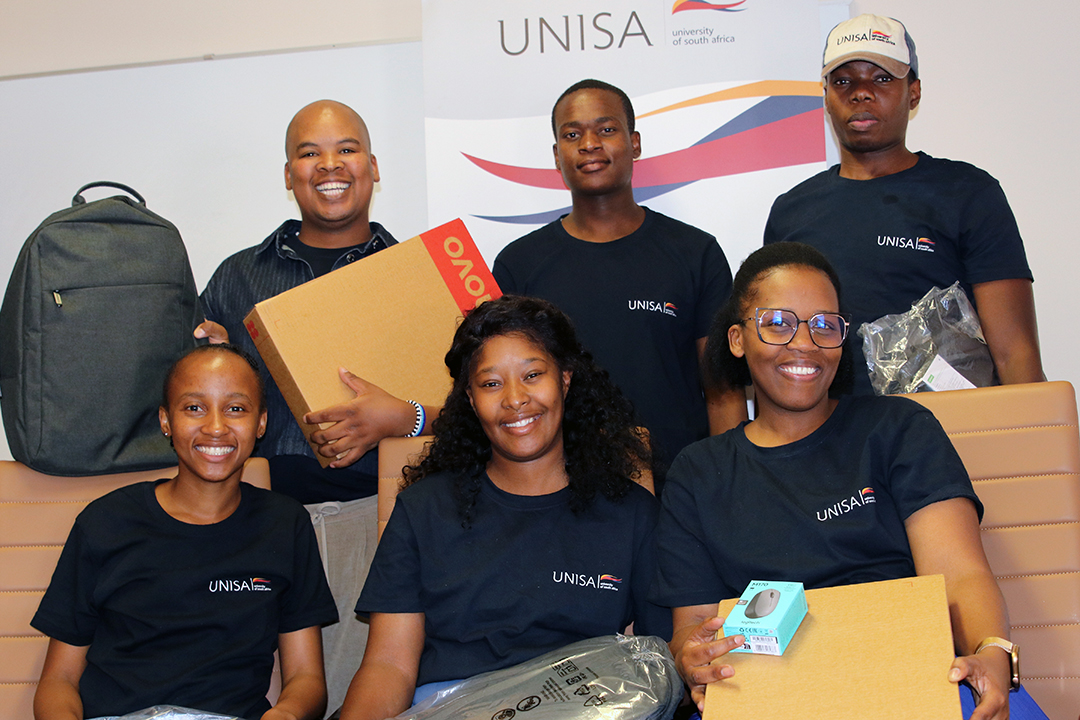 Unisa hackathon winners develop AI solution to support students at risk of falling behind
 Beyond Black Wednesday: Unisa lecture calls for urgent action to protect media freedom and public broadcasting
 Unisa celebrates 25 new PhD graduates advancing research and innovation