
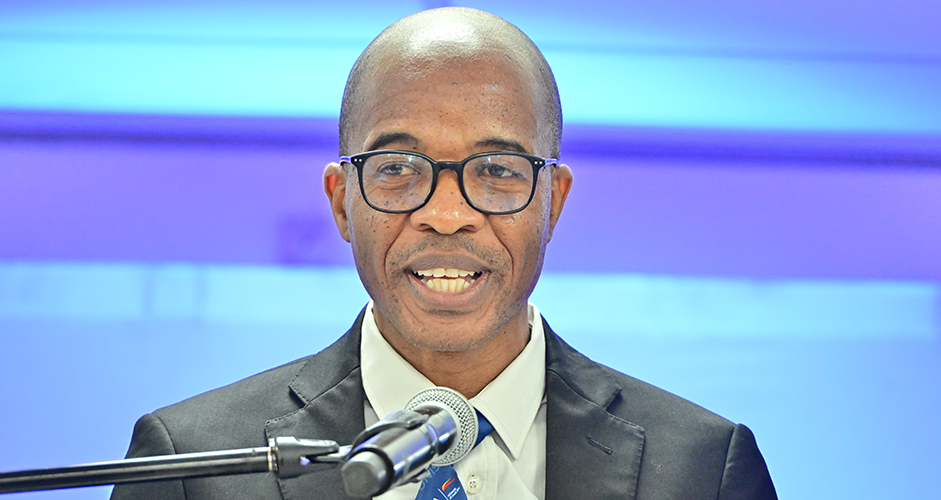
Prof Mpho Ngoepe, Unisa Vice-Principal: Teaching, Learning, Community Engagement and Student Support
For nearly three decades, Prof Mpho Ngoepe has worked at the intersection of knowledge, people and institutions.
His career has taken him from libraries and archives to academia, research and senior university leadership. Now, as he takes on the role of Vice-Principal: Teaching, Learning, Student Support and Community Engagement at the University of South Africa (Unisa), he is turning that experience towards one of the university's most important priorities: creating an environment in which students can learn, grow and ultimately contribute meaningfully to society.
For Prof Ngoepe, the appointment is both an honour and a responsibility.
"Being appointed as vice principal for teaching, learning, student support, and community engagement means a lot to me. First, it has to do with the confidence shown," he said.
His journey at Unisa began on 1 April 2012, when he joined the university as head of the Centre for Applied Information and Communication. Since then, he has moved through a series of academic and leadership positions, serving as a senior lecturer, associate professor, professor, chair of department, director of the School of Arts, acting deputy executive dean, executive director for Library and Information Services and acting vice-principal for research, postgraduate studies, innovation and commercialisation.
Each role has added another layer to his understanding of the university and its people.
It is this breadth of experience that he now brings to his new portfolio, where he wants to see greater collaboration across Unisa, particularly between disciplines that have traditionally operated separately.
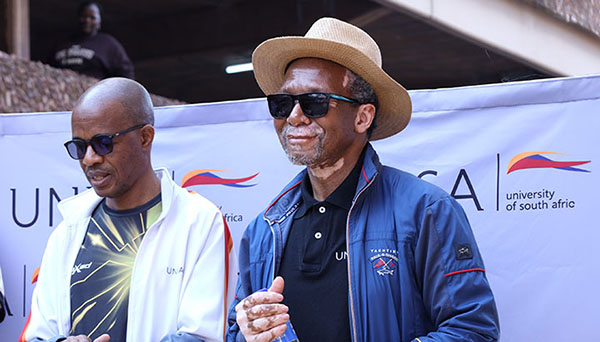
Prof Ngoepe and Prof Magano proudly supporting wellness, health, and community engagement at the Unisa Health & Wellness Day.
"I would like to see us redefining academic structures to encourage interdisciplinary collaboration," he said.
For Prof Ngoepe, this is about more than changing structures. He sees collaboration across disciplines as an important part of preparing students for a rapidly changing world, while also strengthening the university’s research and institutional work.
"This way we can embed inter-, multi-, and trans-, and cross-disciplinarity in curricula, research and institutional strategy to produce a complete student who can be innovative and create employment," he said.
Prof Ngoepe's perspective has been shaped by a career that stretches well beyond the university.
Over the years, he has worked with institutions including the National Archives of South Africa, Cape Town Archives Repository, Technikon Northern Gauteng, the Auditor-General of South Africa, the United Nations Children’s Fund, Trans-Caledon Tunnel Authority and the Department of Provincial and Local Government.
His research has largely centred on archival science, while also extending into literature, paremiology, languages and corporate governance.
In recent years, his attention has increasingly turned towards indigenous archives and the use of indigenous languages in research, an area he believes has significant potential to expand the body of knowledge produced in Africa.
"We have done extensive research in this area, and we are ready for implementation," he said.
That work is already taking shape through the supervision of students conducting research in Northern Sotho, as well as research papers he has co-authored on subjects including astronomy and digitisation in the language.
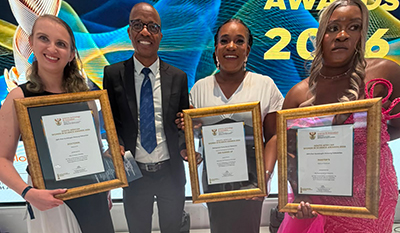
From L-R: Annarien Headley, Prof Mpho Ngoepe, Prof Muthumuni Managa and Mushayathoni Nwovhe at the SAWiSA 2026 awards.
For Prof Ngoepe, the use of indigenous languages in scholarship is not simply about language itself. It is also about broadening whose knowledge is recognised, preserved and made accessible through research.
His academic journey has also taken him onto the international research stage.
Between 2013 and 2018, he served as Director of Team Africa for the International Project on Permanent Authentic Records in Electronic Systems (InterPARES) Trust, coordinated by the University of British Columbia in Canada.
The project examined how digital records can be preserved and kept authentic in an increasingly digital world.
As part of Team Africa, his work included research into archival education, resulting in a directory of higher education institutions offering archival studies across 38 African countries.
The research also contributed to curriculum development at institutions including Unisa, the University of Namibia, the University of Eswatini and the University of Botswana.
He later edited the Routledge-published book Managing Digital Records in Africa, which emerged from this work.
His contribution to the archival profession has also extended into public engagement.
Prof Ngoepe was involved in the “Taking Archives to the People” initiative, which resulted in a strategy implemented by archives and repositories in South Africa. The work also informed the development of a Unisa module and workshops for postgraduate archival students.
These experiences have given him a perspective that spans academic scholarship, professional practice and the public value of knowledge.
It is this experience that he now brings to a portfolio that sits at the centre of Unisa's academic mission.
Teaching and learning, student support and community engagement are areas that directly shape the experience of students and their ability to succeed.
Prof Ngoepe believes that strengthening these areas requires collaboration, innovation and a willingness to rethink established approaches.
His own career also informs his views on the importance of supporting emerging academics.
His advice to young researchers is straightforward: find a mentor, work with experienced researchers and build a strong publication record.
He encourages emerging academics to establish themselves locally while remaining open to international opportunities as their careers develop.
Most importantly, he believes they should not limit their ambitions.
"Don’t be afraid to develop more ambitious targets and expand your horizons as you progress," he said.
For Prof Ngoepe, the new appointment represents more than another step on an already distinguished career path. It is an opportunity to bring together nearly three decades of experience in knowledge management, research, academia and leadership and apply it to the university’s most important asset: its people.
As he begins this new chapter, his focus is clear. He wants to help create a more connected university, where disciplines work together, students receive the support they need and knowledge generated at Unisa continues to make a meaningful contribution to society.
* By Noxolo Miya, Journalist, Department of Institutional Advancement
Publish date: 2026-09-08 00:00:00.0

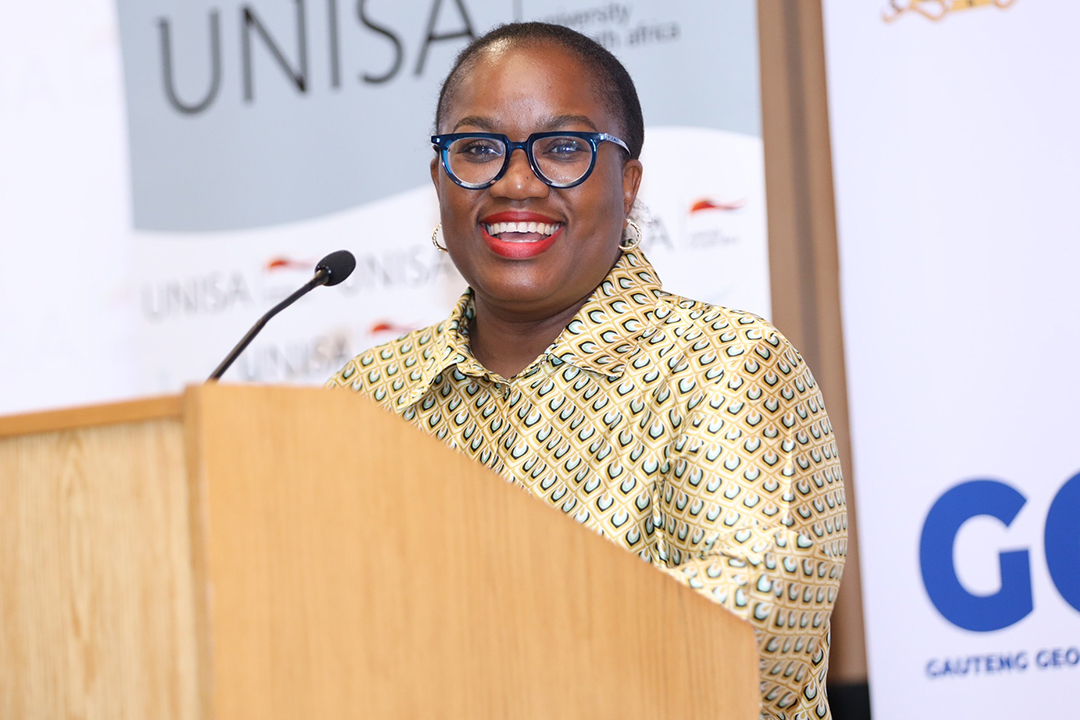 Reclaiming African heritage through geographical names
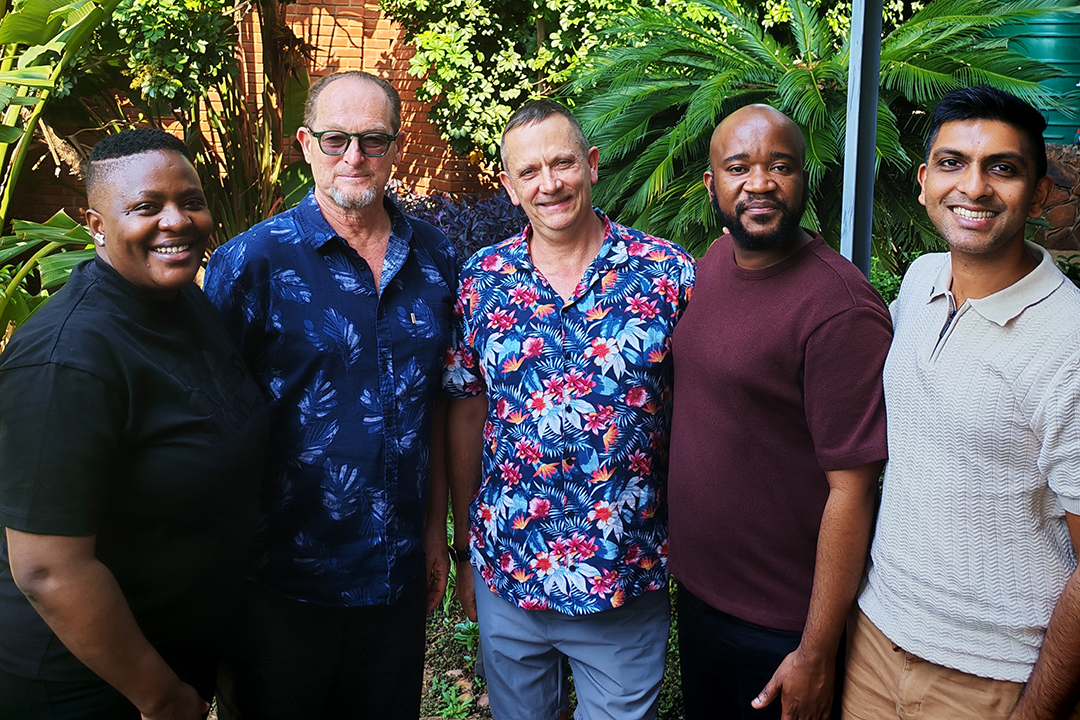 From research to real-world impact: Unisa-linked project explores new ways to advance LGBTQIA+ rights
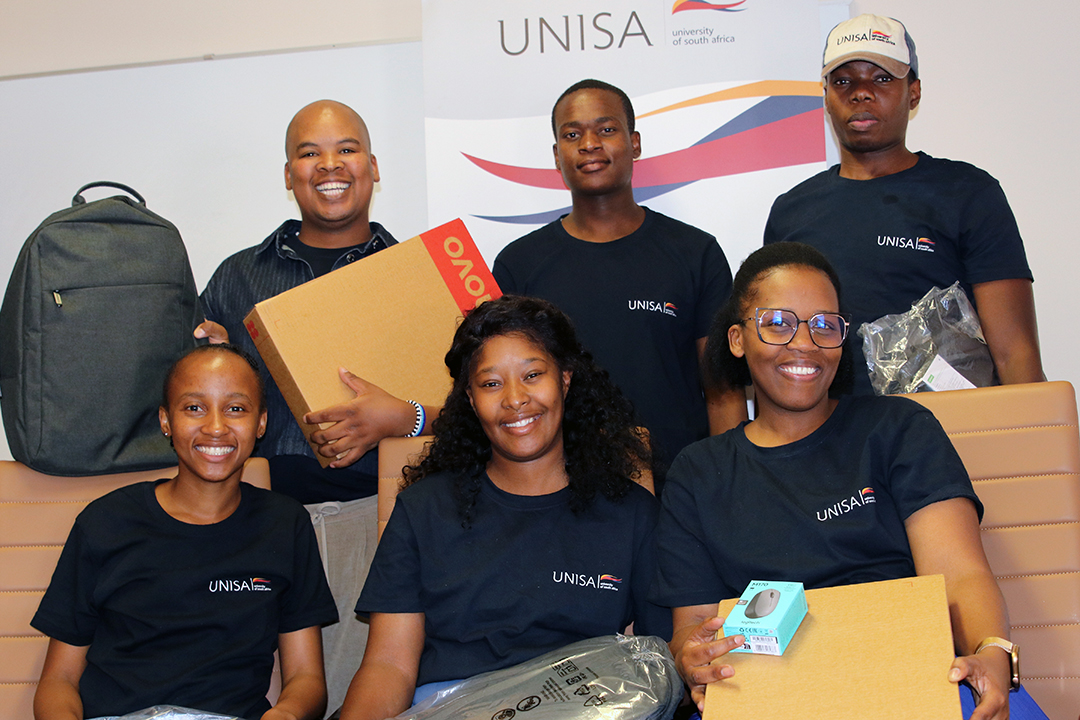 Unisa hackathon winners develop AI solution to support students at risk of falling behind
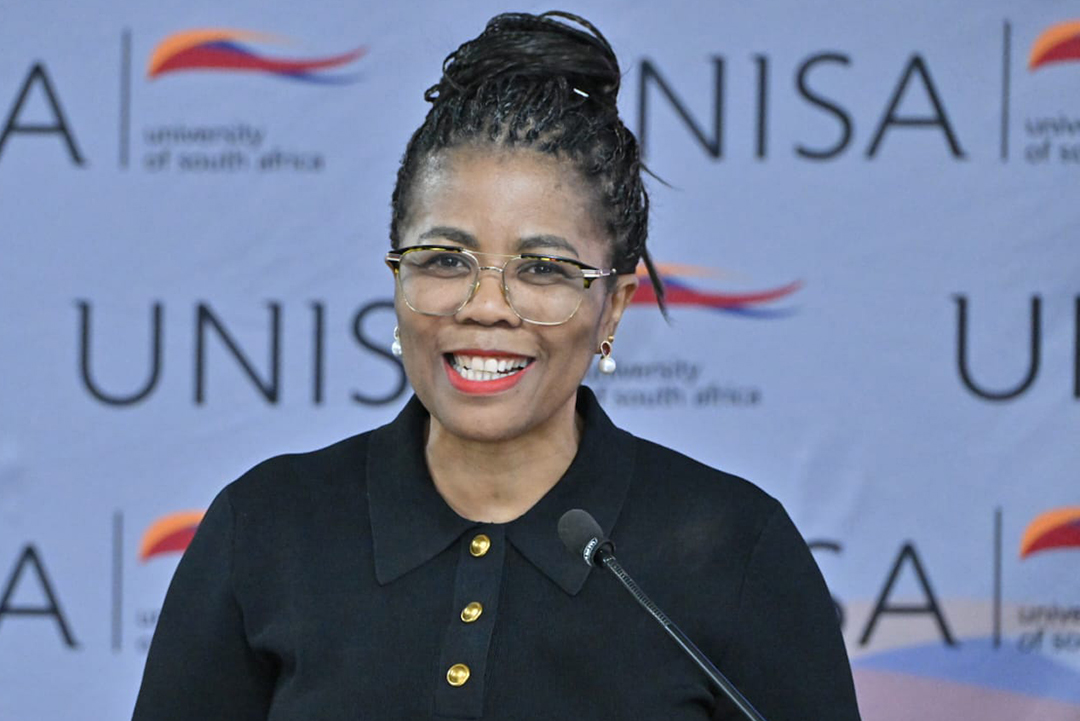 Beyond Black Wednesday: Unisa lecture calls for urgent action to protect media freedom and public broadcasting
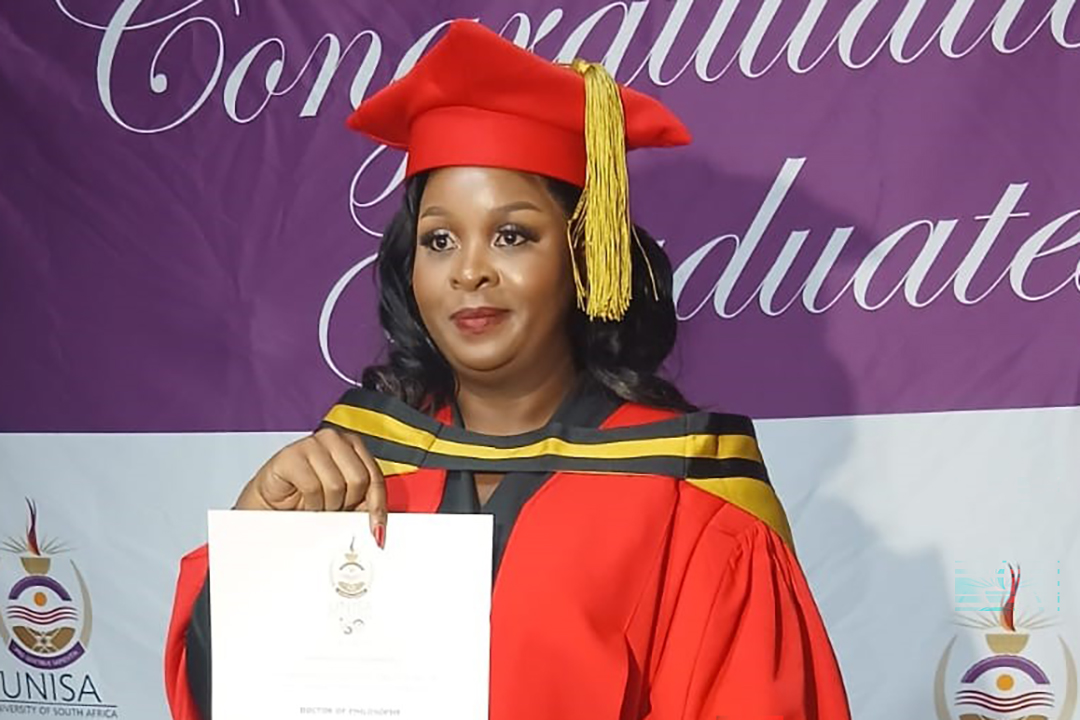 Unisa celebrates 25 new PhD graduates advancing research and innovation