
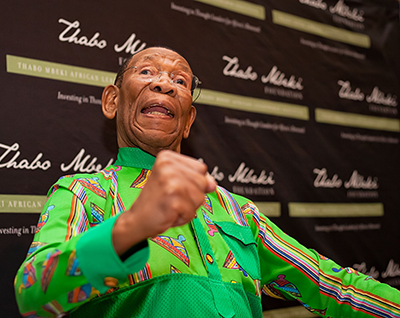
Dr Motsoko Pheko is a historian, political scientists, lawyer, theologian, writer, Publisher and researcher. He is a former member of the South Africa Parliament.
Unisa’s Thabo Mbeki African Leadership Institute (TMALI) held a public dialogue on The Land Question; lessons, opportunities and challenges between Dr Motsoko Pheko and Professor Mogobe Ramose on 22 November 2018.
Dr Toendepi Shonhe of TMALI paints a picture of the discourse as follows.
In his lecture at the Thabo Mbeki African Leadership Institute (TMALI), Dr Motsoko Pheko reminded by locating the ongoing debate on the land question on its historical and moral plinth. Citing Muziwakhe Anthony Lembede, he reminded us that “one who wants to create a future must not forget the past”, adding that the land question and the attendant need for redistribution in South Africa “is a matter of justice, truth, morality and African national survival”. Here I would also add equity, national sovereignty, empowerment, and economic liberation.
This is very distinct from much of the argumentation seen today around the ongoing debate on land appropriation without compensation, wherein, issues of property rights, rule of law, democracy are expounded to contradict the imperative for land repossession and redistribution. Much of the debate had been positioned to forewarn of how capital is fragile and therefore has tendencies to escape spaces of uncertainty through time and how section 25 of the South African national constitution will be violated and mutilated if this was to proceed. Indeed the debate has also attracted scholars on the race who have begun to question the African National Congress on its policy of reconciliation, highlighting how all South Africans are equal before the law, regardless of race and differentiated privileges.
Motsoko’s lecture debunked these myths. Historicising the land question in South Africa, specifically, and Africa, broadly, places this emotive issue into proper perspective. Motsoko emphases that Africans were robbed of their land as Europeans, through the Berlin General Conference held from 14 November 1884 to 25 February 1885, when King Leopold II of Belgium, declared, “We are here to see how we should divide among ourselves this magnificent African cake”. The General Act passed on the 26th February 1885 therefore sealed the stealing and robbery of African countries by the French, Spanish, Portuguese, Italians, Germans, Belgians and the British. African had been partitioned and fragmented in to pieces of a magnificent cake without the participation and consent of the Africans themselves. This is the history that Africans were urged to remember always by Motsoko Pheko on 22 November 2018, at the Senate Hall of Unisa’s main campus.
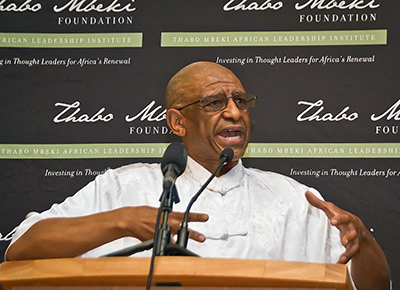
Prof Mogobe Ramose (Philosophy, Practical and Systematic Theology: Unisa)
In the end, 93% of the land was given to Colonial settlers numbering 349 837 while Africans numbering five million were allocated 7% of their own land in the “Natives Reserves” under the Native Land Act of 1913 after South Africa was formed through the South Africa Act of 1909. Africans were turned into “Reserves” of cheap labour for “white” gold mines, even though 6% of this land was given back to Africans in 1936. The white colonialists had managed to expropriate the African’s land “and have taken away his economic power and freedom and have left him worse than they found him” where as Glen Grey, a British humanitarian in South Africa observed, “The Natives (Africans) are generally looked upon by Whites as an inferior race, whose interests must be systematically disregarded”.
There were attempts to shape the narratives and redefine the history of land ownership in Zimbabwe. For instance colonial apartheid Prime Minister Hendrik F Verwoerd misinformed his audience that “More than 300 years ago, two population groups equally foreign to South Africa converged in rather small numbers on what was practically empty land. Neither group colonised, nor robbed the other by invasion.” His foreign minister Eric Louw had in 1959 in London also claimed, “The Bantu began to trek from the North across Limpopo when Jan van Riebeeck landed at Table Bay in 1652.” As late as the 16th of February 2012 Mr. Pieter Muller then a leader of the National Party Plus and Minister of Agriculture in a supposedly “New South Africa” said, “The Bantu-speaking people moved from the Equator down south while the white people moved from the Cape to meet each other at the Kei River.”
This was an obvious rewriting of history. For, in 1973, Professor Revil Mason concluded that “the early iron age African entered Polokwane between 1500 and 2000 years ago”, 1 200 years before the first Portuguese rounded the Southern tip of the continent of Africa. This, for Motsoko Pheko, is the fulcrum of the matter and the background upon which the ongoing debate on land must be predicated. Legally and historically therefore, African land was neither “terra nullus” (empty land) nor was it “res nullus” (ownerless belonging to nobody) and “filius nullius” (occupied by people without rights). The debate on the land issue in South Africa must therefore recognised that under international law, the land belonged to Africans. In other jurisdictions, land was rightfully returned to its owners under Jus cogens, a fundamental and overriding principle of international law.
Motsoko Pheko gave three cases in which illegally owned land was returned to the rightful owners, viz;
The land issue must also be located properly using political economy lenses in which other issues such as the denial of proper education, viz; the Bantu education, politics and economic (dis)empowerment. All these vices were applied to ensure the subduction of the African population. I hasten t o add here that today, a common view being recklessly expressed is that there is no demand for land by black Africans and that is foisted on them, they are likely to dispose it of if rather preferring to be paid financially as compensation in lieu of the land, as primary means of production. Yet this a result of colonialism where such education was fashioned to colonise the mind, a feat to be corrected and a burden for the post-colonial government.
Indeed, Ramose concurred that the constitution, particularly section 25 which stipulates the need to pay compensation was misplaced and must be amended. Moreover, for Ramose, who responded to the lecture, there is no moral and ethical justification why South African must be beheld by the constitution, to the extent that protects an injustice and an inequality. Colonialists holding land illegally must not be compensated. This is a view currently being suppressed in the debate on land. A view that redistribution of land will restore justice and equity on land!
*Submitted by Tshepo Neito and minimally edited.
Publish date: 2018-12-07 00:00:00.0

 Unisa strengthens global standing in 2027 Times Higher Education World University Rankings
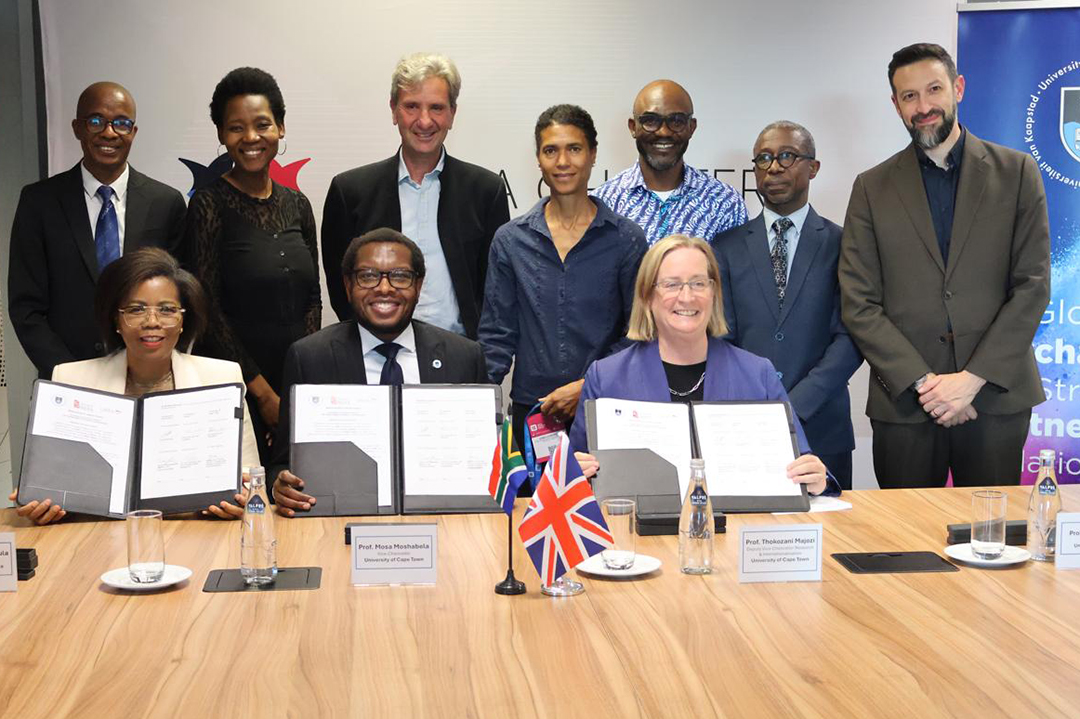 Unisa, UCT and University of Bristol strengthen partnership to transform global research collaboration
 Prof Lessing Labuschagne takes helm of Unisa's Research and Innovation portfolio
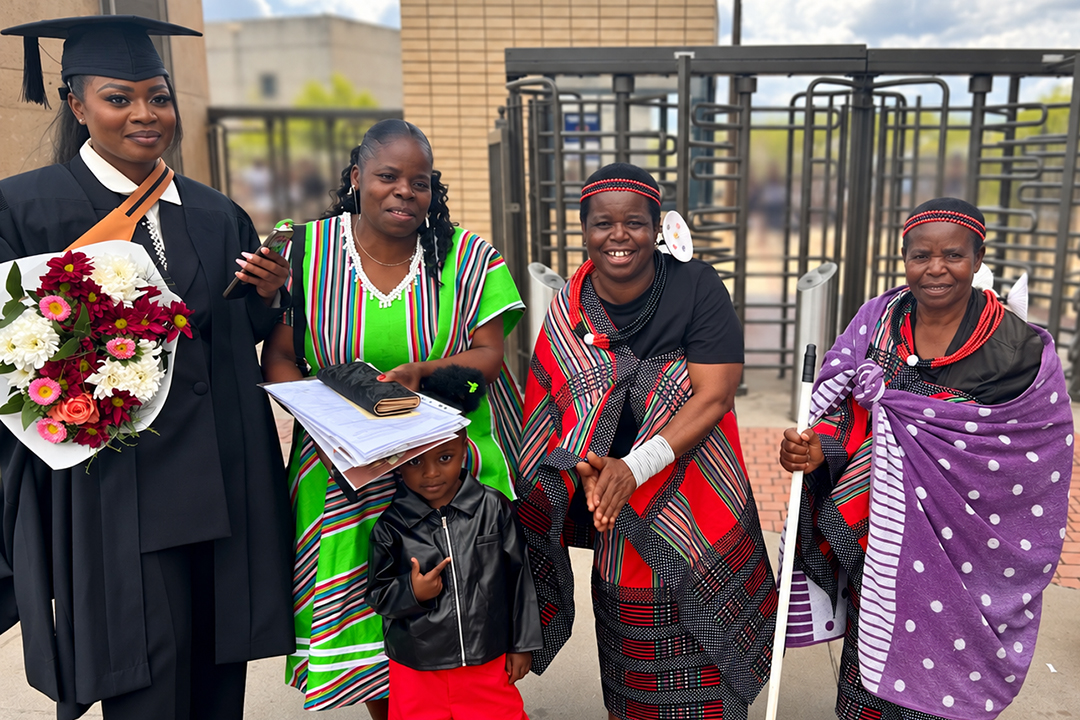 Unisa Spring Graduation opens with stories of perseverance and achievement
 Unisa academic helps develop AI system to stay ahead of cryptocurrency scams