

Providing affordable, accessible, high quality, relevant Science Engineering and Technology programmes
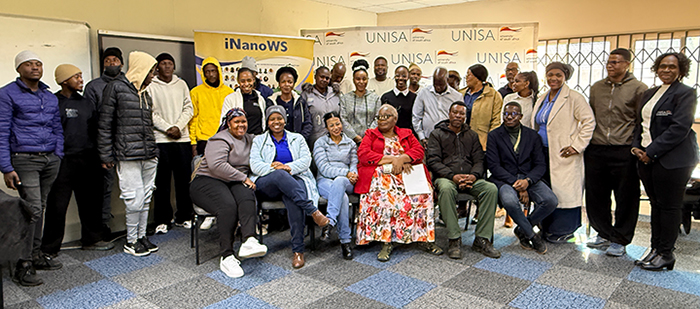
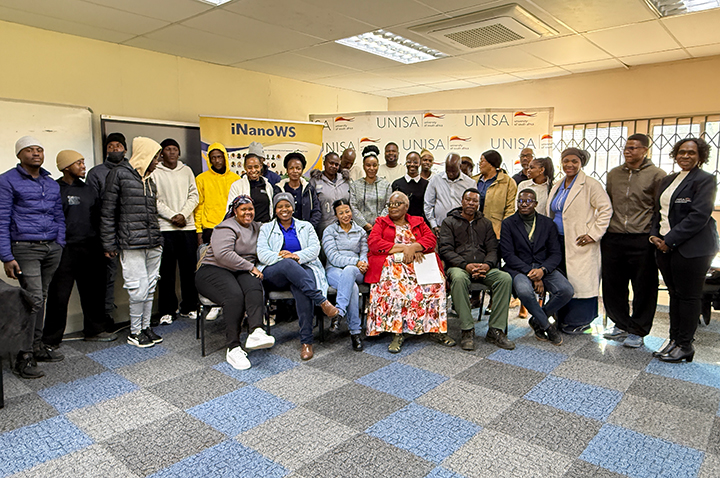
Stakeholders at the Unisa Ekurhuleni Regional Service Centre
Researchers, students, entrepreneurs, traditional leaders and community members recently gathered at the Unisa Ekurhuleni Regional Service Centre for a collaborative workshop focused on water sustainability, community engagement and innovative research solutions to address societal challenges.
The Unisa Gauteng Region, in collaboration with the College of Science, Engineering and Technology’s (CSET’s) Institute for Nanotechnology and Water Sustainability (iNanoWS), recently hosted a community engagement workshop to present results from the preliminary analysis of water samples collected from the Daveyton Campus, while also exploring sustainable solutions to water-related challenges through research, innovation and community partnerships.
The programme director, Dr Smangele Ntuli, Head of Facilitation of Learning in the Unisa Gauteng Region, officially opened the engagement by highlighting the importance of bringing together diverse stakeholders to address community challenges collaboratively.
Participants included members of the Daveyton community, Unisa students, entrepreneurs, traditional leaders and staff members from CSET and iNanoWS. "Meaningful change can only happen when communities, researchers, students and institutions work together. This workshop demonstrates the importance of collaborative engagement in developing sustainable solutions for our communities," said Ntuli.
The workshop formed part of Unisa Gauteng Region's ongoing commitment to community engagement, collaborative research and empowering communities through inclusive participation and knowledge-sharing initiatives.
Delivering the welcoming address, Dr Catherine Boonzaaier, Head of Facilitation of Learning, described the workshop as the second engagement hosted in fulfilment of the catalytic niche area initiative. She applauded the spirit of collaboration demonstrated by stakeholders and expressed optimism about the initiative's long-term impact. "We are hopeful that these engagements will culminate in impactful research outputs that contribute practical solutions to challenges faced by our communities," said Boonzaaier.
Dr Tshepo Malefetse, representing the Head of iNanoWS, introduced participants to the institute's work and highlighted the critical relationship between water sustainability and energy use, noting that substantial energy is required to pump and manage water resources. "The work of iNanoWS remains crucial because it allows students to engage directly with communities and better understand societal challenges that scientists can help solve through innovation and research," said Malefetse.
Pat Lethole, Ekurhuleni Regional Centre Manager, commended iNanoWS's work and stressed the importance of ensuring that indigenous communities are included in research and development initiatives. "We appreciate the work being done by iNanoWS and believe these collaborations will help us achieve meaningful impact within our communities. The Ekurhuleni Regional Service Centre is working towards becoming a research hub that responds directly to community and student interests, particularly around water-related projects," said Lethole. She further noted that surrounding communities and students have shown growing interest in research initiatives linked to water sustainability and environmental solutions.
The programme also featured a presentation by Dr Tshimangadzo Munonde, Chair of Engaged Scholarship at iNanoWS, who provided insights into the Engaged Scholarship Collaborative Project between the Gauteng Region and iNanoWS, including future plans and deliverables to strengthen community-engaged research.
Munonde highlighted that iNanoWS outreach programmes include schools, where learners are taught about water treatment and supported with career guidance opportunities in science and innovation. He further explained that engaged scholarship initiatives take a longer-term approach aimed at addressing specific community challenges through collaborative research.
He also shared plans for a mobile water treatment plant that can travel from community to community to assist with water treatment and awareness initiatives. "Clear water is not always clean water," said Dr Munonde, while reflecting on water sampling activities conducted in Ekurhuleni to assess chemical and microbial water quality and identify potential environmental risks.
Ratanang Mlaba-Zwane, PhD student at iNanoWS, together with technician Zamani Ncanana, presented findings from the chemical and physical analysis of water samples collected from the Ekurhuleni Campus. The presentation assessed water quality against national drinking water standards, focusing on turbidity, pH, electrical conductivity, dissolved oxygen and total dissolved solids.
The findings showed that while the water samples recorded acceptable pH levels ranging from neutral to slightly alkaline, several samples reflected high levels of electrical conductivity, toxins and total dissolved solids, particularly in wetland and borehole water samples. The team explained that flowing water sources generally showed lower turbidity due to reduced accumulation of suspended solids. Dissolved oxygen levels were also monitored to determine overall water health and suitability for aquatic organisms.
Zamani Ncanana, Laboratory Technologist at iNanoWS, shared the guidelines that informed the study and presented findings on the levels of metal concentration detected in the water samples. The results revealed that water from the wetland and groundwater was not suitable for drinking without treatment due to elevated concentrations of certain elements, especially arsenic and iron.
Prof Mxolisi Motsa, associate professor of membrane sciences at iNanoWS, shared findings on the microbial analysis of the water samples, highlighting the importance of water quality monitoring in advancing sustainable water management. In his presentation, Motsa indicated that E. coli was present in wetlands and harvested rainwater and advised communities that this water is not suitable for drinking, as SANS 241 prescribes a zero count of E. coli in drinking water.
He further indicated that researchers would continue collecting samples at different intervals to obtain more conclusive findings and develop sustainable long-term solutions for affected communities.
Up next was Dr Nobuhle Ndebele, postdoctoral research fellow at iNanoWS, who addressed participants on effective water treatment solutions to protect the environment and promote healthier communities. Her presentation compared the results obtained from the South African National Standards for drinking water and the South African Water Quality Guidelines for agricultural and livestock use. The goal was to determine the potential for using the tested water for human consumption, livestock drinking or irrigation.
Ndebele employed a colour-coded system to ensure the community understands: green indicated that the water was safe for use, yellow signified moderate safety, while red warned that the water was concerning and not recommended for drinking without further treatment. She further demonstrated practical methods communities can use to test water quality in their homes and identify possible water contamination. Ndebele also highlighted the importance of keeping our wetlands clean and holding each other accountable when other community members engage in illegal activities, such as dumping in wetlands.
Lungwelwa Mondlane, a farmer and youth leader, and Sizwe Mngomezulu, a traditional leader, expressed their gratitude with remarks highlighting the workshop's significance. They emphasised the knowledge they gained on the importance of water quality for both drinking water and agricultural practices, noting that they learned many things they were previously unaware of.
In the closing remarks, Ria Ngobeni, Regional Academic Coordinator at the Vaal Regional Service Centre, encouraged continued collaboration among researchers, communities and stakeholders to ensure that research initiatives translate into meaningful societal impact.
* By Thembeka Ntuli Mpapama, Manager: Communication and Marketing, Unisa Gauteng Region, and Dr Tshimangadzo Munonde, Chair of Engaged Scholarship at iNanoWS
Publish date: 2026-05-29 00:00:00.0
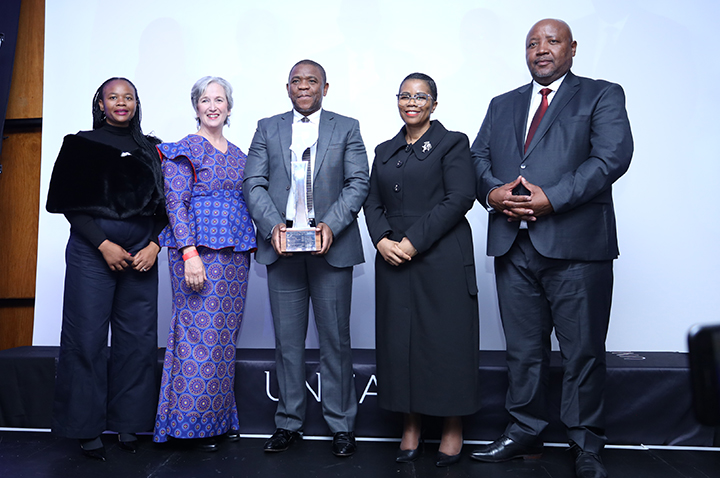 Unisa and the NPC celebrate impactful media contributions
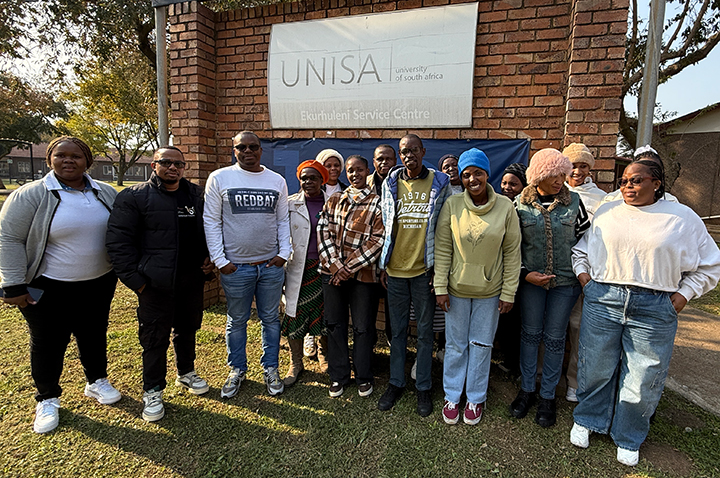 Unisa project empowers the community through digital skills training
 New from Unisa Press: A mirror of the past, a roadmap to the future
 Unisa workshop empowers nearly 2 000 students for the world of work
 Unisa drives community-centred water sustainability dialogue